

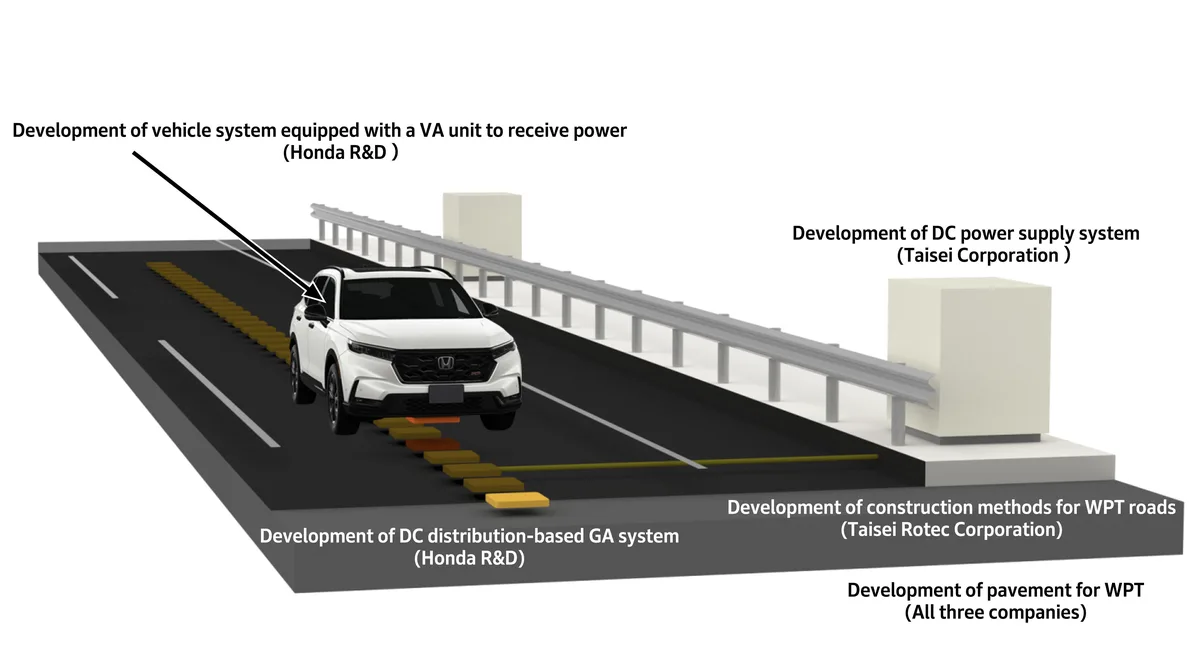
Honda is taking a significant step forward in electric vehicle (EV) technology by developing wireless charging systems designed to recharge EV batteries while vehicles remain in motion or stationary without manual cable connections. This innovation promises added convenience for EV users and supports broader electrification efforts in transportation.
The company’s wireless charging initiative aligns with growing industry interest in dynamic and static wireless solutions that eliminate traditional plug-in charging hassles. By embedding charging infrastructure in roadways or parking spaces, Honda aims to enable EV drivers to top up batteries seamlessly during routine travel or stops, reducing range anxiety and expanding EV usability.

This technology intends to complement existing charging methods by offering continuous battery replenishment possibilities without interrupting a trip. Such advances could significantly impact urban mobility, long-distance travel, and the overall acceptance of electric vehicles by addressing one of the main concerns: charging accessibility and speed.
Honda’s foray into wireless charging also reflects broader trends within the automotive industry toward smarter, more integrated EV energy solutions. Wireless charging systems generally work by transferring electromagnetic energy between a ground-based pad and a receiver on the vehicle, allowing power transfer without physical connectors.
The development involves complex engineering challenges, such as maintaining efficient power transfer at varying speeds, ensuring safety, and standardizing charging protocols to support different EV models. Honda’s entry may accelerate collaboration on establishing compatible technologies and infrastructure standards.
While details such as deployment timelines, pilot programs, or specific technical specifications remain limited, Honda’s commitment signals intensified competition and innovation in the wireless EV charging field, which industry experts view as a crucial enabler for mass EV adoption.