

Carbon dioxide (CO2) plays a paradoxical role in Earth’s climate by warming the planet’s surface while cooling the upper layers of the atmosphere, a phenomenon that has puzzled scientists for decades. Recent research from Columbia University sheds light on the physical mechanisms behind this dual behavior, clarifying how CO2 both traps and emits infrared radiation depending on its altitude.
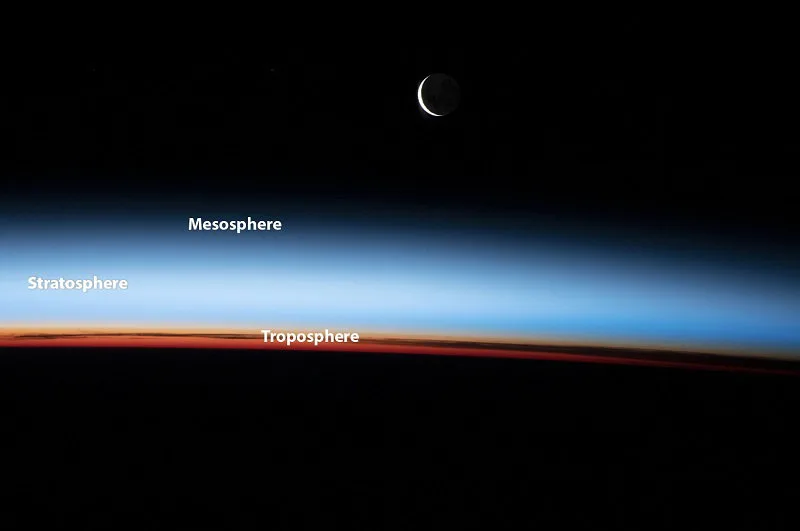
Close to Earth’s surface, CO2 absorbs infrared radiation emitted by the planet’s surface, preventing that heat from escaping into space and thereby warming the lower atmosphere. This greenhouse effect is the primary driver behind global warming. However, in the stratosphere, which extends from about 11 to 50 kilometers above Earth, CO2 molecules absorb infrared energy coming from below and then release part of it outward into space. This makes CO2 act like a cooling radiator at high altitudes, causing that layer of the atmosphere to lose heat and drop in temperature.

This cooling of the stratosphere has been anticipated since climate models first developed in the 1960s, which predicted that rising CO2 levels would cool the upper atmosphere while warming the surface. Observations since the mid-1980s confirm that the stratosphere has cooled by about 2 degrees Celsius, an effect significantly amplified by human-generated CO2 emissions—more than ten times the natural variation expected without anthropogenic impact.
The new study used advanced mathematical models to parse how carbon dioxide interacts with different wavelengths of infrared radiation. Researchers identified a specific range of wavelengths they call a “Goldilocks zone,” where CO2 most effectively emits heat into space. As atmospheric CO2 concentrations rise, this zone widens, strengthening the cooling effect in the stratosphere.
While other atmospheric components such as ozone and water vapor also contribute to cooling at higher altitudes, their influence is considerably smaller compared to that of carbon dioxide. Additionally, the research clarifies why surface warming intensifies simultaneously with stratospheric cooling. A colder stratosphere emits less infrared energy overall, reducing the total heat loss from Earth and enabling more warmth to remain trapped closer to the surface.
These findings deepen our understanding of the complex radiative dynamics within Earth’s atmosphere, highlighting the multifaceted role of greenhouse gases and refining climate models that predict future temperature changes both near the surface and at higher altitudes.