

As the 2026 Atlantic hurricane season unfolds, authorities in Haiti’s Northwest Department emphasize the urgent need to shift from reactive emergency response to proactive disaster preparedness. Regional officials, environmental experts, and community leaders gathered in Port-de-Paix and surrounding municipalities to assess climate vulnerabilities and strengthen collaborative efforts that span multiple sectors.
The Northwest Department faces significant exposure to natural hazards due to its extensive coastline, fragile watersheds, and recurring drought periods. Compounding these risks are weak infrastructure systems, including inadequate roads, drainage, early warning mechanisms, and emergency shelters, which hinder efficient evacuation and relief operations during hurricanes and tropical storms.

During a series of roundtables, representatives from the Ministry of the Environment, Civil Protection agency, local governments, civil society groups, and technical partners discussed strategies to bolster climate resilience. Among the measures is the mobilization of trained volunteers who will spearhead public awareness campaigns aimed at educating residents on disaster risk reduction and necessary safety precautions throughout the hurricane season.
Officials underscored that mitigating vulnerabilities demands sustained investment beyond emergency periods. This includes year-round efforts in environmental conservation, reforestation, watershed management, and the enhancement of infrastructure critical to disaster response and community safety.
Local communities, however, expressed frustration with slow progress on implementing concrete policies, particularly in areas like waste management and environmental protection. Stakeholders stress the importance of translating dialogue into actionable initiatives that address longstanding challenges such as deforestation, poor sanitation, and limited institutional capacity.
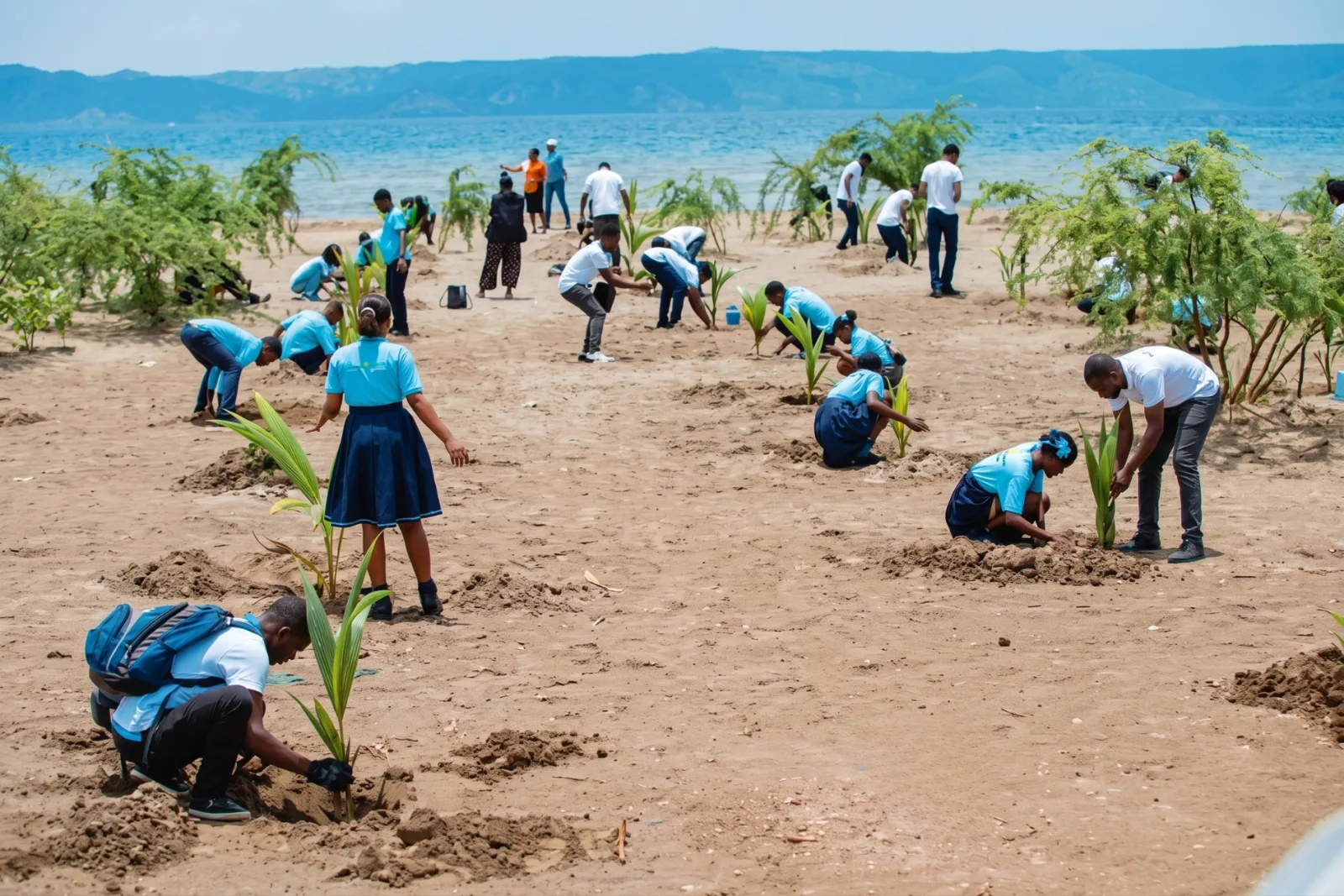
In a symbolic gesture aligned with World Environment Day, high school students received coconut seedlings to plant along Ofounou Beach in Port-de-Paix, illustrating grassroots engagement in environmental restoration and resilience-building efforts.
Despite ongoing struggles, this multi-sectoral approach to disaster preparedness reflects a growing recognition across Haiti’s Northwest Department that strengthening preventative frameworks and fostering community participation are critical to confronting escalating climate threats in one of the nation’s most vulnerable regions.