

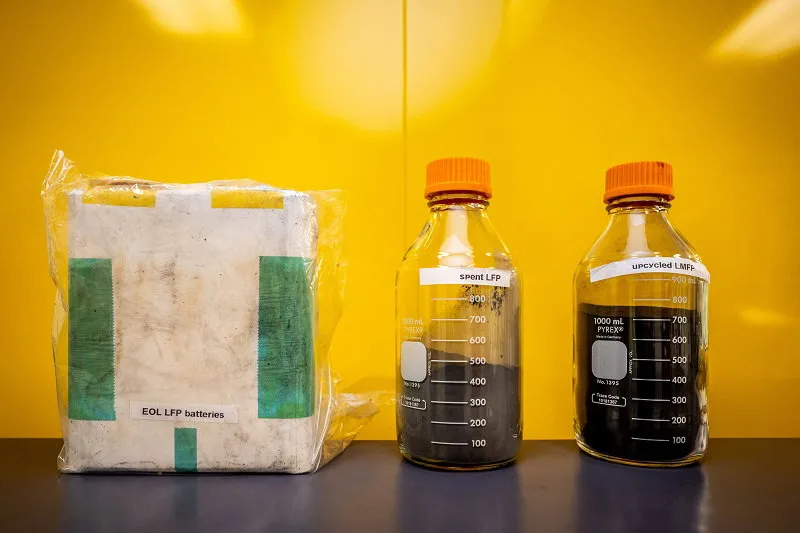
Electric vehicle (EV) batteries that reach the end of their life cycle could soon find new purpose beyond conventional recycling. Engineers at the University of California San Diego have pioneered a process that upgrades spent lithium iron phosphate (LFP) batteries into a superior material known as lithium manganese iron phosphate (LMFP), which offers greater energy storage without compromising safety or longevity.
LFP batteries, popular for their affordability, stability, and avoidance of costly metals like cobalt and nickel, currently represent roughly half of the global lithium-ion battery market. As millions of these batteries retire, improving recycling methods remains essential to reduce environmental impact and resource waste. Existing processes rely heavily on intense heat or harsh chemicals to break down batteries, recovering raw materials but consuming significant energy and producing chemical waste.

The UC San Diego team's approach diverges by focusing on material transformation rather than destruction. They begin by dismantling used battery packs and carefully separating the cathode material from the aluminum backing through gentle water soaking and stirring. After drying and pulverizing the extracted material into powder, researchers supplement it with lithium, manganese, and phosphate compounds, crucial for creating the upgraded LMFP cathode.
A critical step involves producing an intermediate compound, lithium manganese phosphate (LMP), which shares a crystal structure similar to the original LFP material, allowing for uniform mixing. This compatibility enables the blended powders to integrate effectively during subsequent high-temperature treatment in a furnace, forming the enhanced LMFP material.
LMFP cathodes retain the key advantages of LFP batteries, including safety and durability, while increasing energy density—an improvement that could lead to EV batteries with longer driving ranges and better performance in energy storage applications.
This innovation marks a shift toward more circular, energy-efficient battery lifecycles, potentially reducing reliance on mining new materials and lowering the environmental footprint of growing electric vehicle and energy storage markets.