

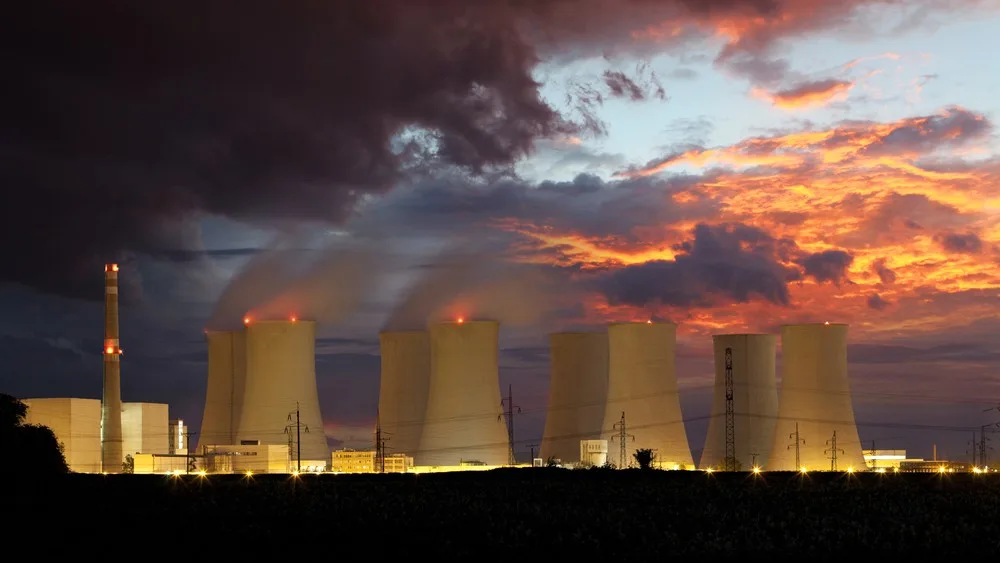
Kazakhstan and Russia moved forward with plans to build Kazakhstan’s first nuclear power plant near Lake Balkhash, signing an agreement outlining cooperation principles. Despite the official deal, critical questions linger over how the project’s $16.4 billion cost will be financed.
The Russian government is expected to finance the bulk of the construction, covering roughly 80 to 85 percent of expenses through state-backed export loans. However, the exact terms of this financing have not been publicly revealed, raising doubts about Moscow’s ability to fully deliver amid mounting economic pressures linked to its ongoing military engagement in Ukraine.

According to statements from Rosatom, Russia’s nuclear energy corporation, their credit will cover most of the investment, with Kazakhstan expected to fund the remaining share. Still, the absence of detailed financing disclosures underscores uncertainty over the Kremlin’s commitment at a time when Russia has lowered its economic growth forecasts and increasingly relies on selling gold reserves to shore up cash flow.
Kazakh President Kassym-Jomart Tokayev framed the project as a strategic driver for scientific and technological advancement, emphasizing its role in fostering energy sector development beyond mere power generation. The nuclear plant is poised not only to boost national energy capacity but also to catalyze educational and sectoral growth.
The agreement, signed during a state visit by Russian President Vladimir Putin, formalizes the framework for collaboration but leaves many practical questions unresolved. The construction timeline, financing specifics, and territorial infrastructure provisions remain opaque, leaving stakeholders and analysts attentive to how Kazakhstan will navigate reliance on Russian partnership against the backdrop of geopolitical and economic volatility.