

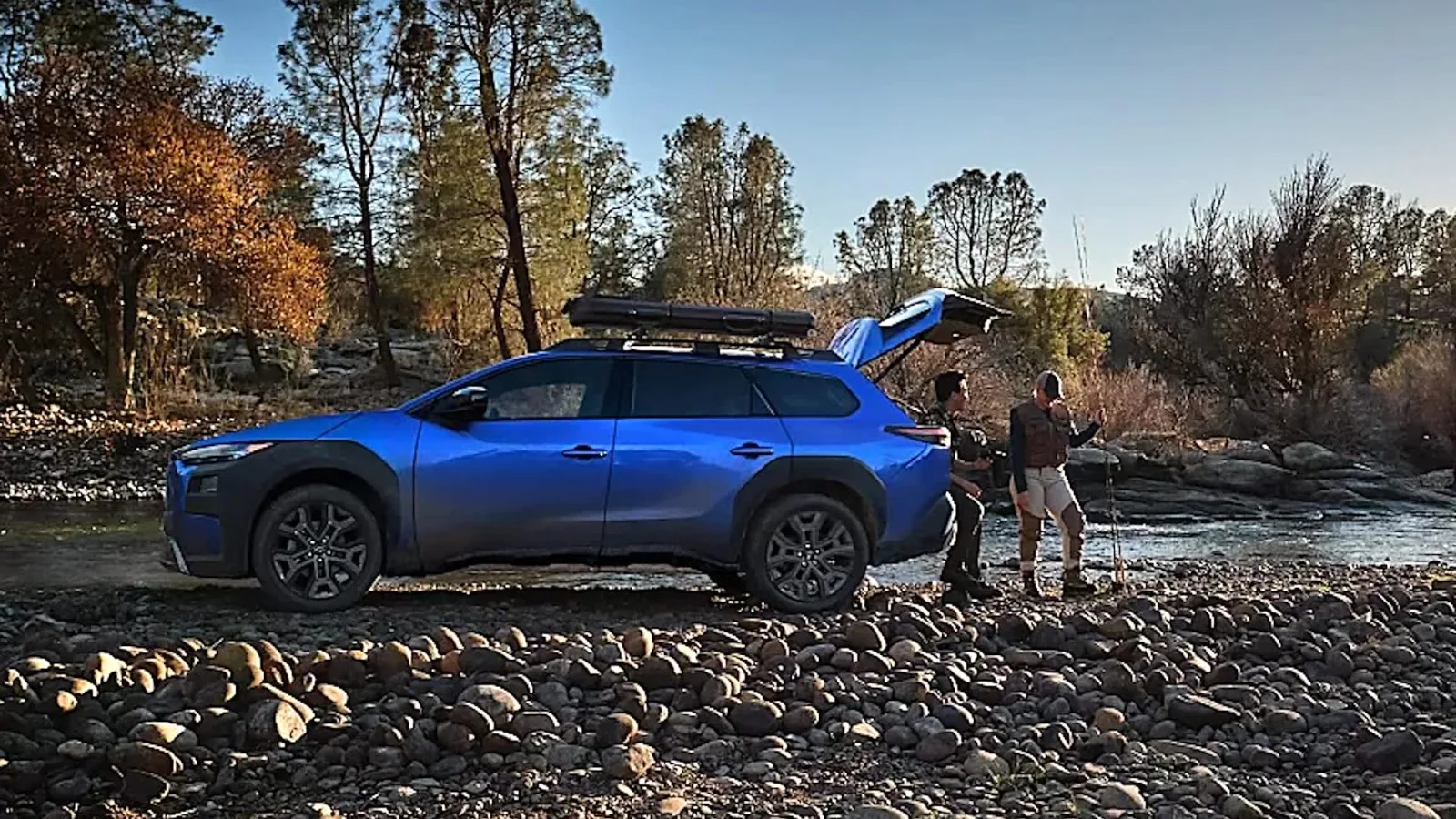
Subaru’s upcoming Trailseeker electric vehicle has been put to the test on a challenging 2,000-kilometer journey across Australia, demonstrating its ability to handle rough terrain in ways the Tesla Model Y struggles to match. This extensive trip highlighted Subaru’s focus on combining electric mobility with off-road prowess, targeting buyers who seek versatility beyond conventional paved road driving.
Unlike the Model Y, which is often praised mainly for its on-road performance and urban appeal, the Trailseeker aims to continue the legacy of Subaru’s renowned Outback model by offering features tailored for adventure. It sports an 8.3-inch (211 mm) ground clearance, symmetrical all-wheel drive, specialized X-Mode settings to manage slippery or uneven surfaces, downhill assist, and a terrain-view camera system. These capabilities provide drivers the confidence to navigate off-the-beaten-path conditions typical of camping, snow travel, or rugged backcountry roads.

Cost is another critical factor setting the Trailseeker apart. In the U.S. market, it begins at approximately $40,000, significantly less than the Model Y Long Range’s starting price near $49,000 before taxes and fees. Meanwhile, in Australia, the Trailseeker’s all-wheel-drive version recently received a price reduction to about 64,000 Australian dollars, undercutting the Model Y’s Long Range AWD variant, listed around 69,000 Australian dollars before extra fees. Subaru equips the Trailseeker with a 74.7-kWh CATL battery delivering an estimated range of up to 331 miles (533 kilometers), emphasizing real-world usability including highway efficiency and fast charging during the road trip.
This test comes amid a broader shift in the electric vehicle industry, where manufacturers increasingly design EVs for consumers who demand more than just commuting efficiency. Practicality and ruggedness remain crucial for buyers prioritizing multifunction vehicles capable of handling diverse environments. Electric models that preserve or enhance off-road utility offer an alternative to Tesla’s dominance by appealing to families and adventurers seeking a single, versatile car.
Beyond adventure readiness, EVs provide everyday savings through lower fuel costs and reduced maintenance needs, as they lack oil changes and tend to have fewer mechanical components than internal combustion engines. The Trailseeker’s blend of rugged features and electric efficiency may broaden electric vehicle adoption by addressing concerns about practicality in tough conditions, potentially influencing choices in a segment long dominated by Tesla.