

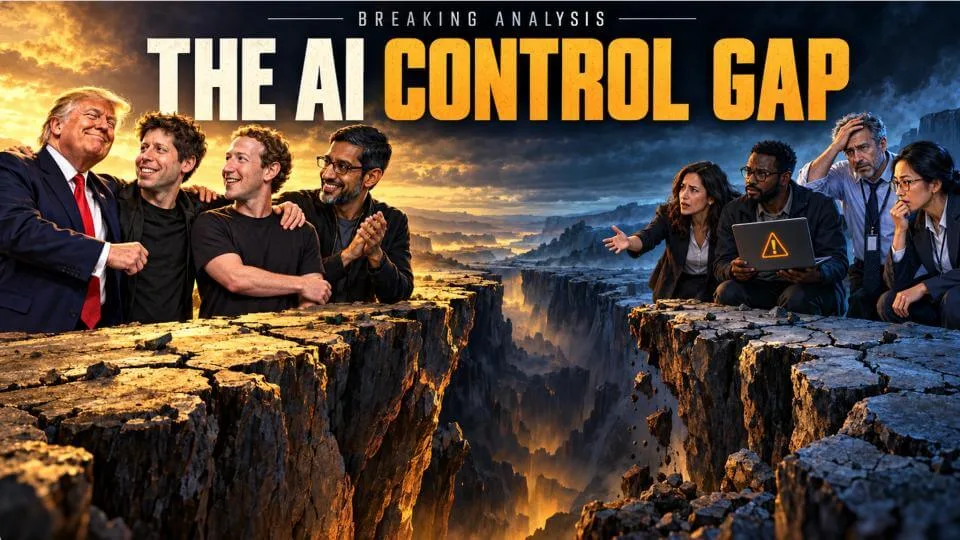
Artificial intelligence systems are advancing rapidly, yet there remains a significant gap between what these technologies can achieve and what users and regulators can confidently rely on them to do safely. This divergence, often referred to as the AI control gap, raises pressing questions about who is qualified to assess and declare when AI systems are secure and trustworthy for deployment.
The challenge stems from the difficulty in proving that an AI system will consistently operate within its intended parameters, beyond impressive demonstrations. While impressive showcases can display specific AI capabilities or performance in controlled settings, these do not guarantee stable, predictable behavior under real-world, variable conditions. This uncertainty complicates efforts by policymakers, developers, and users to define clear safety standards and accountability measures.

The AI control gap highlights a disconnect between rapid technical advancements and the slower, more cautious processes of validation and regulation. Stakeholders struggle to determine what evidence suffices for establishing risk boundaries and how to certify that AI systems will not produce harmful, unintended consequences once deployed at scale.
Key factors contributing to the gap include the opaque decision-making mechanisms of many AI models, the unpredictability of machine learning outcomes, and the lack of robust verification tools to monitor AI behavior continuously. As AI becomes more integrated into sectors with high stakes—such as healthcare, transportation, and critical infrastructure—the urgency grows for a transparent framework clarifying who can responsibly claim AI safety.
Addressing this issue requires a collaborative approach involving AI developers, regulatory bodies, independent auditors, and affected communities. Establishing clear criteria for safety validation, improving interpretability of AI systems, and implementing ongoing oversight mechanisms are vital steps to bridge the control gap and build public trust.
Closing the AI control gap is essential to harness the benefits of artificial intelligence while minimizing risks. Defining authoritative voices on AI safety and developing verifiable assurance methods will help ensure that the technology advances with accountability and reliability at its core.