

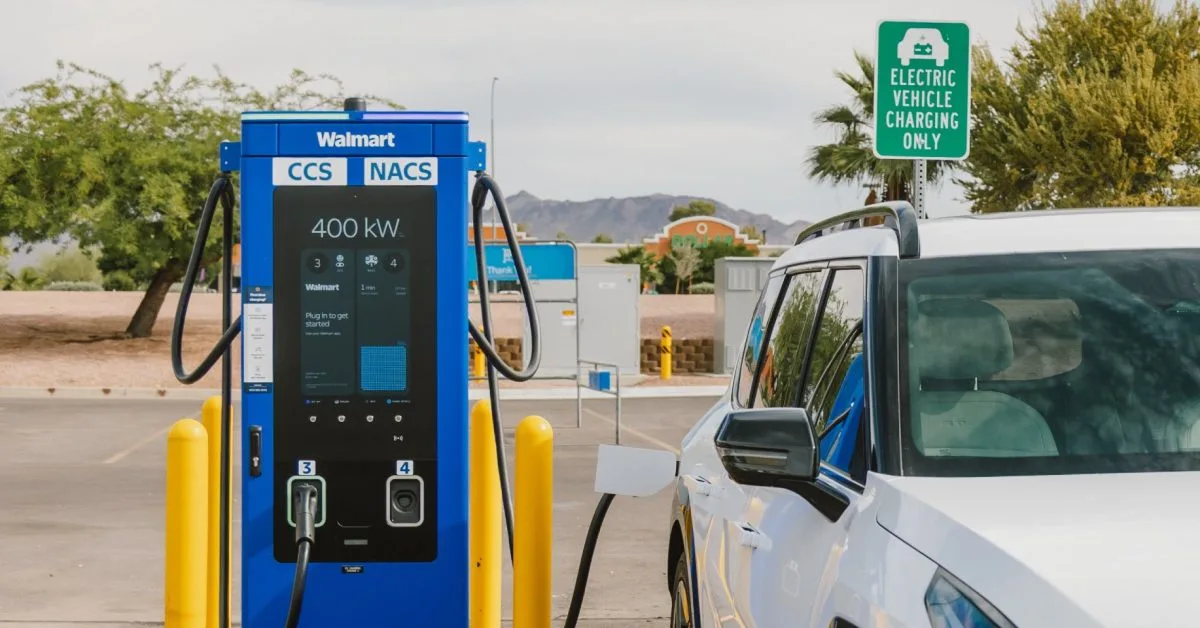
The US electric vehicle (EV) fast-charging sector is evolving beyond rapid network expansion toward enhancing reliability and driver experience, according to the Q2 2026 State of the EV Charging Industry report by Paren, an EV charging data platform. While the number of public fast-charging ports continues to climb, the pace of new installations is slowing, signaling a shift to a more mature market phase where operational efficiency is crucial.
The country added 4,382 new public DC fast-charging ports in the second quarter of 2026, marking a decline from 4,865 ports installed during the same period last year. For the first half of 2026, 7,903 new ports came online, compared to 8,532 in the first six months of 2025. Despite this slowdown, EV charging sessions surged by 29% year over year, demonstrating that drivers are increasingly relying on the infrastructure already in place.

Tesla leads the sector’s growth, contributing 1,185 new ports—more than a quarter of all new installations nationwide. Unlike competitors who focus on building large charging hubs with multiple ports, Tesla is expanding by opening a higher number of stations featuring fewer ports per site, averaging 12.1 ports per new station compared to over 4 ports at non-Tesla locations. This strategy broadened the network’s geographic reach across nearly every state, targeting urban and suburban areas where around 80% of new stations emerged.
Operators added a total of 806 new public fast-charging stations nationwide during the quarter, with a concentration in California, Texas, Florida, Illinois, and New York. These five states accounted for about 40% of the new stations, while California alone represented nearly one in seven additions.
Charging speed continues to improve as ultra-fast options become standard. About 72% of new ports deliver at least 250 kW power, up from previous years, while only a small fraction offers less than 150 kW. This shift accelerates charging times, making long-distance EV travel more feasible.
Pricing shows considerable regional variation, with the average fast-charging price holding steady near $0.54 per kilowatt-hour across states. Hawaii records the highest prices at $0.86 per kWh, while Nebraska offers some of the lowest at $0.43 per kWh. The increase in charging sessions—3.5 million more than the previous year—indicates a steadily rising demand despite the installation slowdown.
Along with the expansion and technical enhancements, the report signals a transition of the US EV charging market into a phase that values profitability and customer satisfaction over sheer growth. Some charging network operators have reported layoffs and moderated their expansion efforts, reflecting industry adjustments to smarter, sustainable business models.