

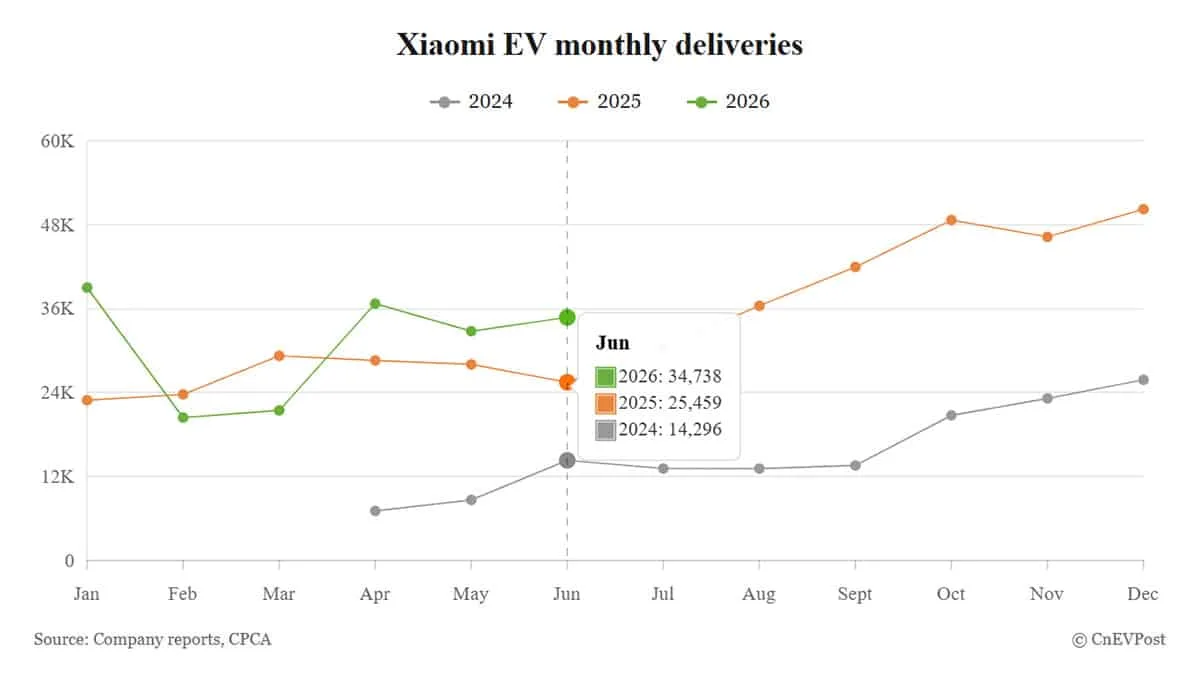
Xiaomi’s electric vehicle division delivered 34,738 cars in June, recording a 36% increase compared to the same month last year. This marks the third consecutive month the company surpassed 30,000 units in monthly deliveries, according to data from the China Passenger Car Association.
The surge was largely fueled by the YU7 SUV, which saw a nearly 64% month-over-month jump, breaking a five-month streak of falling deliveries. This rebound followed Xiaomi’s launch of two new YU7 variants in late May—a more affordable base model starting at approximately $34,340, and a high-performance YU7 GT featuring a 990-horsepower dual-motor system. The latter recently set a lap record for production SUVs at Germany’s Nürburgring Nordschleife, completing the circuit in 7 minutes and 22.755 seconds.

Despite this momentum, Xiaomi’s SU7 sedan continues to struggle. Deliveries of the SU7 declined 12% year-on-year and dropped over 15% from May, marking its ninth consecutive month of year-on-year declines. The model delivered just 20,414 units in June and faces significant pressure amid ongoing product transitions, with cumulative deliveries down by nearly half in the first half of the year.
Over the first six months, Xiaomi EV achieved a total of 185,055 deliveries, registering an increase of just over 17% annually. However, this pace remains well below the company’s full-year target of 550,000 units, which would require a sharp rise in monthly deliveries to approximately 60,000 for the rest of the year.
Strong sales performance is crucial for Xiaomi’s automotive segment, which posted an operating loss of 3.1 billion yuan in the first quarter. The YU7 currently serves as the pillar of the brand’s EV lineup, accounting for more than half of the company’s deliveries in the first half of 2026 with over 104,500 units. Xiaomi’s ability to meet its ambitious annual goal will depend heavily on continued product innovation and market reception to upcoming models.