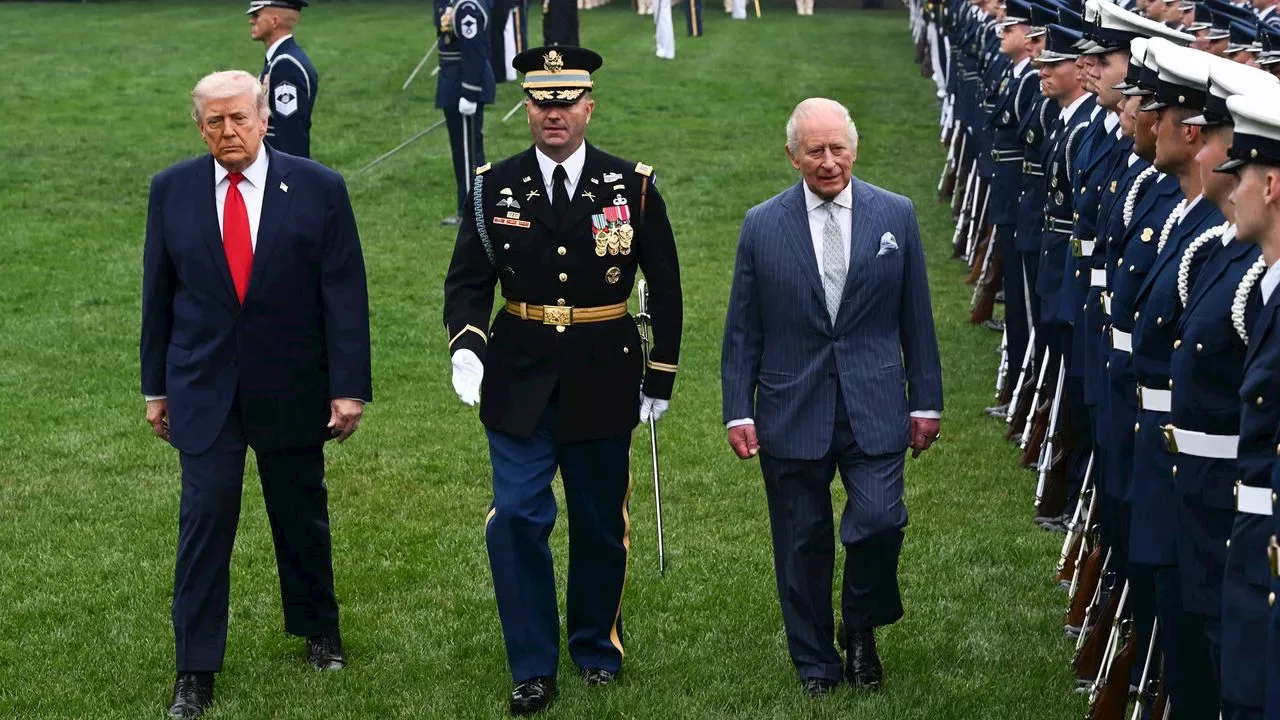
The royal welcome ceremony on the South Lawn of the White House took place in rainy conditions, with construction noise from an ongoing ballroom renovation audible throughout the event. American military units and bands marched in wet weather while a crane hovered overhead. President Trump, reviewing troops alongside the King, moved at a brisk pace, leaving Charles to trail slightly behind. Queen Camilla and First Lady Melania Trump sat together in white outfits as ceremonial cannonballs were fired through the smoke.
The visit arrived amid significant diplomatic friction. Peter Mandelson, Britain's most recent U.S. Ambassador, had been recalled following revelations about his connections to Jeffrey Epstein. Additionally, Prince Andrew, the King's younger brother, was arrested on suspicion of passing confidential briefings to Epstein while serving as a U.K. trade envoy. Prime Minister Keir Starmer faced questions about his political future amid the scandal. Trump has been critical of Starmer's policies, comparing him to Neville Chamberlain over disagreements on Iran strategy.
In his South Lawn remarks, Trump delivered an unusually elaborate speech emphasizing Anglo-Saxon heritage and the foundations of American liberty. "For nearly two centuries before the Revolution, this land was settled and forged by men and women who bore in their souls the blood and noble spirit of the British," he said. He added that "their veins ran with Anglo-Saxon courage, their hearts beat with an English faith." A senior administration official noted that the President connected "republican ideas and Anglo-Saxon heritage" as inseparable concepts.
The King's address to Congress the following day struck a markedly different tone. Charles spoke of shared values, the Founding Fathers as "bold and imaginative rebels with a cause," and the Magna Carta's establishment of checks and balances on executive power. He expressed support for Ukraine, NATO, and environmental preservation. The chamber offered sustained applause for these remarks, with nearly all members standing to cheer. Democrats and Republicans alike responded positively to his emphasis on democratic values.
The contrast between the two speeches did not go unnoticed. While Trump emphasized heritage and national strength, Charles focused on democratic principles and shared commitments. One Democratic congressman texted that he wished Trump "could think the same way" about values and common history. A British political editor offered a sharper reading, suggesting Charles had employed "woke diversity language" to appeal to Democrats opposed to monarchy.
At a state dinner that evening, Trump remarked that Charles "got the Democrats to stand," adding, "I've never been able to do that." The King toasted Trump's ongoing ballroom renovation with a light reference to 1814, when the British set the White House on fire. "The story of Britain and America," Charles said, "is one of reconciliation."