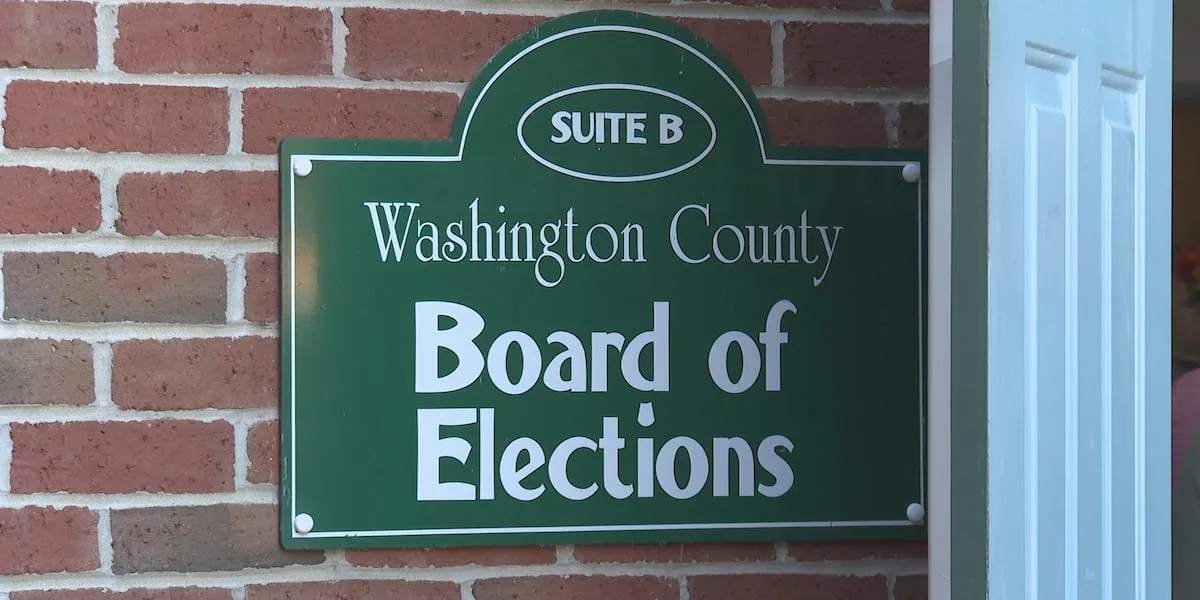
Democratic candidate Ron Kincaid and Libertarian candidate William Redpath have articulated starkly different approaches to governing as Ohio heads toward its May 5 primary election. Kincaid, who has spent years working in disability advocacy, and Redpath, a retired CPA with four decades in minor party politics, each offered distinct visions for addressing the state's challenges.
Kincaid centered his pitch on economic hardship, saying affordability remains the paramount concern he hears from voters. He proposed an American Dividend Plan funded by taxing businesses that automate jobs, arguing that automation-related taxes would generate revenue to benefit Ohioans affected by workforce displacement. "Businesses will replace workers, essentially competing with robots," Kincaid said. "They'll pay an employer tax for that automation, just like they used to on the employers. From that will benefit everyone else who's impacted, which is probably 99% of Ohioans."

On healthcare, Kincaid called for a not-for-profit public option that would set premiums based on income and negotiate prescription drug prices at Canadian levels. He characterized healthcare access as a fundamental right in a wealthy nation. He also proposed replacing Section 8 housing vouchers with direct cash assistance, citing a Philadelphia pilot program where direct payments resulted in an 80 percent higher rate of housing stability over two years.
Kincaid emphasized Ohio's potential for green energy manufacturing, citing Toledo and Pataskala as examples of regions capable of scaling solar production. He noted that entry-level green energy jobs offer starting wages of thirty dollars per hour and argued that domestic manufacturing capacity should be developed rather than ceding production to international competitors.
Redpath presented a fundamentally different agenda centered on fiscal restraint and reduced government involvement. He identified the war in Iran as the most pressing issue and stated he would work to strengthen congressional war powers and end U.S. funding for the conflict. On domestic spending, Redpath called for reductions across government and proposed eliminating the departments of education and housing and urban development.
Redpath characterized entitlements as "the elephant in the room" regarding government spending and said the nation faces a debt crisis unless spending is restrained substantially. He proposed establishing a commission similar to the Base Realignment and Closures Commission to recommend Social Security reforms, which would then receive a congressional up-or-down vote. For Medicare, he advocated converting the program into a cash assistance model in which recipients purchase their own insurance, arguing that increased out-of-pocket spending would make consumers more price-conscious and lower overall medical costs. Medicaid, in his view, should transition to state-run programs funded through federal block grants and be phased out entirely over a decade.
The Democratic primary also includes incumbent Senator Sherrod Brown, though he was unavailable for an interview. The Libertarian primary features candidate Jeffrey Kanter, whom the outlet could not reach for comment. Ohio voters will decide between these candidates on May 5.