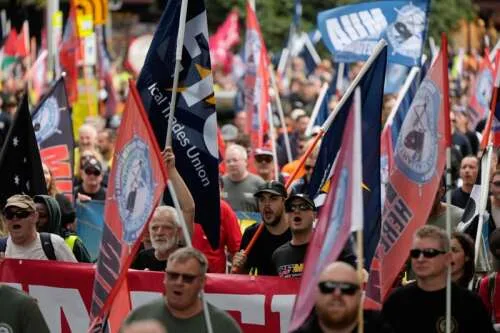
Protests erupted across major cities from Seoul to Paris on Friday as workers marked International Workers' Day with rallies focused on peace, wages, and rising living costs tied to the Iran war. Demonstrations took place in Sydney, Jakarta, Manila, Istanbul, Havana, Casablanca, and numerous European capitals, with participants calling for stronger labor protections and economic relief.
The European Trade Union Confederation, representing 93 trade union organizations across 41 European countries, issued a statement opposing what it described as the financial burden of conflict. "Working people refuse to pay the price for Donald Trump's war in the Middle East," the confederation said, adding that rallies demonstrated workers' resolve not to accept job losses and declining living standards.

In the Philippines, large crowds near the U.S. Embassy in Manila protested American involvement in the Iran conflict. Indonesian President Prabowo Subianto attended a rally in Jakarta where workers demanded government protection from rising prices and shortages of raw materials affecting key industries. In Morocco, taxi and bus drivers in Casablanca blocked traffic to protest surging fuel costs. Akherraz Lhachimi of the Moroccan Labor Union stated, "All my expenses have gone up, but my wages haven't budged."
Turkish police detained hundreds of demonstrators in Istanbul who attempted to march in restricted areas, including central Taksim Square. In South Africa, union leaders reported workers were "suffocating" under escalating costs for food, electricity, transport, and healthcare. Tens of thousands gathered in Havana's central square to celebrate Cuban workers and condemn U.S. sanctions, with President Miguel Díaz-Canel and former President Raúl Castro in attendance.
In France, the holiday carried heightened significance following a parliamentary debate over mandatory work closures on May Day, the country's only fully protected paid day off. A recent proposal to expand work privileges on the date prompted strong union opposition. Tens of thousands marched across France, including Paris, where brief clashes with police occurred.
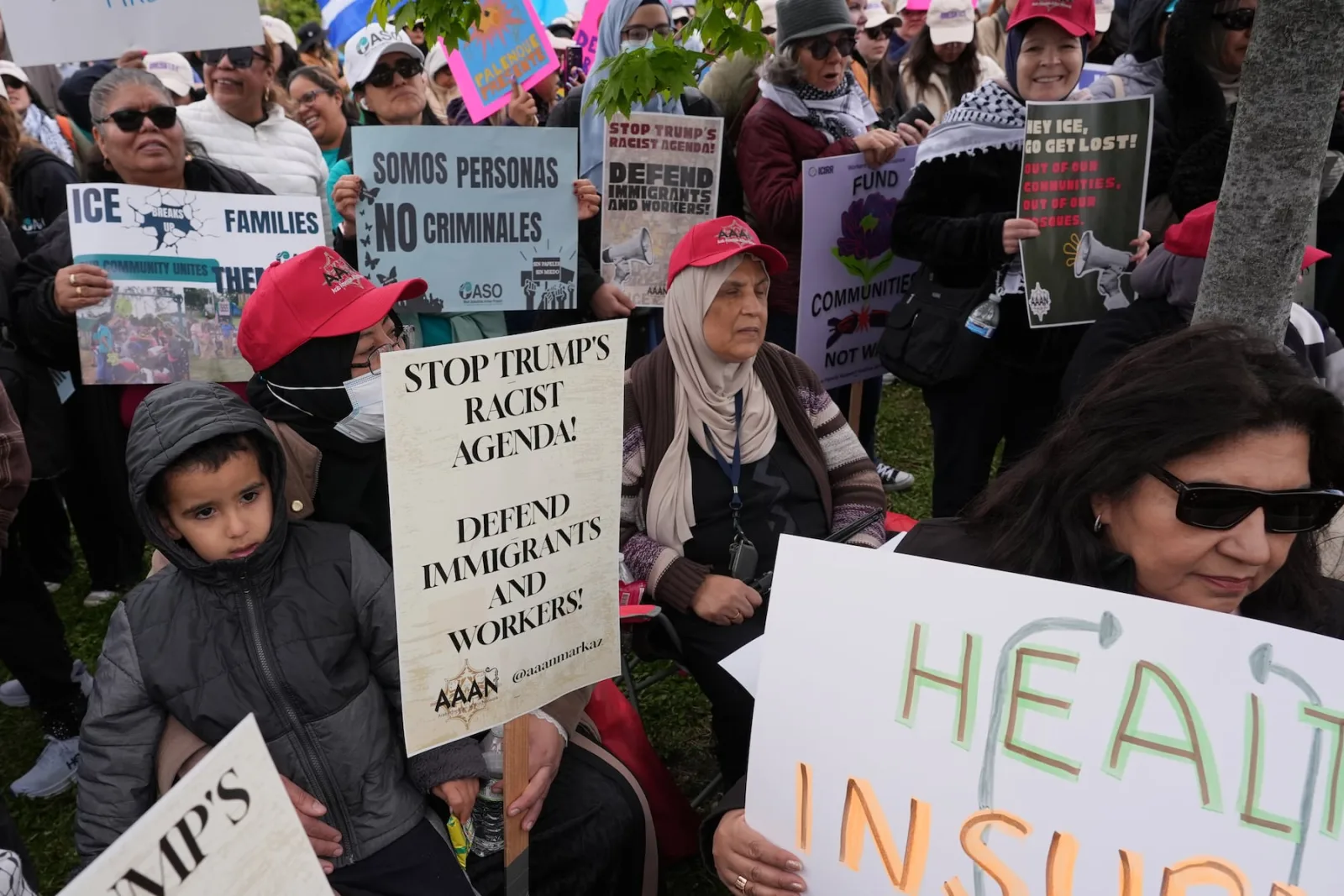
Within the United States, where May Day is not a federal holiday, the coalition May Day Strong organized nationwide protests under the theme "workers over billionaires." The movement called for an economic boycott through "no school, no work, no shopping" and demanded tax increases on the wealthy and an end to the administration's immigration enforcement actions. U.S. May Day activism has centered on immigration since 2006, when roughly 1 million people protested proposed legislation that would have criminalized unauthorized residency.
International Workers' Day traces its origins to 1886, when a Chicago labor rally demanding an eight-hour workday ended with a bomb explosion and police gunfire. Several labor activists, many of them immigrants, were convicted and four were executed. Unions subsequently designated May 1 to commemorate them.