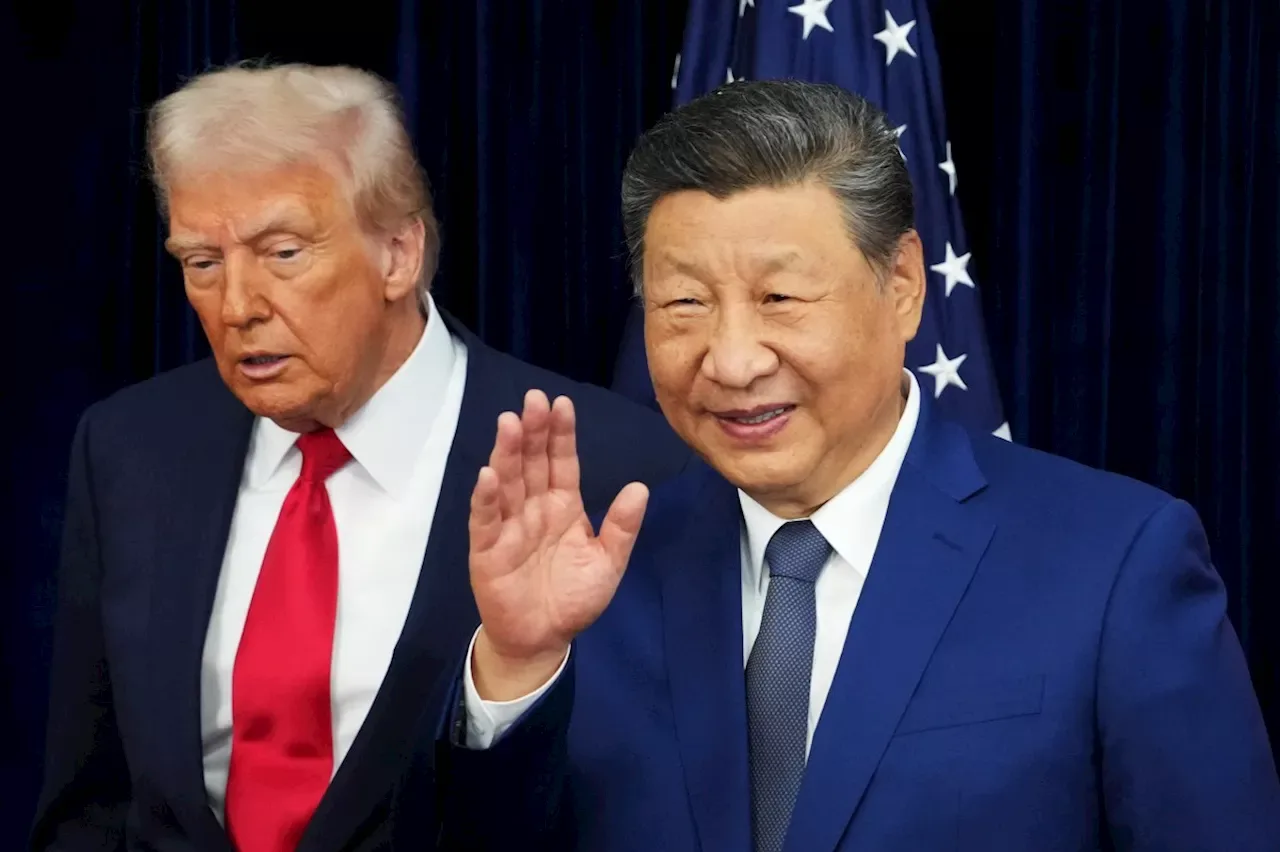
The upcoming meeting between President Donald Trump and Chinese President Xi Jinping comes as the administration pursues an ambitious agenda to bring manufacturing back to American soil. Yet experts and analysts warn that achieving resilience through trade does not require pulling all production within U.S. borders. Instead, a diversified supply chain strategy—combining selective reshoring, nearshoring, and partnerships with trusted allies—better serves national economic interests.
Trump's tariff campaign, which began in his first term and accelerated over the past year, has already reshaped global manufacturing patterns. Mexico has emerged as a strategic manufacturing hub, more than doubling its exports of technology products including data servers, motherboards, and data center components. Meanwhile, consumer technology imports from China have dropped from 45 percent in 2024 to 22 percent in 2025, suggesting tariffs have redirected rather than eliminated supply chains.

The economics of complete reshoring present significant obstacles. Shifting all consumer technology manufacturing back to the United States would require roughly $500 billion in direct investment over a decade and more than a tenfold increase in the manufacturing workforce—a scale widely viewed as impractical. The nation lacks the facilities, supplier ecosystems, and workforce capacity needed to manufacture consumer goods at competitive prices.
Critical minerals illustrate the limits of isolation. Chinese firms control between 60 and 90 percent of processing capacity for many materials, even when those materials are mined in the United States. Modern manufacturing depends on sourcing components from dozens of countries, assembled with precision and scaled to meet global demand. Recreating that ecosystem domestically at competitive costs remains unrealistic.
A balanced approach would combine targeted reshoring in critical sectors—such as advanced semiconductors—with strategic partnerships. Tariffs on parts and machine tools unavailable domestically harm American manufacturers, particularly small businesses operating on thin margins. Lower tariff rates and reduced nontariff barriers could better support American manufacturing competitiveness without sacrificing trade relationships.
The administration's focus on artificial intelligence innovation is strategically sound, but innovation requires access to markets, enforceable trade rules, and business predictability. The Stanford Institute for Human-Centered AI has noted that the United States faces growing difficulty attracting AI talent, highlighting the importance of immigration policy alongside trade policy. Expanding high-skill visas and creating pathways for STEM graduates to remain in America would strengthen the workforce needed for manufacturing expansion.
The Trump-Xi summit offers a chance to de-escalate tensions and establish more stable economic engagement. A practical framework built on Phase One agreements from 2020 could establish enforceable rules curbing unfair practices while maintaining the trade relationships American businesses depend on. Resilience, ultimately, comes from diversification—not isolation.