

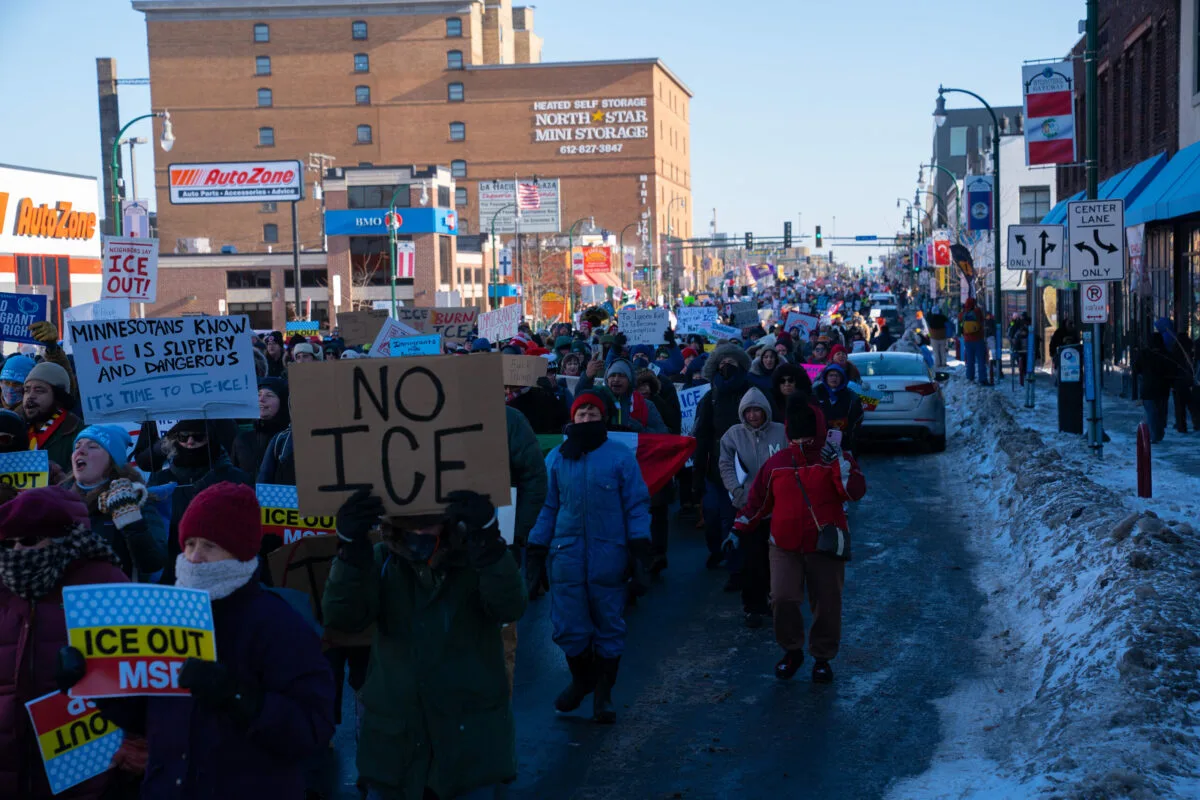
Minnesota’s leisure and hospitality industry has faced a steep decline in employment and hours worked amid a recent federal immigration enforcement operation known as Operation Metro Surge. According to a report by North Star Policy Action, a Minneapolis-based progressive, union-supported think tank, the crackdown resulted in an estimated loss of 4,600 jobs and 3.8 million working hours in this sector. This disruption translated to roughly $71 million in lost wages during the first quarter of the year.
The report highlights that workers who remained employed also experienced substantial reductions in hours—accounting for 2.6 million of the lost working hours—driven primarily by reduced demand and fear of repercussions under the increased immigration enforcement. The remaining 1.2 million lost hours correspond to jobs completely eliminated within the hospitality field, which includes restaurants and hotels, industries heavily reliant on immigrant labor.

North Star Policy Action constructed a “synthetic” version of Minnesota’s economy to estimate what employment and wages might have looked like without the federal enforcement surge. Their method compared real state data to this control model, revealing that Minnesota suffered the largest leisure and hospitality job decline among all U.S. states during the first three months of the year, with a 2.1% drop. In contrast, the nationwide leisure and hospitality sector grew slightly in the same period.
The report underscores that the greater impact came from cutbacks in working hours rather than outright job losses, signaling that many employees faced underemployment rather than unemployment. It also points out that leisure and hospitality workers tend to earn lower wages on average, explaining why the sizable job and hour losses translated into a lower overall wage impact compared to other industries.
January marked a particularly low point, with average weekly hours in Minnesota’s private sector hitting their lowest since at least 2007. Within leisure and hospitality, working hours reached their lowest since December 2022, nearing lows last seen during the initial COVID-19 shutdowns in spring 2020.