

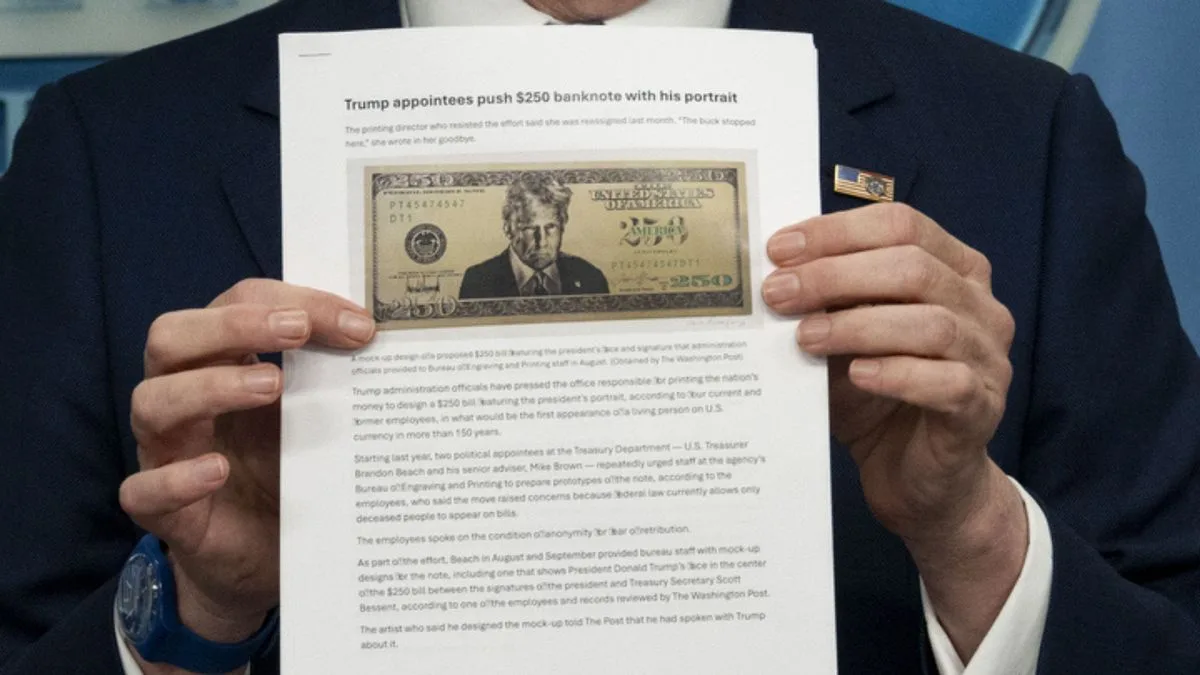
The former director of the Bureau of Engraving and Printing left her position under unclear circumstances after reportedly pushing back against plans to prepare prototypes for a controversial $250 bill bearing President Donald Trump’s image. Sources told The Washington Post that Patty Solimene was “involuntarily” reassigned following her refusal to move forward with the unauthorized production effort.
The Treasury Department has sought to distance itself from claims that Solimene was ousted specifically for opposing the new currency. A spokesperson emphasized that no staff were asked to print the bill before congressional approval, which remains pending. Federal law currently limits portraits on currency to deceased individuals, although legislation introduced in early 2025 would change this requirement, potentially allowing living figures like Trump to appear on new bills.

On the same day Solimene’s reassignment became public, Treasury Secretary Scott Bessent announced that Trump could soon be featured on a $250 bill, acknowledging the legal process underway. Despite lingering questions over the legality and timing of the Bureau’s preparations, the administration maintains it is following appropriate channels.
According to multiple anonymous employees cited by The Washington Post, political appointees, including Treasurer Brandon Beach and his senior adviser Mike Brown—now acting Bureau director—pressed staff to develop prototypes of the $250 note. Solimene reportedly communicated internally that her departure was not voluntary.
The story gained traction across social media platforms, with many users portraying Solimene’s reassignment as a direct consequence of standing up to the administration’s initiative. However, Solimene herself declined to comment publicly on the reasons for her exit.
This episode highlights tensions within the Treasury between career officials and political appointees amid efforts to alter longstanding rules on U.S. currency design. The proposed legislation, if passed, would mark a significant shift allowing living persons’ images on bills, a practice currently prohibited.