

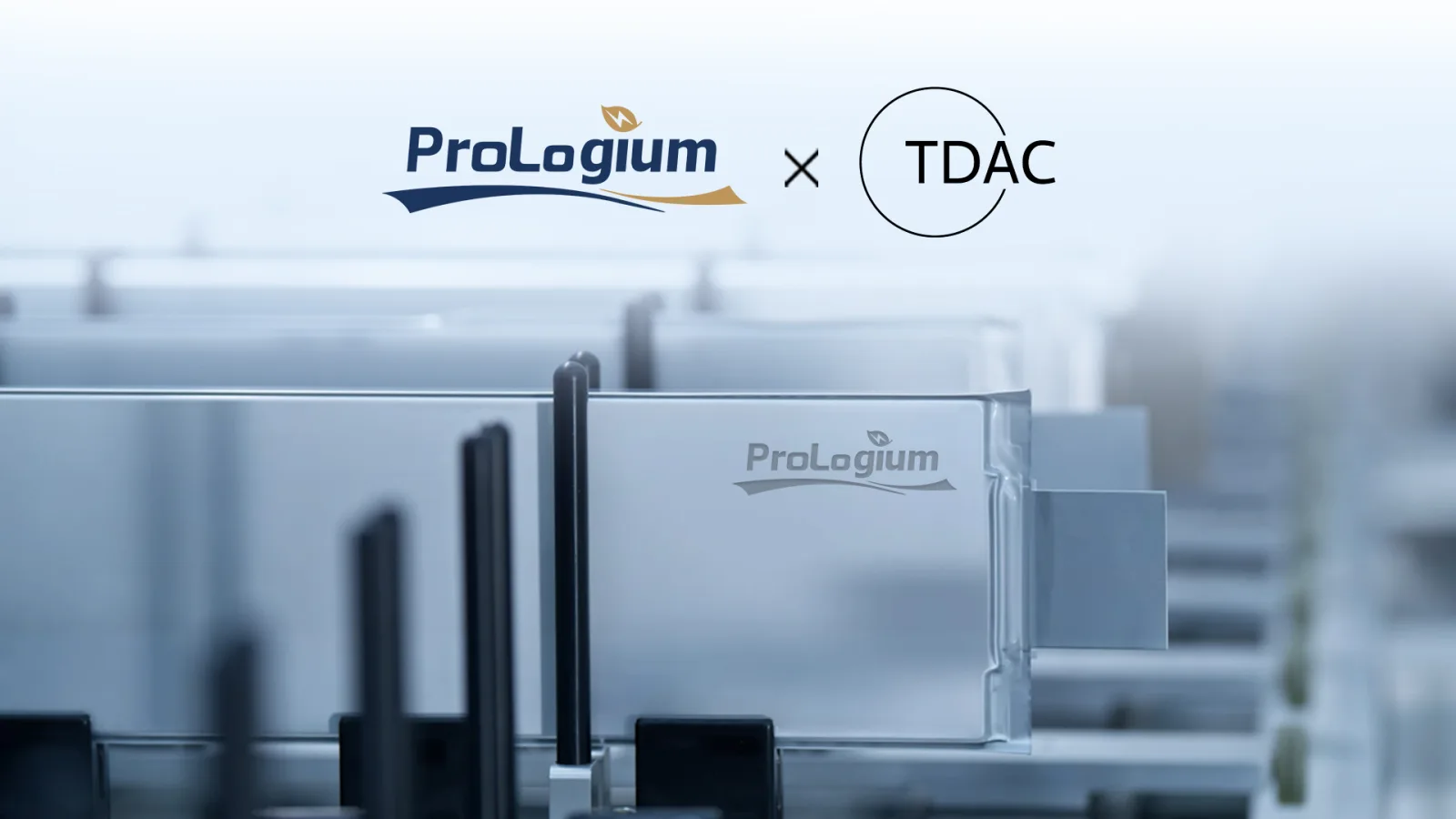
ProLogium, known as the first company to commercialize solid-state batteries with a fully ceramic separator, announced plans to go public through a merger with Translational Development Acquisition Corp., a special purpose acquisition company (SPAC). The deal, which values the company at approximately $3.8 billion, is expected to close in the latter half of 2026, with ProLogium’s shares trading under the ticker PRLG on Nasdaq.
This move is designed to fuel ProLogium’s next phase of growth by increasing production capacity and supporting the construction of a new factory in Dunkirk, France. The company has dedicated over two decades to developing solid-state batteries, transitioning from laboratory innovation to large-scale manufacturing. It also claims to be the only company globally to publicly demonstrate a mass-production line for solid-state batteries.

ProLogium recently introduced the first all-inorganic, superfluidized solid-state lithium ceramic battery, a cutting-edge iteration of its technology. These batteries boast significant advantages over conventional lithium-ion designs, particularly higher energy density and enhanced safety. Independent testing rated ProLogium’s advanced batteries at 360 watt-hours per kilogram, about 50% above typical lithium-ion cells. This increased energy density enables lighter battery packs or more power within the same footprint, benefiting electric vehicles, robotics, and other energy-demanding applications.
Safety is a critical factor in solid-state battery development. UL Solutions ARC tests demonstrated that ProLogium’s batteries successfully avoided thermal runaway during the stringent Heat-Wait-Seek procedure, highlighting their chemical stability under stress. Such performance suggests these batteries could provide longer ranges for electric vehicles, more compact energy storage solutions, and more reliable power delivery in critical infrastructure like data centers.
The company’s expansion aligns with growing industry interest in alternatives to conventional lithium-ion batteries, which face limitations in energy density and safety. By scaling production and advancing its innovative designs, ProLogium aims to contribute to safer and more efficient power technologies across multiple sectors.