

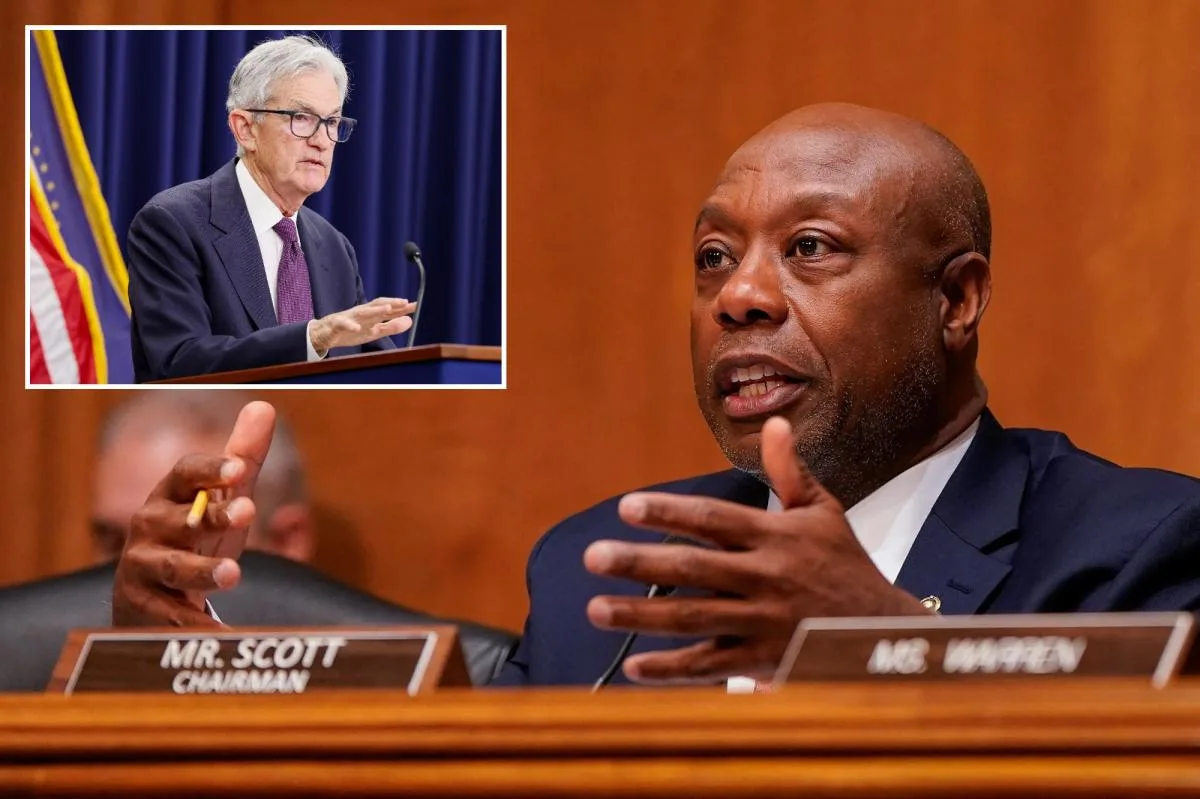
Senator Tim Scott has publicly voiced his wish for Jerome Powell to step down from his role as Federal Reserve chairman when his current term ends this month. Speaking at the Milken Institute conference, Scott described relying on prayer as he contemplates Powell’s future, while also suggesting the chairman might be deliberately defying the president’s preferences.
Scott indicated that Powell’s decision to remain at the Fed as a governor until 2028—legally permitted—could signal resistance to the incoming Fed chief nominee, Kevin Warsh, who has criticized Powell’s approach. Warsh, favored by former President Trump, is expected to reverse key policies implemented under Powell, including the Fed’s focus on environmental, social, and governance (ESG) factors and its enlarged balance sheet.

The tension surrounding Powell extends to controversy over the Fed’s expensive headquarters renovation, a subject Scott raised during a Senate Banking Committee hearing in 2025. The $2.5 billion project, which included unconventional features like a beehive garden on the roof, drew scrutiny for its high cost and perceived extravagance. Powell’s dismissive responses during the hearing triggered a Department of Justice investigation into his management of the project.
A deal brokered by Jay Clayton, the Manhattan U.S. Attorney and former SEC chair, helped ease the political standoff by shifting the investigation from criminal prosecution to an oversight review by the Fed inspector general. This compromise convinced Senator Thom Tillis to advance Warsh’s nomination out of committee. However, Powell’s decision to stay on the Federal Reserve Board of Governors despite ongoing concerns indicates possible friction ahead.
Scott emphasized that while he does not believe Powell engaged in criminal activity, some within the administration suspect negligence surrounding Powell’s testimony and the handling of the renovation project’s budget overruns. The unfolding confrontation over leadership at the Federal Reserve highlights broader debates about the direction of U.S. monetary policy and regulatory priorities in the years to come.