

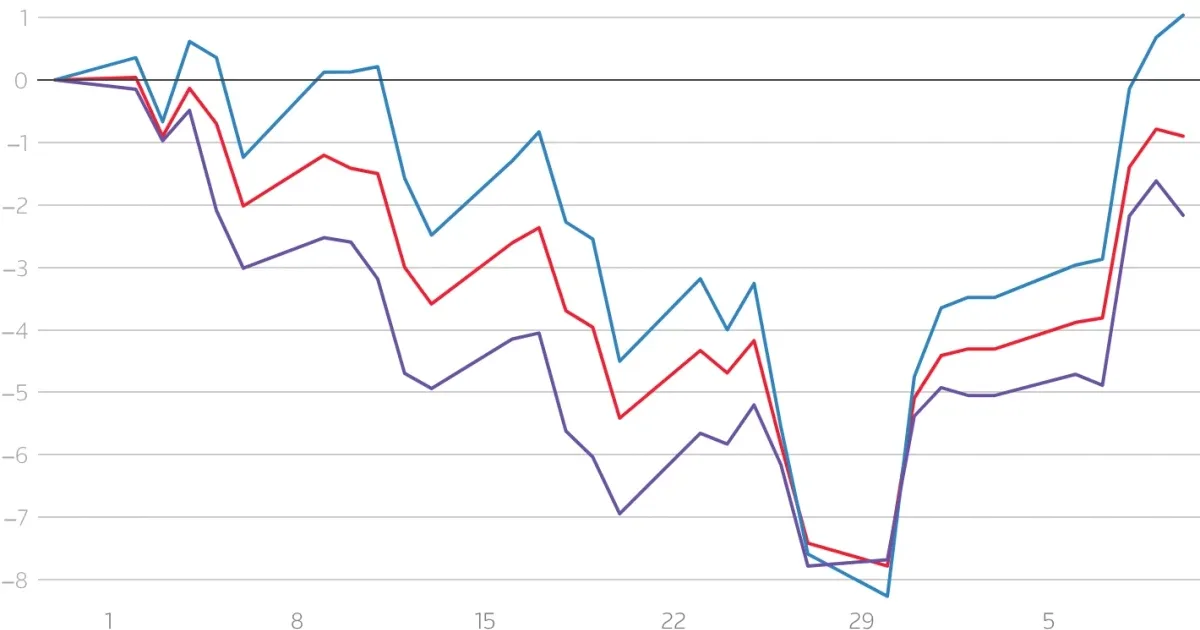
U.S. stock futures fell as investors navigated conflicting signals from tentative progress in Iran nuclear negotiations and looming inflation figures critical to monetary policy decisions. Futures for the S&P 500 dropped half a percent, Nasdaq-100 futures lost 0.6%, and Dow futures declined by 187 points, reflecting uncertainty about whether easing geopolitical tensions will outweigh inflation-driven risks.
The negotiations between the U.S. and Iran have advanced with mediators from Qatar and Pakistan announcing an agreed roadmap toward a final deal within 60 days. This development pressured Brent crude prices down to just above $80 per barrel, though U.S. West Texas Intermediate crude edged higher near $77.50. Oil price fluctuations continue to reflect the fragile state of the talks and the broader implications for energy markets.

Global equity markets showed divergent movements alongside these developments. Japan’s Nikkei surged nearly 2% to a record level, and South Korea’s Kospi gained over 1%, while Hong Kong’s Hang Seng experienced a significant decline of more than 1.7%. Mainland China’s CSI 300 rose modestly. This split highlights how investors remain sensitive to both potential relief from lower oil prices and the ongoing risk of disruptions—particularly in strategic oil transit routes like the Strait of Hormuz—that could sustain inflationary pressures.
At the core of investor concern is the May personal consumption expenditures (PCE) price index, the Federal Reserve’s preferred gauge of inflation, due later this week. Recent consumer price reports revealed core inflation exceeding the Fed’s 2% target, reinforcing expectations for potential interest rate hikes. Markets currently anticipate a possible increase as soon as October, meaning a stronger-than-expected PCE report could accelerate tightening measures, which would impact mortgage rates, borrowing costs, and stock valuations.
Market sensitivity to geopolitical events has been pronounced. Earlier volatility saw sharp declines following political tensions with Iran, with the Dow tumbling nearly 1,000 points and oil prices spiking above $90 a barrel. Conversely, hopeful announcements about a nuclear deal led to steep drops in oil prices and rebounds in equity markets, underscoring how closely intertwined the sectors remain.
The coming inflation report stands as a critical test for investors weighing easing geopolitical risks against the prospect of tighter economic policy. The balance between these forces will likely determine near-term trends for equity markets, energy prices, and consumer financial conditions.