

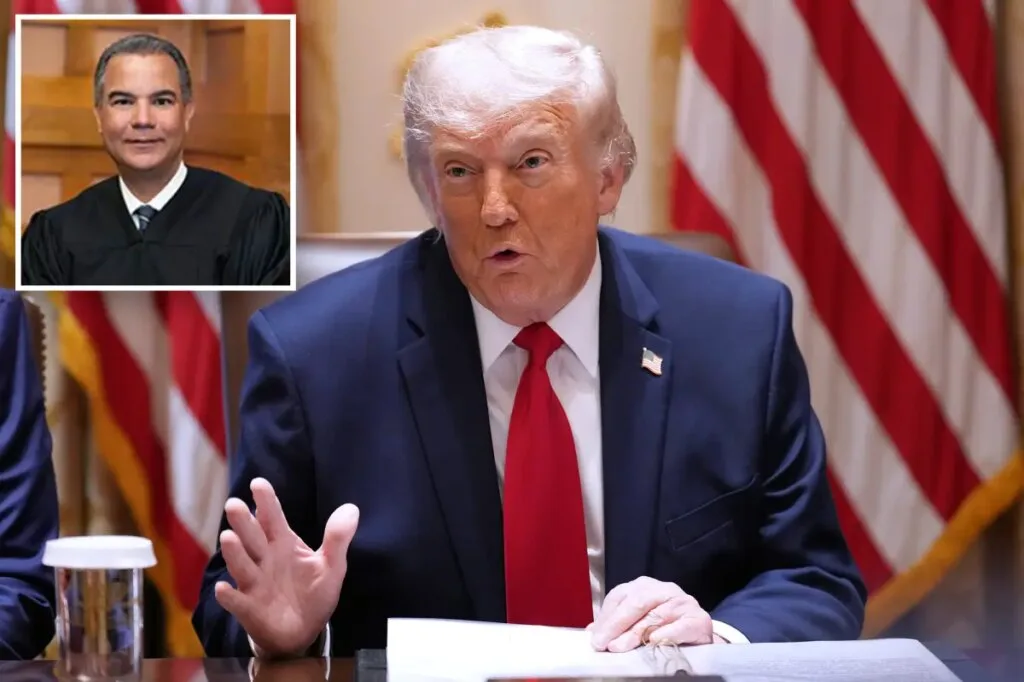
Former President Trump clashed with a federal judge after a ruling compelled his administration to remove his name from the Kennedy Center’s façade. The judge, Christopher Cooper, a District Court judge appointed during the Obama administration, decided that only Congress holds the authority to change the center’s name, setting a deadline for the administration to comply.
The controversy intensified after reports revealed that Judge Cooper’s wife, Amy Jeffress, serves as President Joe Biden’s personal lawyer. Trump highlighted this connection, accusing the judge of bias and alleging a conflict of interest. He branded Cooper a “Trump hating judge” and described Jeffress as an “anti-Trump hater” currently involved in legal matters protecting Biden, specifically related to Biden’s efforts to withhold audio recordings connected to a classified documents investigation.

Judge Cooper additionally halted plans to close the Kennedy Center for two years unless its board formally reviews the closure evidence. Trump, however, called the closure “necessary,” citing the building’s deteriorating condition, including damaged marble and structural concerns. Despite the ruling, Trump indicated he may consider permanently shuttering the center, which was designated as a living memorial to John F. Kennedy.
The Kennedy Center announced its intention to contest the judge’s decision. Meanwhile, reports surfaced that Trump has handed control of the center over to Congress. The revelation of the judge’s marital relationship to a senior Biden legal adviser followed previous media coverage revealing Amy Jeffress’s involvement with Biden’s legal team and past work for the House Select Committee investigating the January 6 Capitol riot.
Trump also targeted former FBI attorney Lisa Page, whom Jeffress had represented, calling her a “dirty cop” in line with his broader critique of individuals he associates with efforts against him. The dispute over the Kennedy Center’s naming encapsulates the ongoing tension between the former president’s political legacy and federal institutions.