

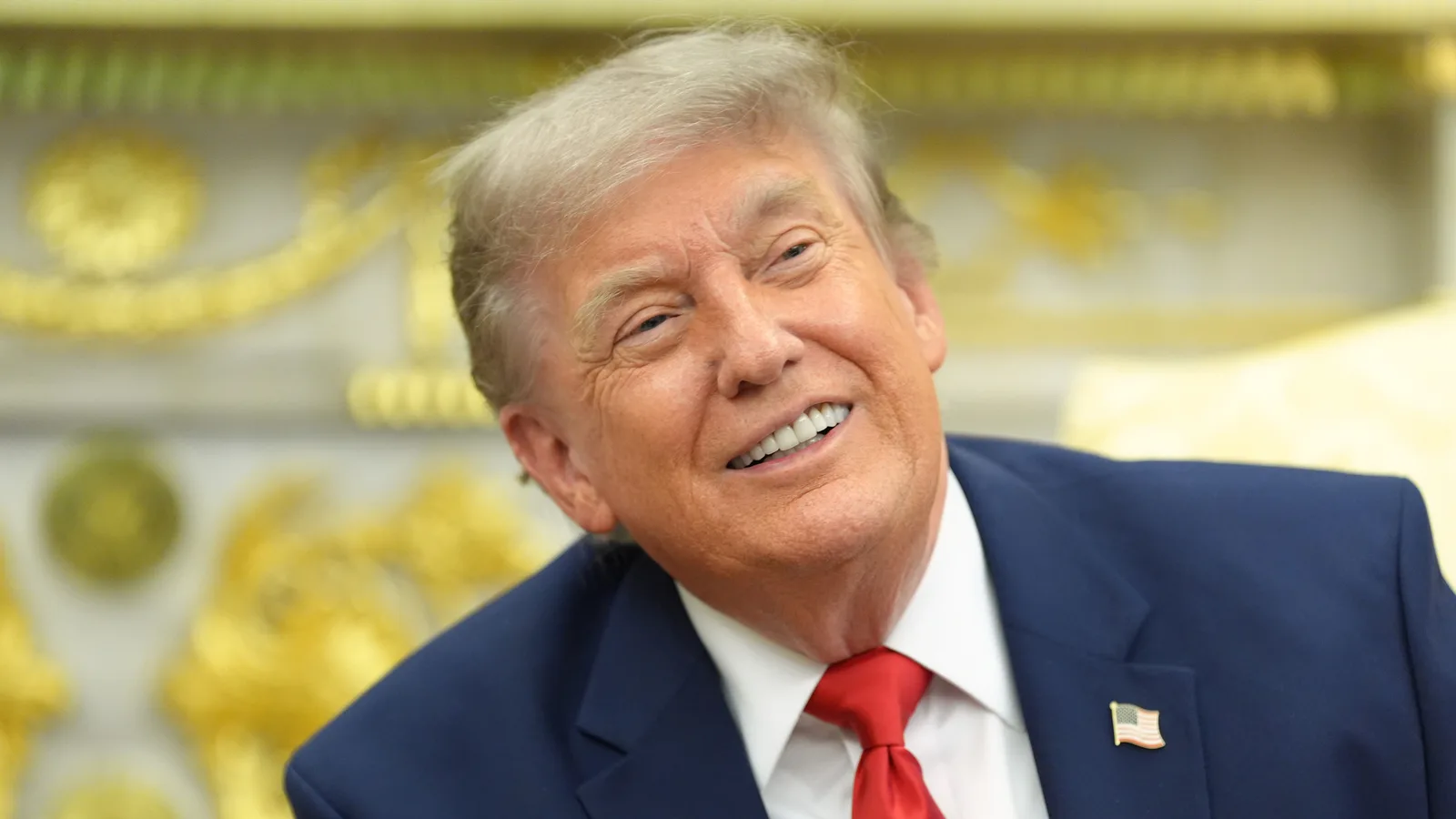
President Donald Trump rang the opening bells for the New York Stock Exchange and Nasdaq from the Oval Office, underscoring his effort to link his administration’s success to recent stock market gains. This symbolic act reflects Trump's strategy to shift public focus to the strong performance of investment accounts ahead of the looming midterm elections.
Despite surging inflation, which has dented his approval ratings, Trump has urged Americans to consider their 401(k) investments as evidence of economic progress under his leadership. Treasury Secretary Scott Bessent highlighted the launch of Trump Accounts, a new investment vehicle aimed at expanding stock ownership among Americans, particularly children, as part of the 2025 Republican tax and spending bill.

The Trump Accounts program seeks to address the fact that a significant portion of American adults remain disconnected from the stock market. Bessent pointed out that nearly 40% of Americans do not own stocks, a situation the administration wants to reverse over time with these accounts as a catalyst.
Market data underscore mixed economic fortunes. The S&P 500 index delivered strong returns in recent years, with double-digit gains since 2023, including a notable 17.9% increase in 2025. However, much of this growth followed years under President Joe Biden’s administration. This year, the stock market has continued to advance but more modestly.
Meanwhile, inflation remains a persistent challenge. Since Trump began his second term in early 2025, consumer prices have risen by more than 4%, climbing from 3% at the term’s start. The inflationary pressures partly stem from previous tariff policies and geopolitical events, such as the war in Iran—factors that complicated Trump's early pledges to reduce living costs.
Trump’s focus on market gains serves as a counterweight to the shrinking public confidence in his economic management. According to recent polling, only about one-third of U.S. adults approve of his economic leadership, signaling that the stock market rally alone may not suffice to sway voters this fall.