

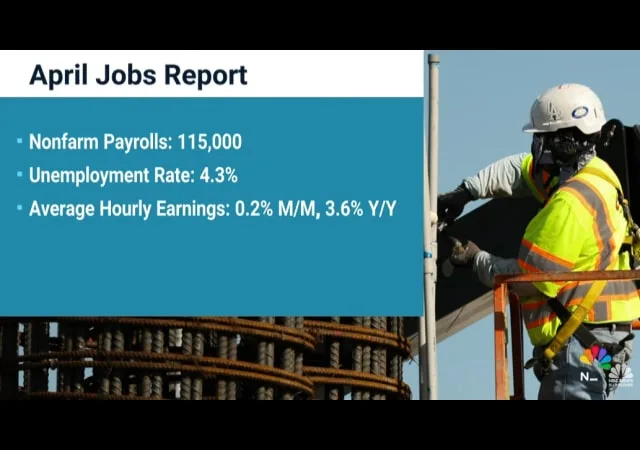
The U.S. economy expanded its workforce by 115,000 jobs in April, exceeding expert forecasts that predicted around 55,000 new positions. This robust job creation spanned various sectors, highlighting a broad-based improvement in hiring activity.
Health care led the gains with an increase of 37,000 jobs, followed by transportation and warehousing with 30,000 new hires. Retail trade saw a boost of 22,000 positions, while social assistance added 17,000 jobs. Despite these gains, the federal government continued to shed employees, losing 9,000 jobs in April and tallying a significant decline of 348,000 jobs since October 2024, representing an 11.5% reduction in federal employment.

In contrast to sectors with solid growth, others showed minimal change. Employment in mining, quarrying, oil and gas extraction, construction, manufacturing, wholesale trade, financial activities, professional and business services, leisure and hospitality, and other services largely remained flat. The information sector experienced a drop of 13,000 jobs. These figures reflect mixed dynamics across industries despite the overall positive monthly jobs report.
Monthly revisions to previous employment data provided additional context. The Bureau of Labor Statistics adjusted March’s job growth upward by 7,000 to 185,000. However, February saw a downward revision from a loss of 133,000 to 156,000 jobs, indicating that combined employment for February and March was slightly lower than initially reported by approximately 16,000 jobs.
Meanwhile, the unemployment rate held steady at 4.3%, suggesting that the labor market remains relatively stable. Nevertheless, broader economic sentiment may be tempered until inflationary pressures, particularly high gas prices, ease. Ongoing geopolitical tensions and policy uncertainties continue to influence economic outlooks.