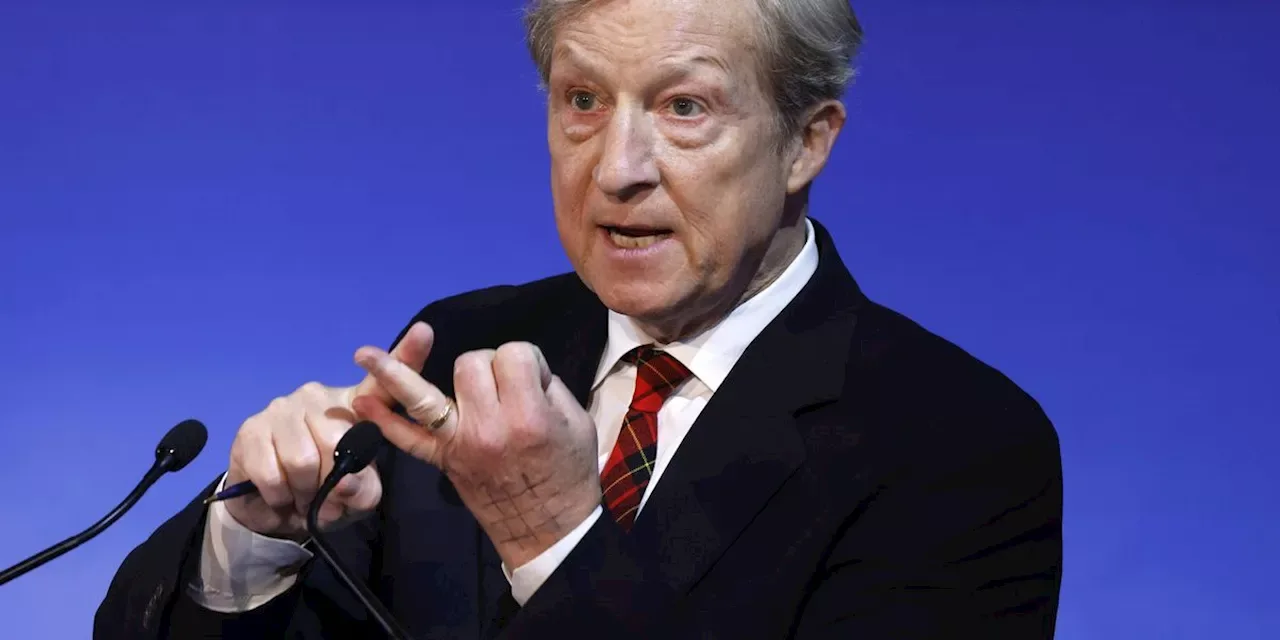
Jeff Cohen, a progressive activist and former journalism professor, has reversed his usual approach to Democratic candidates by endorsing Tom Steyer, a billionaire hedge fund manager turned environmental advocate running for California governor. Cohen, who founded the media watchdog group FAIR and served as an associate professor at Ithaca College, typically opposes Democratic candidates who dominate television airwaves through lavish corporate funding. Steyer, however, has broken that pattern by self-funding his campaign to the tune of $130 million with substantive progressive advertising.
The advertisements backing Steyer have called for taxing the wealthy, breaking up utility monopolies, and standing against fossil fuel interests—positions Cohen describes as comparable to those of Bernie Sanders. One featured Rep. Ro Khanna discussing single-payer healthcare for California, while another criticized the Democratic Party establishment and AIPAC for insufficient opposition to war with Iran. These messaging choices prompted Cohen to engage in dialogue with progressive activists, journalists, and organizational leaders across California, most of whom reached similar conclusions about Steyer's viability as a candidate.

Cohen acknowledges his deep skepticism toward billionaires and the financial speculation elite, stating he remains uncertain whether someone of Steyer's wealth can genuinely understand and fight for working-class interests. Nevertheless, he frames his support as a pragmatic choice in California's political landscape, where corporate influence has stalled universal healthcare legislation despite Democratic legislative majorities since 2011. Single-payer healthcare bills passed the state legislature in 2006 and 2008 under Republican Gov. Arnold Schwarzenegger, who vetoed them both, but have failed to reach the governor's desk since Democrats took control.
Steyer's unequivocal backing of CalCare universal health coverage has earned endorsements from Rep. Ro Khanna and the California Nurses Association. He also supports the California Billionaire Tax Act, a ballot initiative that would impose a one-time emergency tax on the state's 200 wealthiest individuals to fund healthcare. This position distinguishes him from Gov. Gavin Newsom and other wealthy figures such as Google executives Sergey Brin and Eric Schmidt, who oppose the measure.
The race has intensified with negative advertising from corporate interests accusing Steyer of corporatism and profiting from his hedge fund's past investments in fossil fuels and private prisons. California's DISCLOSE Act requires top funders of campaign ads to be identified on screen. Steyer faces competition from Xavier Becerra, the former US Secretary of Health and Human Services, who has received maximum campaign donations from Chevron and, according to KQED public radio, has bent toward private healthcare interests.
California's June primary will likely narrow the Democratic field to one candidate who will face a Republican—potentially Steve Hilton, a former Fox News contributor endorsed by Trump. Cohen frames the central question as whether Steyer would prove to be an effective advocate against corporate power if elected, drawing a parallel to Franklin Roosevelt's willingness to confront wealthy interests.