

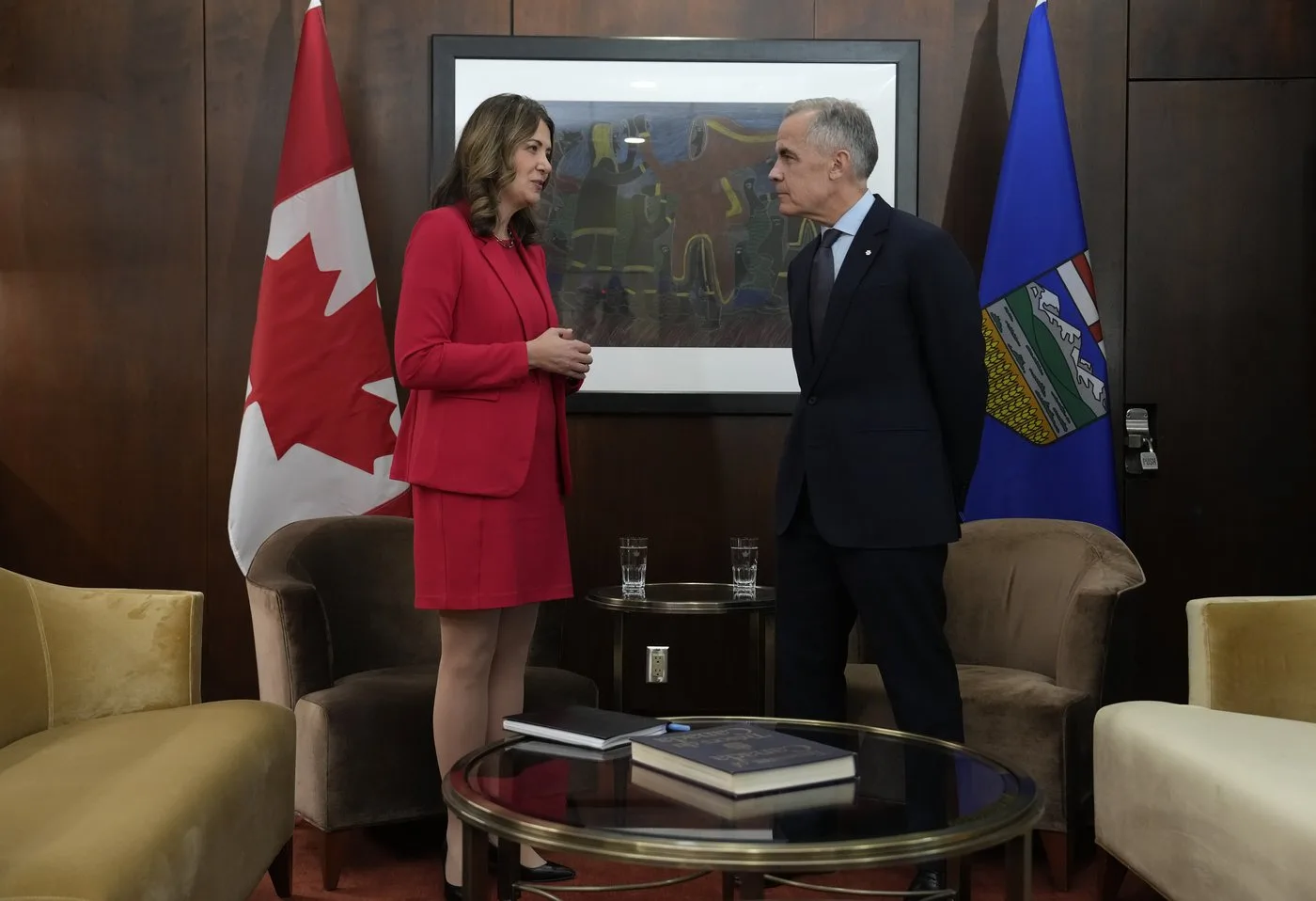
Alberta is poised to increase its industrial carbon emission price as part of a forthcoming agreement between Prime Minister Mark Carney and Alberta Premier Danielle Smith. The deal, expected to be announced in Calgary, will raise the province’s carbon price to $100 per tonne by 2027, ultimately reaching $130 per tonne by the mid-2030s. This plan marks a significant step toward advancing a major bitumen pipeline to the West Coast, a project linked to ongoing federal-provincial negotiations.
The pricing framework differentiates between the headline carbon price—paid by companies directly to the Alberta government—and the effective carbon price, which is determined by the market price of emission credits traded between firms. While the headline rate will reach $100 per tonne in the near term, the effective price, reflecting the actual cost of compliance through carbon credit transactions, is expected to approach $130 per tonne by 2040. Funds collected will support investments in emissions reduction technologies.

This development follows last year’s halt to Alberta’s industrial carbon price at $95 per tonne, signaling a renewed provincial willingness to cooperate with federal environmental objectives. The initial memorandum of understanding between Ottawa and Alberta included this carbon pricing adjustment as part of a broader strategy to facilitate pipeline construction and improve federal-provincial relations. Premier Smith framed the agreement as a “reset” in engagement with Ottawa.
The federal government faces legal obligations stemming from a 2021 court ruling mandating equitable treatment of carbon pricing across provinces. Alberta’s commitment to a higher carbon price could prompt Ottawa to offer more flexible terms to other provinces that adhere to the federal benchmark, a sensitive balance given regional economic disparities.
Industry leaders have offered mixed reactions. Some argue the federal carbon policy undermines Canada’s competitiveness against oil-exporting countries lacking similar levies. However, executives like ATCO’s chief executive have expressed confidence that industries can adapt and even benefit from stronger carbon pricing, highlighting potential opportunities in technological innovation and emissions reduction.
Not all voices are supportive. Former federal environment minister Catherine McKenna criticized the new schedule, describing it as a dismantling of Canada’s climate strategy due to pressure from Alberta’s leadership and the oil and gas sector. She emphasized concerns about allowing oil and gas companies to pollute without facing sufficient financial consequences, reflecting ongoing tensions in balancing economic and environmental priorities.