

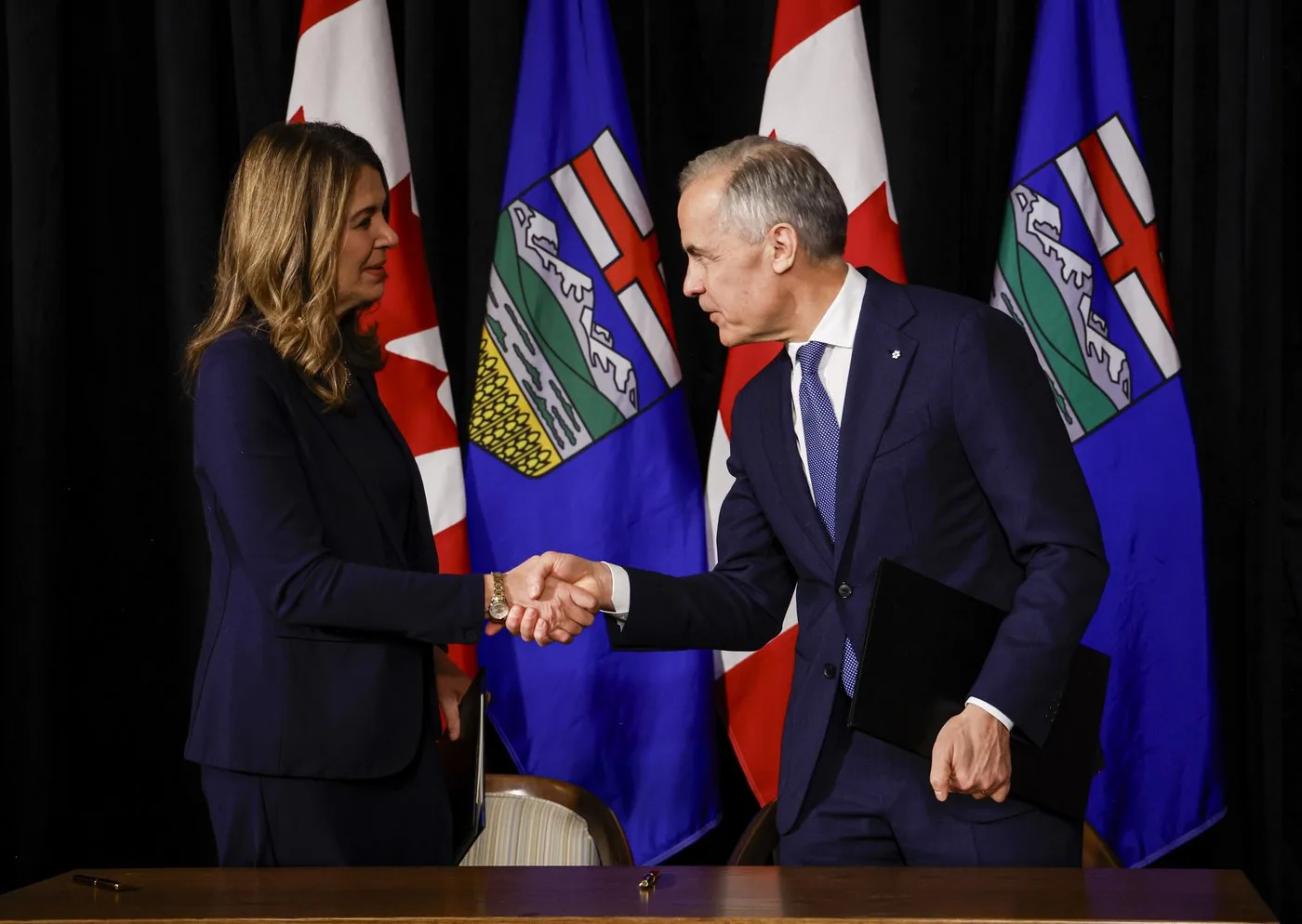
The recent energy agreement between Alberta and the federal government is unlikely to drive significant reductions in Canada’s greenhouse gas emissions, according to a study released by the Canadian Climate Institute. The report warns that changes to Alberta’s industrial carbon pricing framework could allow industries to emit more than previously capped, undermining efforts to curb emissions.
The agreement, which sets a gradual increase in Alberta’s carbon price to $100 per tonne by 2027 and $130 per tonne by 2035, introduces more lenient “stringency rates”—the permitted emissions limits for industries under the carbon pricing system. These relaxed limits effectively provide industries with more room to emit, offsetting the intended environmental benefits of the higher carbon price.

The study’s lead economist pointed out concerns about how the new system may fail in its core objective. Despite setting a higher floor price for carbon credits, the leniency in emissions limits could produce an oversupply of low-cost credits. This surplus risks decoupling carbon prices from actual emission reductions, as industries accumulate credits through "paper compliance" rather than investing in meaningful emissions-cutting measures.
Under the current design, industries can outperform their emission targets early on, stockpiling credits that suppress market prices and erode the financial incentives needed to drive cleaner technologies. This situation could persist beyond 2030, weakening the carbon market's role in accelerating decarbonization.
Moreover, the federal government has refrained from enforcing the previous, more stringent federal carbon pricing standard in Alberta. Instead, Ottawa promotes the new model as stronger, emphasizing its influence on Alberta's carbon credit market. However, the report argues that without mechanisms to address credit oversupply, such as market interventions or credit purchases to create scarcity, Alberta's system may fall short of delivering tangible emissions cuts.
While speculative proposals like Ottawa buying credits to reduce market surplus have been mentioned, no concrete plans have emerged. How both levels of government intend to handle this oversupply remains uncertain, leaving open questions about the future effectiveness of Alberta’s emissions strategy.