

The energy agreement between Ottawa and Alberta, designed to tighten industrial carbon pricing in the province, is expected to have minimal impact on reducing Canada’s greenhouse gas emissions, according to a study published by the Canadian Climate Institute. Despite intentions to raise Alberta’s effective carbon price to $130 per tonne by 2040, the deal relaxes industrial emission stringency rates, allowing companies to emit more than under previous rules.
This leniency in emission limits, known as stringency rates, undermines the core objective of carbon pricing: encouraging industries to invest in emission-cutting technologies rather than relying on carbon credits. The study highlights that Alberta’s new system will likely produce an oversupply of low-cost carbon credits beyond 2030 as businesses easily outperform their emission benchmarks until then, enabling significant accumulation of credits instead of actual emissions reductions.

While the headline carbon price in Alberta will increase to $100 per tonne by 2027 and further to $130 per tonne by 2035, the effective market prices for carbon credits—what companies actually pay—may stall below these floors, diluting incentives for meaningful climate action. The report warns that maintaining carbon price floors without ensuring corresponding emissions cuts results in “paper compliance” where industries meet targets on paper but do not drive substantial environmental benefits.
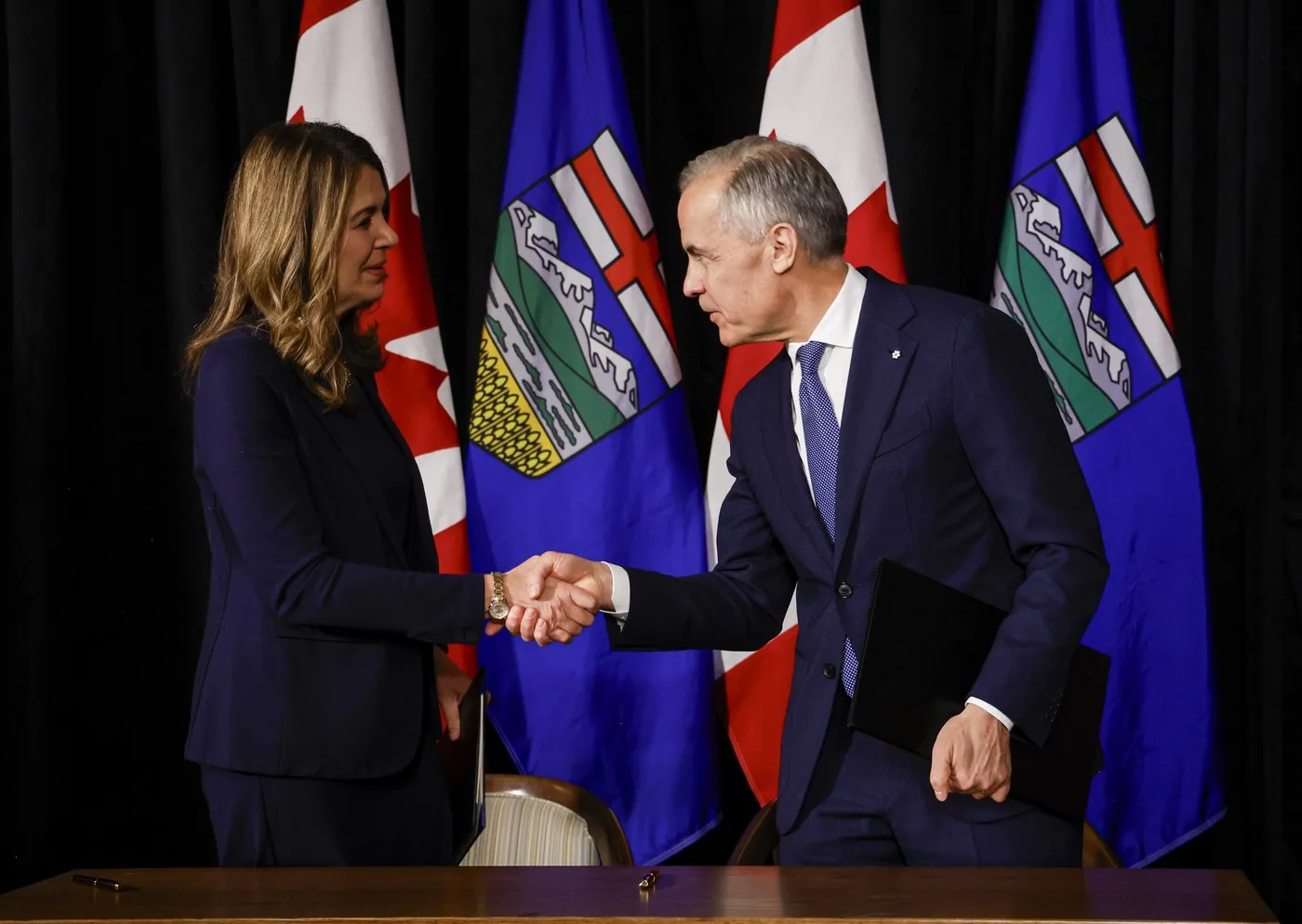
The federal government, represented by Prime Minister Mark Carney, and Alberta Premier Danielle Smith agreed to implement this industrial carbon pricing structure last month. Ottawa promotes the new framework as stronger than the previous federal backstop, although analysts note it is less stringent and more accommodating to industry emissions. The federal backstop was a benchmark carbon pricing system applied where provinces did not meet national standards.
The Canadian Climate Institute’s principal economist, Dave Sawyer, who authored the study, emphasized the need to reevaluate the agreement’s design, especially the stringency rates that determine how much industries can realistically emit without penalty. He suggested the current levels risk undermining the system’s effectiveness by permitting too much emissions flexibility.
As an eventual response to the credit surplus, Prime Minister Carney mentioned the possibility of the government purchasing excess carbon credits to create scarcity and drive prices up, although this approach has met some skepticism and was reportedly reconsidered. The mechanism for managing the expected oversupply remains uncertain, posing challenges for the system’s credibility and environmental goals.