

Armenia stands at a potential crossroads as its parliamentary elections approach, with Prime Minister Nikol Pashinyan’s Civic Contract party seeking to consolidate power and accelerate a strategic pivot away from Moscow. A victory for Pashinyan is widely seen as a step toward the final decoupling of Armenia’s traditionally close political and economic ties with Russia.
In the tense pre-election atmosphere, Russia has issued stark warnings that it may halt or curtail key energy and resource supplies—such as natural gas, petroleum products, and rough diamonds—if Yerevan continues pursuing EU integration. These threats underscore Moscow’s intent to maintain leverage over Armenia, which remains heavily dependent on Russian energy imports.

Russian officials, including Dmitry Medvedev, have publicly stated that Armenia risks exclusion from both the Russian market and the broader Eurasian Economic Union (EAEU) should it persist on Pashinyan’s reformist path. Earlier, President Vladimir Putin emphasized the preferential price at which Russia sells gas to Armenia, contrasting it with soaring European prices, signaling that Armenian alignment with the EU could jeopardize this energy advantage.
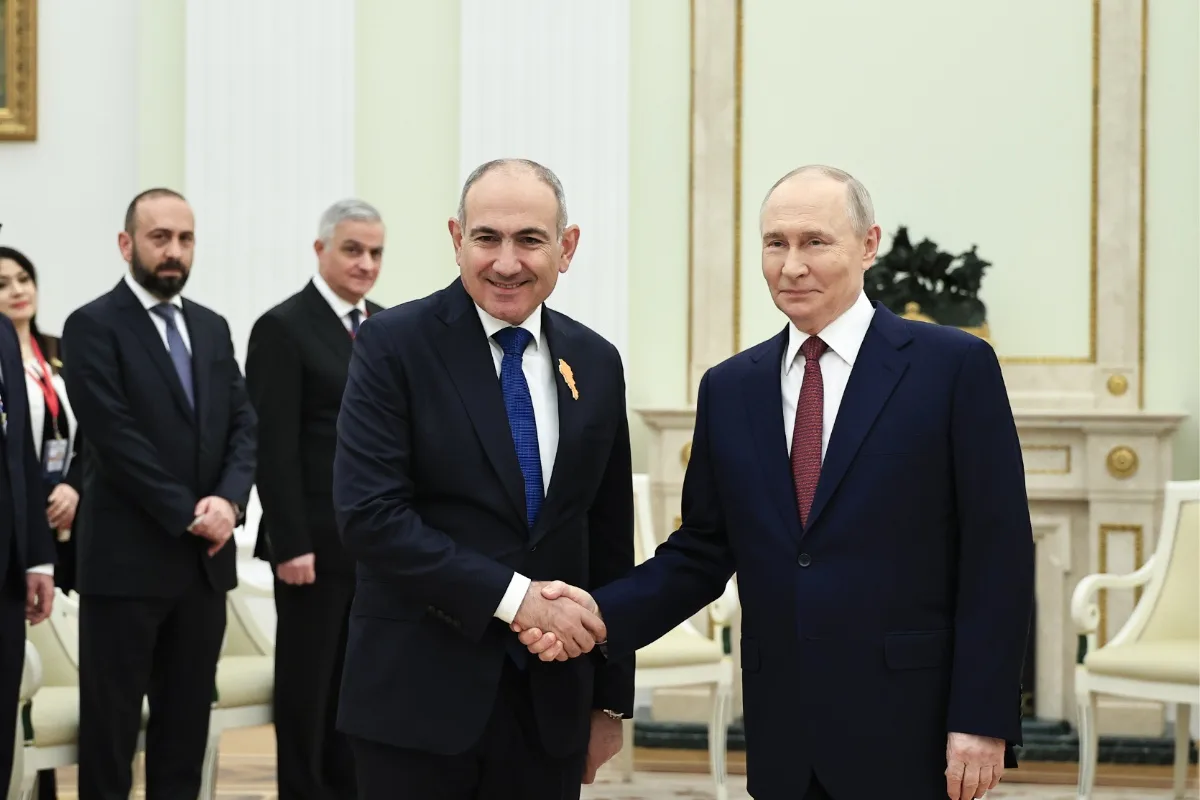
The recent meeting between Pashinyan and Putin highlighted these tensions. In a rare open criticism from Yerevan, Pashinyan questioned the relevance of the Russian-led Collective Security Treaty Organization (CSTO) after suspending Armenian participation in its activities. He insisted on maintaining relations with both the EAEU and the EU “as long as possible,” indicating an intent to balance competing geopolitical affiliations.
Energy cooperation is a core dimension of the evolving relationship. Despite discussing a new nuclear power plant project with Moscow, Armenia has concurrently pursued discussions with the United States, evidenced by a civil nuclear cooperation agreement signed between Pashinyan and U.S. Vice President JD Vance. This move signals Armenia’s intention to diversify its energy partnerships beyond Russia.
Pashinyan’s assertive stance during the Kremlin meeting appears tied to his election campaign, aimed at demonstrating Armenia’s sovereignty and resilience to his electorate. Meanwhile, Putin’s decision to engage in this high-stakes dialogue, which some interpret as a political loss or humiliation for Russia, reflects Moscow’s complex approach to managing influence in the South Caucasus amid shifting regional dynamics.