

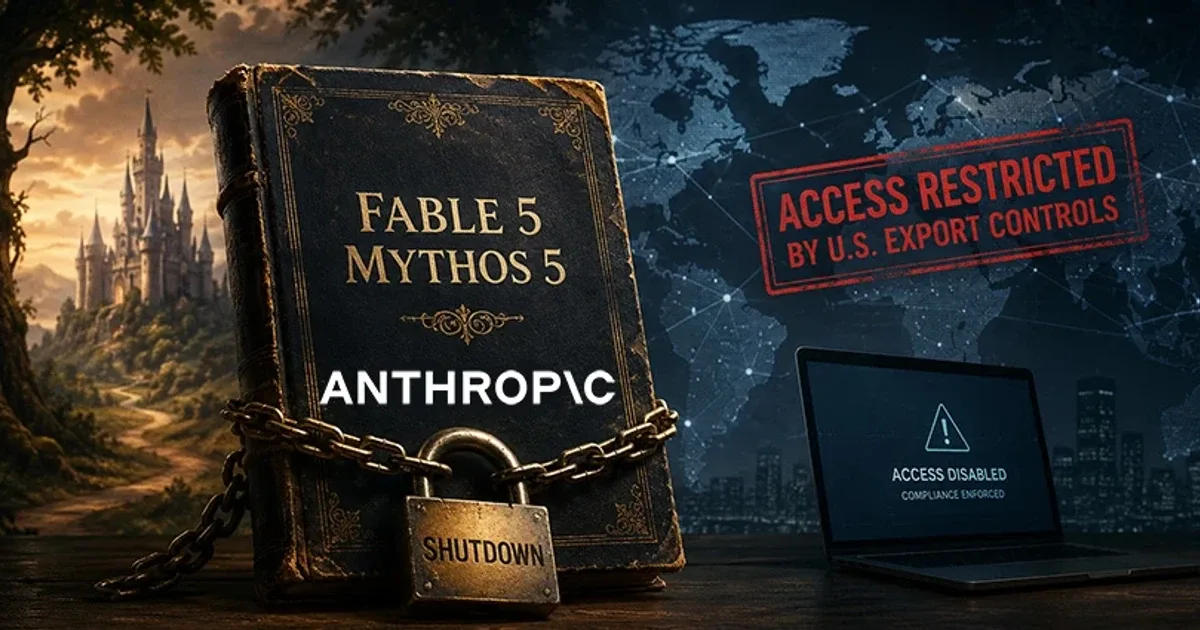
After the U.S. government imposed export controls barring foreign nationals from accessing certain advanced AI models, Asian developers have accelerated efforts to offer substitute technologies tailored to regional needs. These moves aim to provide businesses and governments a way to use AI without being constrained by U.S. regulations.
Anthropic, a notable AI company, disabled access to its flagship models Fable 5 and Mythos 5 worldwide, in response to a directive restricting foreign users from interacting with these technologies. The company cited security concerns related to potential jailbreak techniques but emphasized that the vulnerabilities were limited and no widespread breaches had been identified. Prior to launch, Anthropic collaborated extensively with multiple security agencies and conducted rigorous internal testing.

Taking advantage of this disruption, Tokyo-based Sakana AI launched a new model called Fugu designed for task orchestration and managing access to other AI models via API interfaces. Although Sakana said the launch coincided with the new export rules, it positioned Fugu as a more sovereign alternative especially tailored for Japanese corporate and government use. The startup’s founders, who include former Google researchers, have framed their product as part of a broader geopolitical strategy that advocates for collaborative AI development among allied nations rather than restrictive technology hoarding.
South Korea represents a critical market in this shifting landscape. Anthropic opened a local office in Seoul shortly before the export constraints took effect. Despite anticipating a swift resolution to the restrictions, company representatives highlighted South Korea’s high adoption rates for their AI services, noting that usage far exceeds expectations based purely on population size. Concerns have also emerged around the controlled distribution of AI through Anthropic’s Project Glasswing, which limits Mythos access to vetted institutions but drew scrutiny due to one priority recipient’s alleged connections to Chinese interests.
Meanwhile, other Asian players are expanding their offerings. Reports surfaced that the Chinese cybersecurity firm 360 recently introduced a new AI system named Tulongfeng, demonstrating regional efforts to build capabilities independent of U.S.-controlled technology frameworks.