

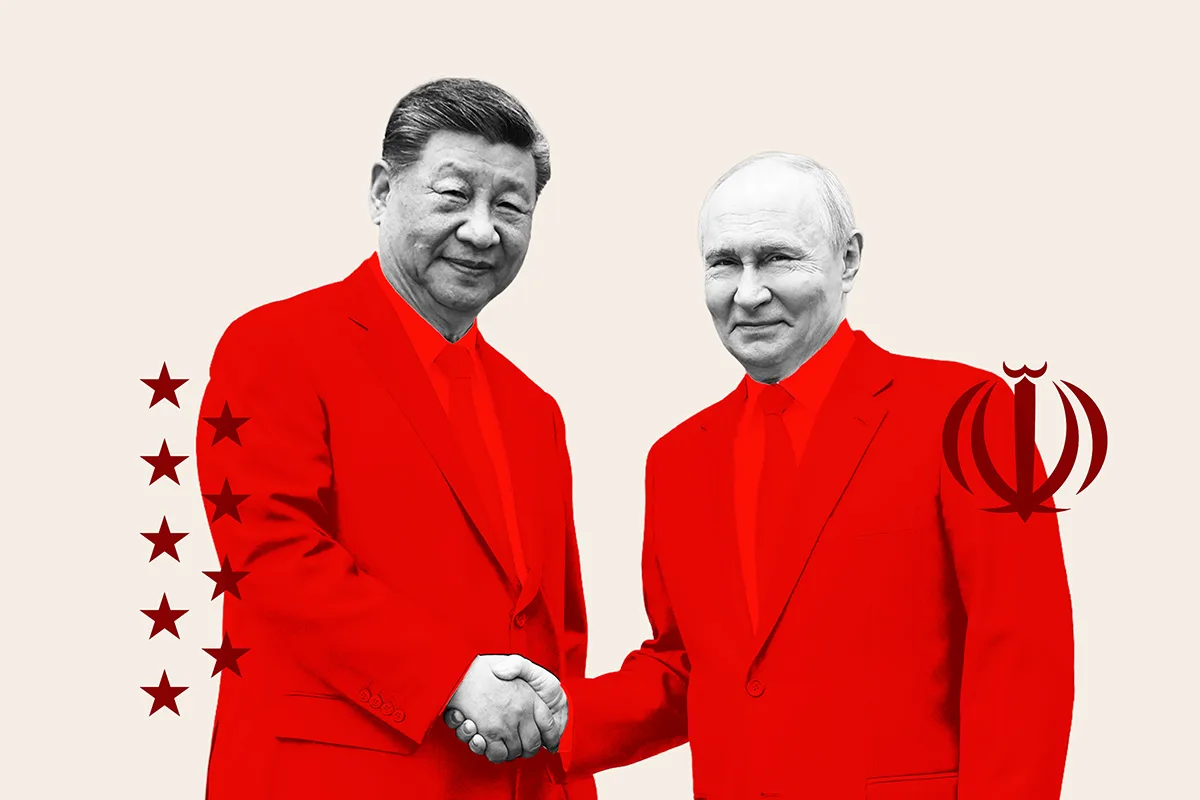
Amid intensifying clashes between the United States and Iran, China and Russia have solidified their roles as crucial partners for Tehran, bolstering its ability to endure a prolonged conflict. Despite Washington’s attempts to isolate Iran economically and diplomatically, Beijing and Moscow maintain vital connections that sustain Tehran’s resilience on multiple fronts.
Iran has strategically deepened cooperation with China and Russia to offset mounting economic pressures and military challenges. This triadic relationship extends beyond formal alliances to encompass essential avenues of economic aid, diplomatic backing, and indirect defense support, enabling Iran to withstand sustained US pressure. Tehran’s military approach centers on a decentralized “mosaic” doctrine, leveraging militia proxies, missile strikes, and drone attacks to impose costs on US and allied forces.

The ongoing US naval blockade targeting Iranian shipping has intensified Iran’s economic difficulties, but Tehran’s leadership appears prepared to exploit its foreign partnerships to manage these strains. Observers note that while the US counts on economic and maritime pressure to wear down Iran, Tehran sees value in prolonging resistance to expose Washington’s political vulnerabilities.
Internal factors complicate the White House’s strategy as well. Domestic pressure and concerns over mounting energy costs due to disruptions in the Strait of Hormuz constrain US options, while the risk of escalation beyond control weighs heavily on American policymakers. As a result, the US seeks to engage Iran through controlled negotiations that limit conflict intensity but preserve leverage.
In this complex strategic environment, China and Russia’s continued support for Iran serves as a critical lifeline, providing Tehran room to maneuver amid economic sanctions and military threats. While not formal military allies, their economic and diplomatic cooperation signal a broader geopolitical contest shaping the conflict’s endurance dimension.