

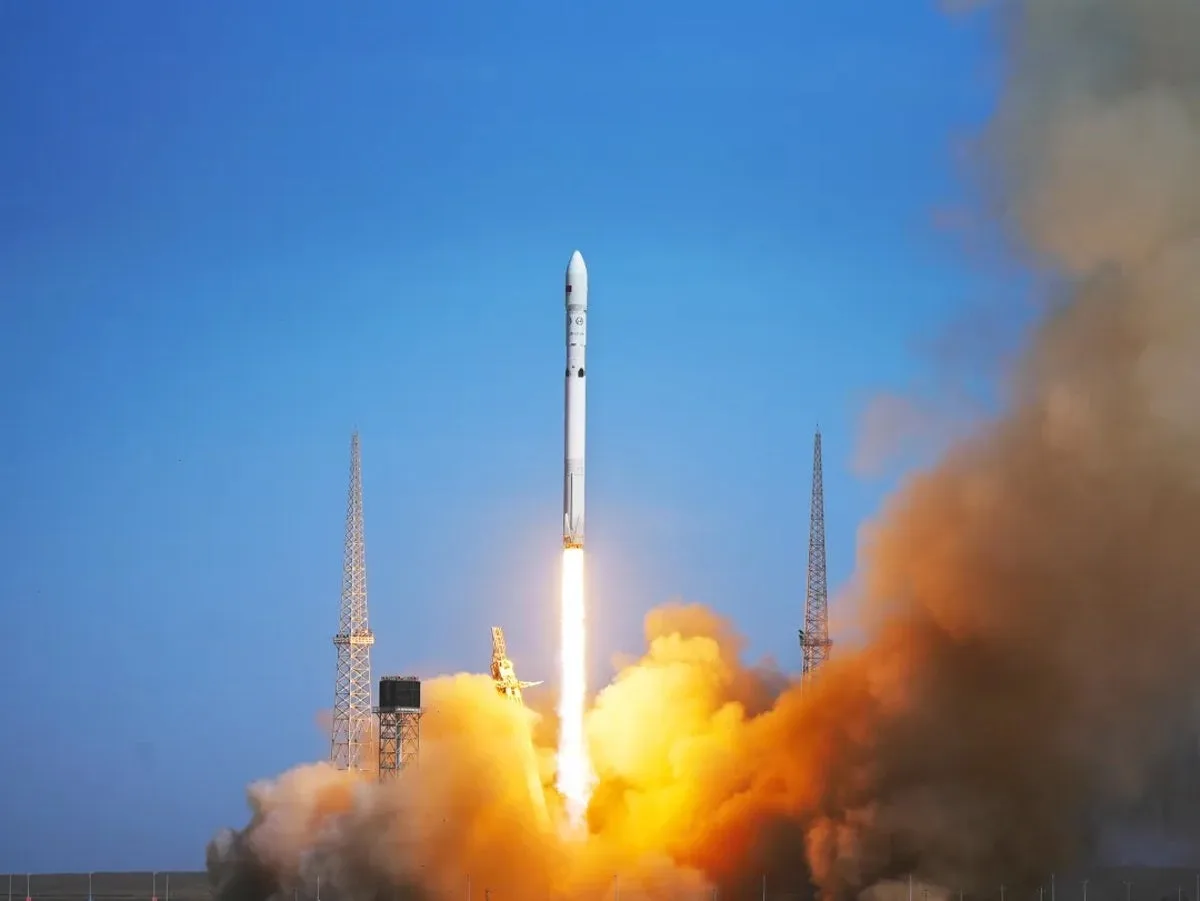
China executed the maiden flight of its Long March 12B rocket without issuing standard advance notifications to air and maritime authorities, a departure from common international safety protocols. The launch took place from the Dongfeng Commercial Aerospace Innovation Test Zone in the Gobi Desert, with news first emerging through Chinese social media channels. The absence of prior warnings raises concerns over adherence to global standards designed to protect air and sea traffic from launch hazards such as falling debris.
The Long March 12B rocket shares a comparable capability with SpaceX’s Falcon 9 and delivered operational satellites for China’s Qianfan constellation, a state-backed project targeting competition with SpaceX’s Starlink internet service. While the rocket is designed for reusability, this initial flight did not attempt recovery of its first stage. China Aerospace Science and Technology Corporation (CASC), the state-owned manufacturer, declared the mission successful.

This launch follows China’s earlier test of the Long March 10 — a prototype lunar rocket that demonstrated orbit insertion and controlled splashdown, a maneuver not yet achieved by NASA’s Space Launch System. Analysts widely anticipate China’s crewed moon landing effort by 2030, a timetable influencing NASA’s Artemis missions aiming to send astronauts back to the lunar surface by 2028.
International air and maritime organizations such as the International Civil Aviation Organization and the International Maritime Organization typically coordinate advance warnings prior to rocket launches, ensuring safety and regulatory compliance. International law holds countries accountable for damages caused by launches within their jurisdiction. However, experts have noted that China does not consistently follow these norms, especially in safely managing launch debris.