

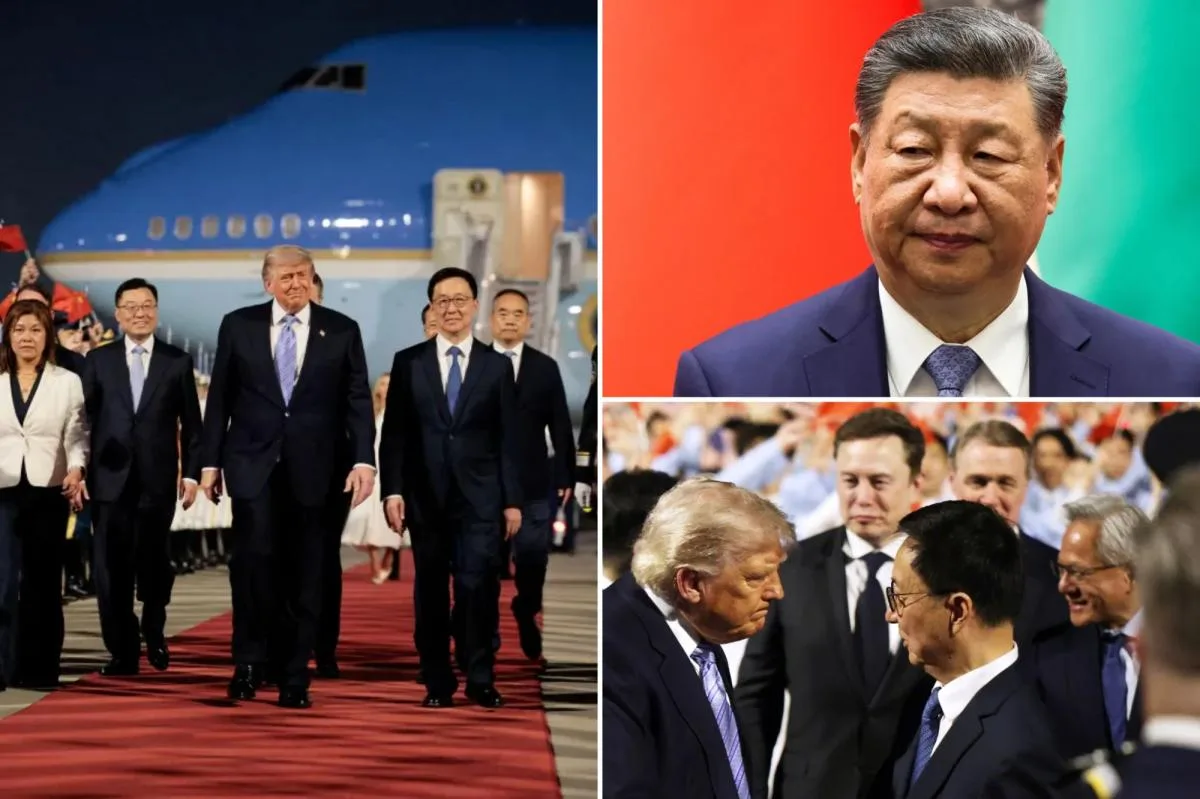
China chose to welcome President Trump at the airport with Vice President Han Zheng along with top diplomats, marking a significant rise in protocol compared to his last visit. This move reflects Beijing’s intent to emphasize the importance of the visit amid complex geopolitical dynamics.
In contrast to Trump's 2017 arrival, when he was greeted by a lower-ranked official, this time China's second-highest-ranking official personally received him. Protocol experts note that the rank of Chinese officials in diplomatic engagements is deliberate, underscoring the strategic priority China assigns to this meeting. At his previous visit, Trump was met by Yang Jiechi, a senior state councilor whose rank did not match that of the vice president.

President Xi Jinping did not personally attend the arrival ceremony on the tarmac in either 2017 or this visit, but the presence of Vice President Han Zheng alongside ambassadors and senior foreign affairs officials signals a clear diplomatic upgrade. Experts interpret this as a message that the latest visit bears greater strategic and geopolitical significance.
Trump traveled to Beijing with a prominent U.S. business delegation, including well-known figures in technology and industry. Among them were Elon Musk, CEO of Tesla and SpaceX, and Jensen Huang, CEO of Nvidia, highlighting the business interests intertwined with the diplomatic meetings.
Trade relations remain a central focus of the talks, with President Trump anticipating discussions on economic ties. Additionally, the agenda may cover issues such as curbing illicit fentanyl shipments to the United States and regional security concerns, including tensions involving Iran. However, Trump downplayed the likelihood of in-depth discussions about the American conflict in Iran during preliminary comments before departure.