

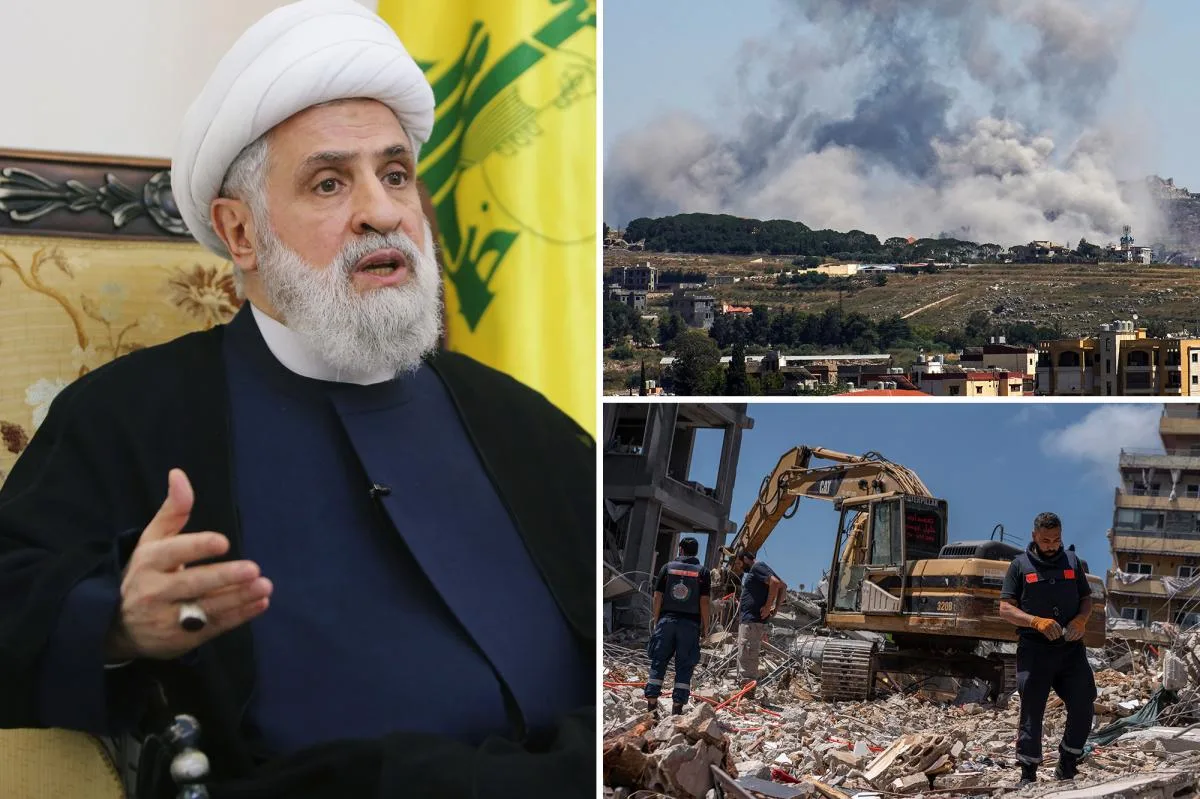
The Iran-backed group Hezbollah rejected the recent cease-fire agreement brokered by the United States between Israel and Lebanon, undermining prospects for peace in the region. Hezbollah's leader, Naim Qassem, denounced the pact as humiliating and unacceptable, insisting that Israel’s full withdrawal from southern Lebanon is a non-negotiable demand.
Under the deal, Hezbollah agreed to withdraw north of the Litani River, an area currently occupied by Israeli forces, while the Lebanese Armed Forces would assume exclusive control over designated “pilot zones” free of non-state actors, including Hezbollah. However, the agreement did not specify a timeline for Israel’s withdrawal, fueling further uncertainty. This omission was a key sticking point for Hezbollah, which views Israeli presence south of the Litani River as an ongoing occupation.

Hezbollah’s refusal to cooperate has manifested in continued drone attacks against Israeli troops in southern Lebanon, with the group warning that northern Israel will remain insecure as long as Israeli forces remain active in Lebanese territory. Since the outbreak of conflict triggered by the Gaza war in 2023, Hezbollah has conducted near-daily attacks against Israel, escalating an already volatile situation. Large swaths of northern Israel remain evacuated amid fears of Hezbollah aggression.
The conflict has inflicted severe human tolls, with Lebanese officials reporting thousands of deaths and over a million displaced people. Lebanese President Joseph Aoun framed the cease-fire agreement as a crucial opportunity for comprehensive peace, but Hezbollah’s outright rejection complicates the path forward.
The deal designates Hezbollah as an enemy not only of Israel and the United States but also of Lebanon itself. The U.S. aims to support Lebanese sovereignty by enabling stronger state control in sensitive border zones. Yet Tehran, Hezbollah’s primary backer, has tied its commitment to negotiations on Lebanon’s conflict to the fate of Hezbollah, warning it may withdraw from talks if clashes persist. Recent attempts at de-escalation included discussions between the U.S., Israel, and Lebanon, with Israeli Prime Minister Benjamin Netanyahu reportedly urged to delay planned strikes in Beirut.
As fighting continues, the fragile cease-fire risks collapse, with neither Hezbollah’s fighters pulling back fully nor Israel committing to a clear exit strategy. This ongoing standoff underscores the complexity of securing lasting peace in southern Lebanon amid regional rivalries and proxy conflicts.