

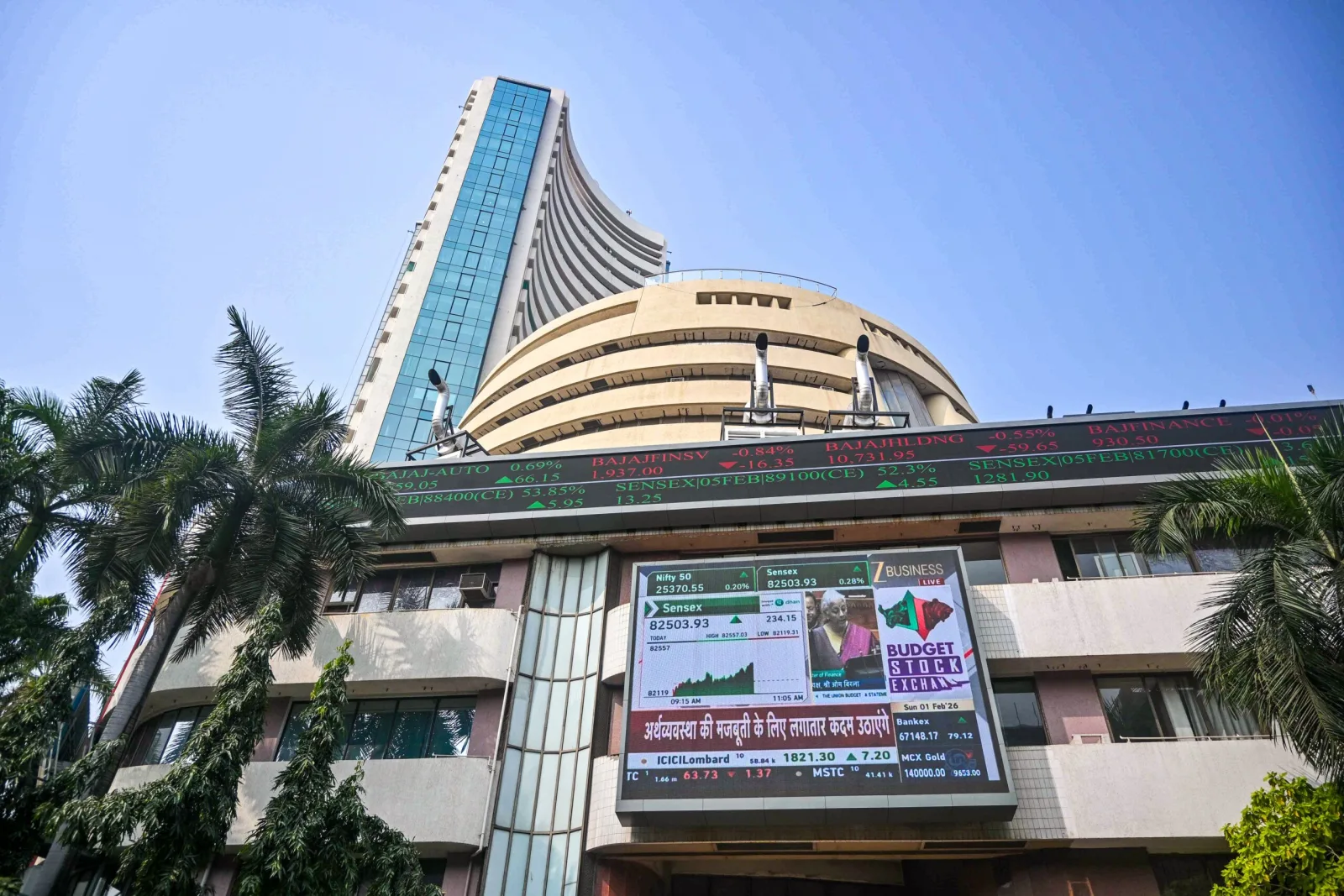
Indian stock markets closed the week lower, pressured by sustained foreign institutional investor (FII) selling and a forecast indicating a below-normal monsoon, which triggered worries about rising food prices. The Nifty 50 index fell by nearly one percent over the week, ending the last session down sharply to 23,547, while the Sensex dropped over 1,000 points, closing at 74,775.
Despite the weakness in large-cap stocks, mid-cap and small-cap segments showed resilience, with the Nifty Midcap 100 and Nifty Smallcap 100 indexes registering modest gains amid a mixed market mood. The mid-cap index even briefly touched an all-time high, reflecting selective investor interest outside blue-chip shares.

Some sectoral movements stood out, with public sector banks benefiting from mark-to-market gains due to falling bond yields. Similarly, the auto and metals sectors gained traction on the back of a sharp decline in crude oil prices during the week, supported by optimism over a diplomatic breakthrough between the US and Iran. In contrast, defensive sectors such as FMCG, healthcare, and consumer durables declined as investors scaled back their risk-aversion premiums.
Market participants also pointed to MSCI index rebalancing adjustments as another factor driving substantial institutional selling on the final trading day. While the overall macroeconomic environment shows signs of improvement compared to recent weeks, investors await clearer signals from policy decisions, a stabilization in monsoon patterns, and easing geopolitical tensions to regain strong conviction in large-cap stocks.
The Indian rupee experienced slight appreciation, influenced by Reserve Bank of India (RBI) remarks that suggested the currency remained undervalued. Meanwhile, cumulative FII outflows during the week amounted to around Rs 23,700 crore, emphasizing foreign investors’ cautious stance.
Looking ahead, technical analysts identified key levels for the Nifty 50 index, citing resistance near 24,000 to 24,100 and critical support between 23,000 and 23,300. Bank Nifty’s immediate resistance was noted in the 54,600–54,800 range, with support around 54,000–54,200. Investors continue to monitor upcoming macroeconomic data releases, including the RBI’s monetary policy outcome, GDP figures, the Purchasing Managers’ Index, and industrial production reports for further market direction.