

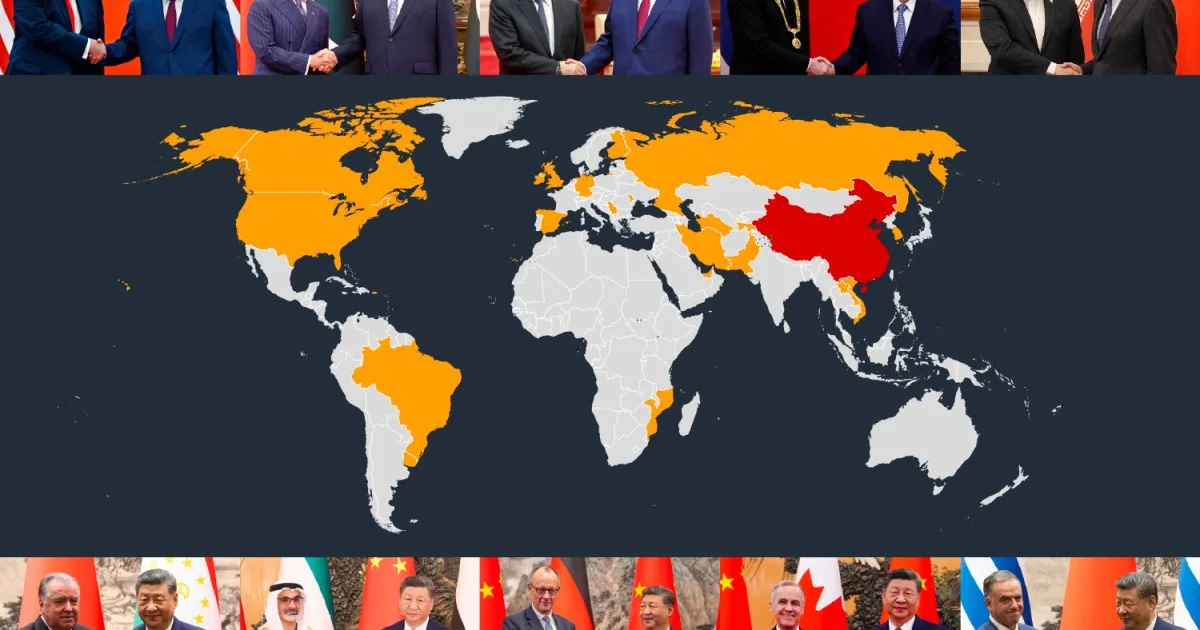
China has emerged as a central hub for global diplomacy in 2026, hosting a steady flow of high-profile visits from world leaders and senior officials. British Foreign Secretary Yvette Cooper became the 26th such visitor this year, engaging in talks with top Chinese officials and participating in a science and technology program in Shenzhen.
These visits cover a broad geographic spectrum, including Europe, Asia, the Middle East, Africa, North America, and Latin America. Leaders from 23 countries have traveled to China, representing a mix of presidents, prime ministers, foreign ministers, and crown princes. Notable figures like Canadian Prime Minister Mark Carney, British Prime Minister Keir Starmer, German Chancellor Friedrich Merz, Spanish Prime Minister Pedro Sanchez, US President Donald Trump, and Russian President Vladimir Putin have all held talks in Beijing.

This diplomatic activity takes place while Chinese President Xi Jinping remains primarily at home, hosting the influx of global dignitaries. Visits often focus on securing investment deals, expanding market access, and fostering collaboration in manufacturing, technology, energy, and infrastructure, reflecting China's multifaceted role as an export market, source of investment, and geopolitical actor.
Countries considered strategic partners by Beijing, such as Russia and Pakistan, have sent multiple senior officials, underscoring the importance China places on these relationships. The European contingent leads in numbers, with leaders from the United Kingdom, Germany, Spain, Ireland, and Finland demonstrating an ongoing interest in maintaining and strengthening ties with Beijing despite wider tensions related to trade, security, and geopolitical alignments.
China’s prominence as a global trade partner and diplomatic linchpin is visible in this pattern of visits, which mirror the complexities of balancing cooperation and competition across continents and political landscapes.