

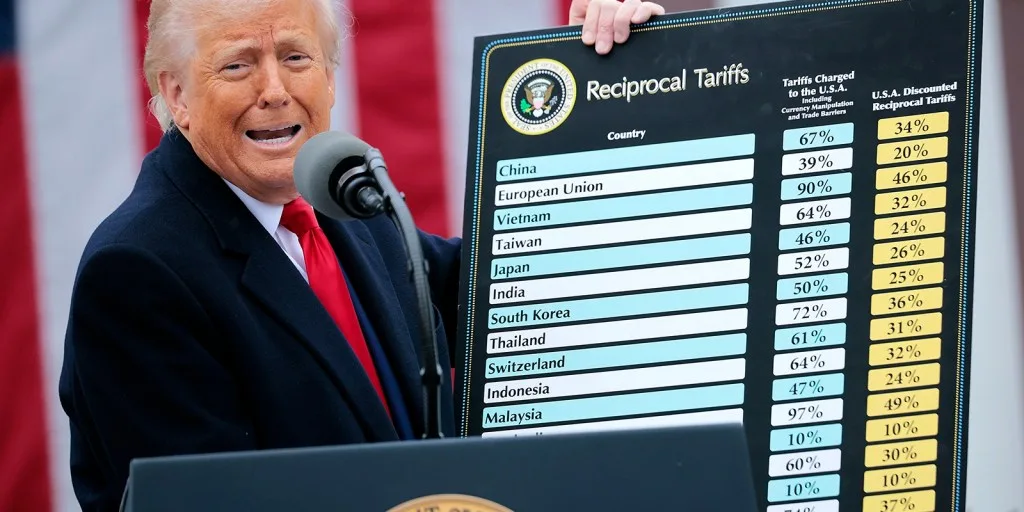
The Trump administration’s effort to impose tariffs under successive legal authorities has faced repeated legal defeats, yet there is little sign the government will abandon its approach. After the U.S. Supreme Court ruled that the initial “Liberation Day” tariffs were illegal and unconstitutional, the administration sought to impose new tariffs under a separate federal law. However, the U.S. Court of International Trade recently found that this subsequent attempt also failed to meet legal standards.
Despite these judicial rebukes, the administration is expected to appeal again, signaling a continued commitment to maintaining tariffs that have strained domestic businesses and contributed to rising consumer prices amid global economic pressures. The underlying legal battle centers on whether the executive branch has the authority to impose tariffs without explicit congressional approval.

The Supreme Court’s rejection of the first set of tariffs rested on the constitutional principle that only Congress has the power to levy tariffs, and that the executive’s authority under the International Emergency Economic Powers Act (IEEPA) did not cover these trade restrictions. In response, the administration turned to a more obscure provision: Section 122 of the Trade Act of 1974, enacted during an economic period marked by balance-of-payments concerns following the end of the gold standard.
Section 122 grants the president temporary tariff powers to address balance-of-payments deficits. Yet economic conditions today differ drastically from those in the 1970s, and courts have questioned whether such tariffs are justified under the statute’s original intent. The Court of International Trade highlighted that invoking a decades-old economic concept no longer relevant to the current global financial system undermines the administration’s legal foundation.
These tariffs have effectively transferred significant costs to U.S. businesses and consumers, estimated to have reached billions of dollars. Meanwhile, ongoing geopolitical tensions affecting energy prices add further inflationary pressures on top of the tariffs’ impact.
The continuing legal challenges illustrate the complex balance between executive trade policy and congressional authority. While the administration pursues tariffs as a tool to address trade imbalances, courts are pushing back on the legal basis for unilateral tariff imposition, emphasizing constitutional checks and historical legislative intent. For American businesses and consumers, the unfolding litigation signals more uncertainty ahead as the government seeks to defend controversial trade measures in the courts.