

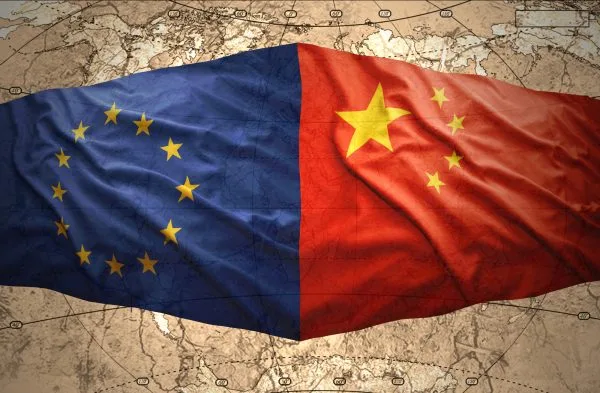
The European left’s relationship with China is complex, resisting a single, unified stance. Different interpretations cast China variously as a model of enduring revolution, a developmental state defying neoliberal decline, an authoritarian capitalist power, a partner on climate and trade issues, a strategic counterbalance to U.S. dominance, and a cautionary example of state overreach into society. This multifaceted view shapes a pluralistic debate rather than a cohesive policy line.
This diversity plays out against the backdrop of mounting economic interdependence and geopolitical tension. In 2025, the European Union maintained a significant trade deficit with China, driven by massive imports despite strong EU exports. The China-EU summit that year underscored an increasingly crowded and contentious agenda, including disputes over market access, rare-earth minerals, climate collaboration, and geopolitical flashpoints such as Taiwan and the South China Sea. These issues illustrate how the EU must reconcile cooperation with competition.

Public perception adds another layer to the debate: surveys show that left-leaning Europeans tend to favor maintaining close economic ties with China more than their right-wing counterparts. For the European left, China is a testing ground for the concept of strategic autonomy—not merely a slogan but a practical challenge demanding nuanced policy responses.
At the heart of the internal left-wing struggle lies the risk of oversimplification. On one side, liberal hawks view China predominantly as a security threat and equate alignment with the United States as the only viable strategy. On the other, campist factions emphasize China’s role as a counterweight to Washington, sometimes overlooking critical engagement with Chinese state power. Both tendencies reduce China to a binary symbol rather than addressing the complexities of its society and political system.
More constructive approaches recognize distinctions between sympathy, alignment, and critical dialogue. Being sympathetic to China does not mean uncritical alignment, nor does opposing U.S. policies automatically signify democratic internationalism. The crucial questions revolve around determining when opposition to U.S. dominance becomes a blind accommodation of Chinese authoritarianism, and how left-wing skepticism toward security-driven China policies might lead to better-informed European strategies.