

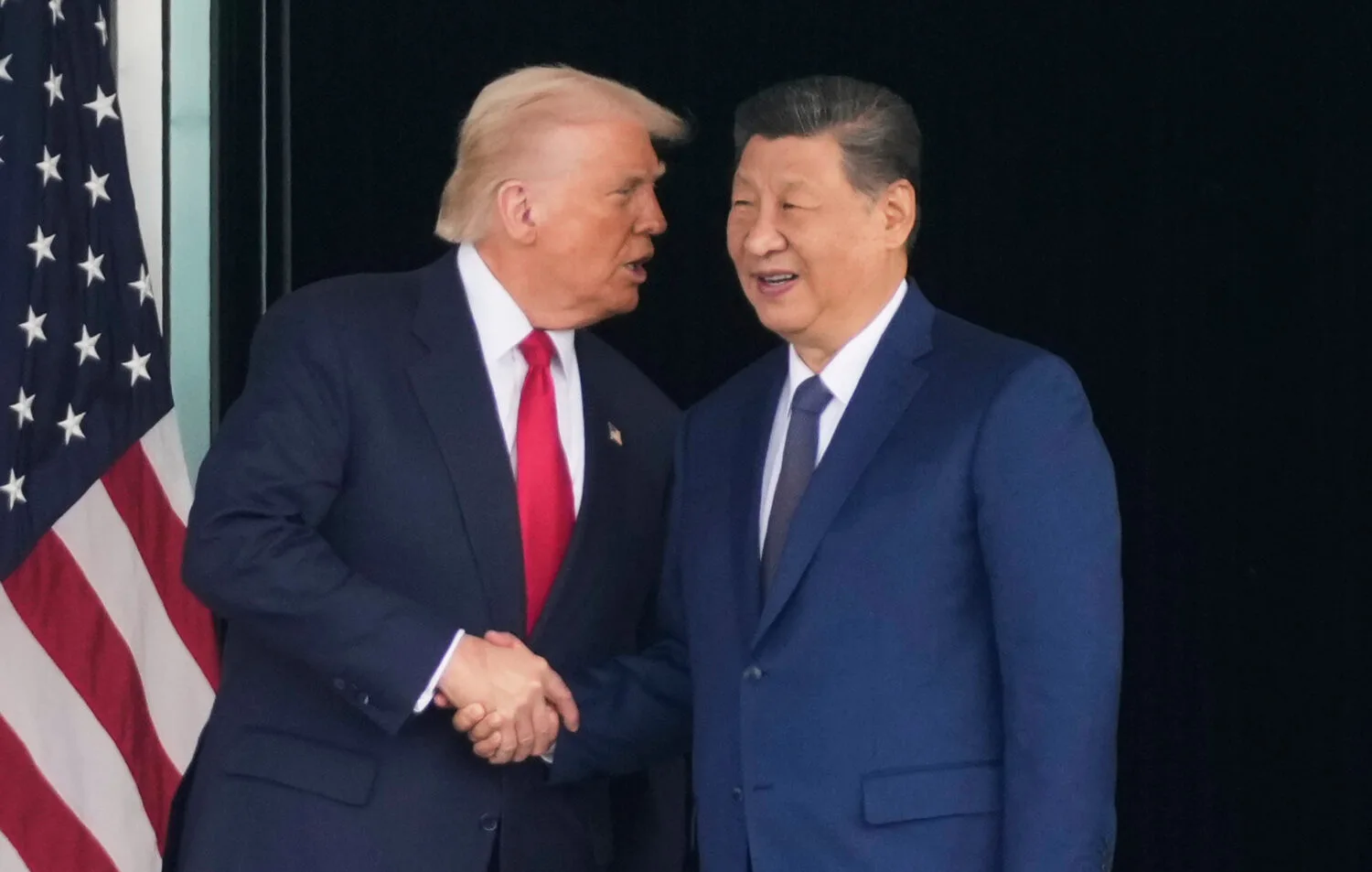
As President Donald Trump arrives in Beijing for a high-profile summit with Chinese leader Xi Jinping, the discussions are focused on maintaining economic stability rather than announcing sweeping new trade agreements. This meeting marks a possible first of several encounters this year aimed at managing a complex and often fraught trade relationship between the world’s two largest economies.
The summit is expected to reinforce a trade truce established last October, which paused escalating tariffs and tariffs-related tensions. China is also anticipated to announce increased purchases of American agricultural products such as soybeans and beef, as well as Boeing aircraft, responding to U.S. efforts to support domestic farmers and manufacturers. Additionally, U.S. officials have suggested forming a new Board of Trade to facilitate ongoing dialogue on economic issues.

Despite President Trump’s public statements about the financial benefits of trading with China, recent data show a decline in Chinese purchases of American goods, dropping by nearly $50 billion compared to the previous year. This reduction partly stems from China’s earlier suspension of soybean imports during the peak of the trade war. Meanwhile, U.S. imports from Taiwan have surpassed those from China, a shift influenced by the semiconductor and artificial intelligence sectors, as American companies source crucial components from the self-governed island.
Shifts in global supply chains further complicate the trade picture. Since 2017, China’s share of U.S. imports has fallen significantly, as Chinese exports are rerouted through other Asian countries, and American companies increasingly move production to Vietnam and India. These changes reflect broader geopolitical and technological competition, including battles over emerging technologies such as AI and electric vehicles.
Experts highlight that the summit’s success hinges less on dramatic new agreements and more on preserving a stable environment for continued negotiation and adjustment. Stability offers both countries space to build domestic economic resilience while keeping the channels open for future deals.
In recent talks ahead of the summit, U.S. Trade Representative Jamieson Greer emphasized the importance of sustained communication, discussing the creation of mechanisms to manage economic issues with China. While the immediate outlook centers on cautious cooperation, longer-term challenges remain, including competing ambitions in technology, shifts in supply chains, and broader geopolitical tensions.