

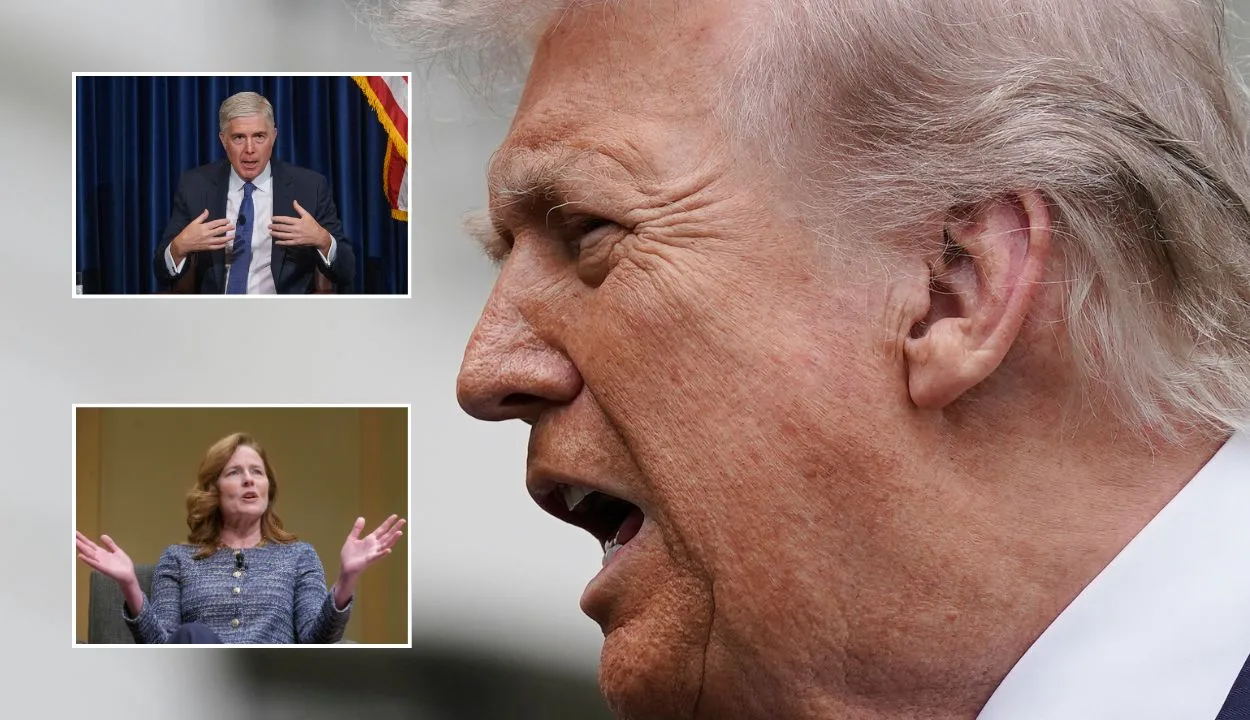
Donald Trump expressed sharp frustration over the Supreme Court’s rejection of his tariff policy, focusing his criticism on two of his own appointees, Justices Neil Gorsuch and Amy Coney Barrett. In a series of posts on Truth Social, Trump described their votes against his tariffs as harmful to both his agenda and the nation.
The underlying controversy began when the Supreme Court struck down Trump's signature tariff program earlier this year. In response, Trump immediately imposed a 10% tariff on imports from all countries, a move challenged by small businesses and ultimately ruled unlawful by a federal appeals panel. The court’s decision asserted that the president had improperly used statutory authority to enact the tariff.

Trump’s reaction combined critique with confusion over the split among his appointees. While he praised Gorsuch and Barrett as smart and respectable, he also found their opposition to his tariff measures “devastating” and “hurtful” to the country. He questioned why justices nominated by Republicans appeared less aligned with his policies than those appointed by Democrats.
In his posts, Trump argued that Republican-appointed justices should demonstrate loyalty to the president who nominated them, contrasting this with Democratic appointees, whom he claimed consistently supported their nominating party’s positions. He suggested this dynamic reduced the urgency for Democrats to consider expanding the Supreme Court, a process often referred to as “court packing.”
Beyond tariffs, Trump anticipated further unfavorable rulings from the court, particularly regarding his Department of Justice’s effort to end birthright citizenship. He highlighted his unprecedented attendance at a Supreme Court hearing earlier in the year, noting the institution’s perceived lack of acknowledgment of his presidential status during the session.
This episode reflects ongoing tensions between Trump and the judiciary, including justices he appointed, underscoring a divide in the interpretation of executive powers and the political expectations attached to Supreme Court nominations.