

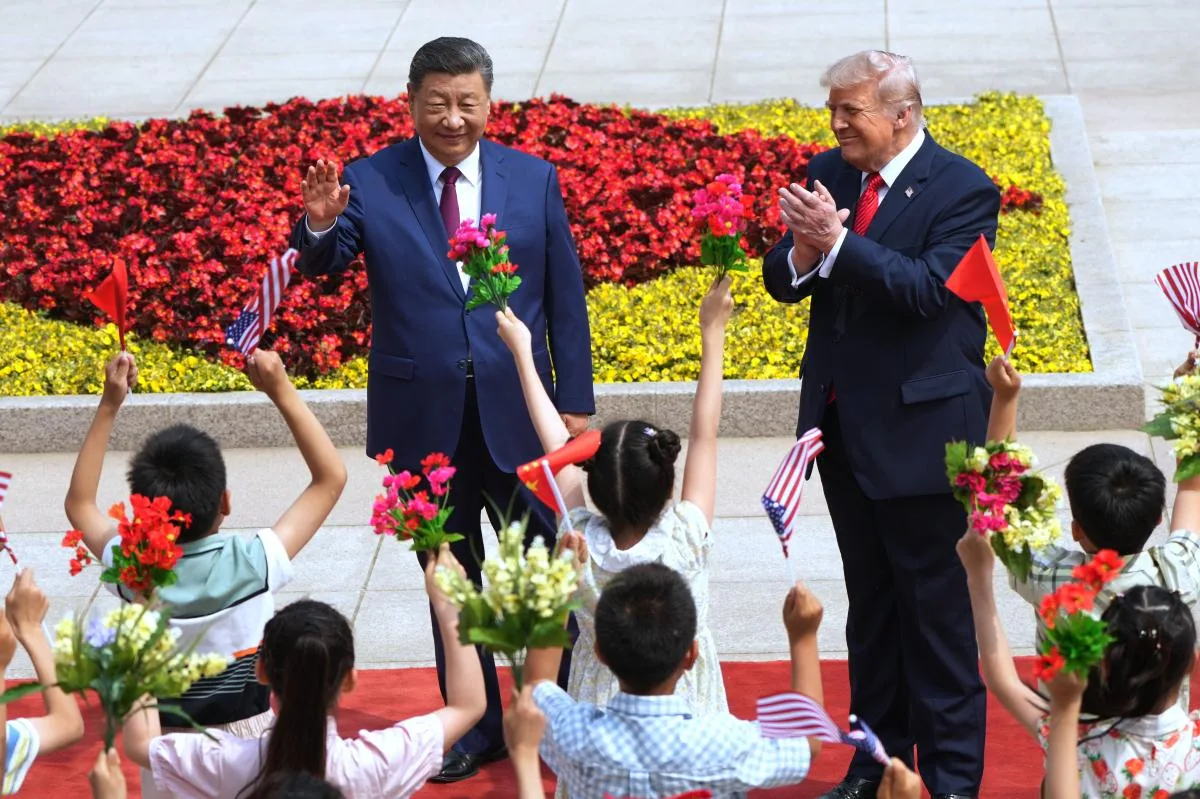
President Trump expressed admiration for the disciplined behavior of Chinese children he encountered during his visit to Beijing. The youth greeted him with orderly enthusiasm, carrying flowers and flags, exemplifying a level of decorum rarely seen in similar international encounters.
The scene recalled a personal experience of a visit to a Shanghai school, where children as young as seven or eight demonstrated remarkable composure. The students moved in perfect lines, responded promptly to the bell, and maintained silence and stillness throughout their activities, such as indoor and outdoor marching exercises. Their training reflected a regimented routine encouraging them to stand firm and united without distraction or disorder.

This display of disciplined conduct contrasts with expectations of youthful behavior in many Western contexts, where classrooms often contend with noise and interruptions. The Chinese approach emphasizes collective order and respect, suggesting an upbringing aimed at fostering resilience and staunch unity rather than yielding or dissent.
The disciplined behavior of Chinese children also serves broader political symbolism, underscoring the country's emphasis on social cohesion amidst complex geopolitical dynamics. For leaders like Trump, such encounters highlight cultural differences as well as the organizational priorities shaping future generations.
Meanwhile, other unrelated cultural observations mark ongoing global interactions. For instance, family members of Mexican artist Frida Kahlo recently visited New York’s Museum of Modern Art quietly, illustrating how legacy and public attention often diverge. Additionally, common concerns about financial scams continue to grow, with experts advising quick verification via official bank contacts to avoid falling victim to fraud.