

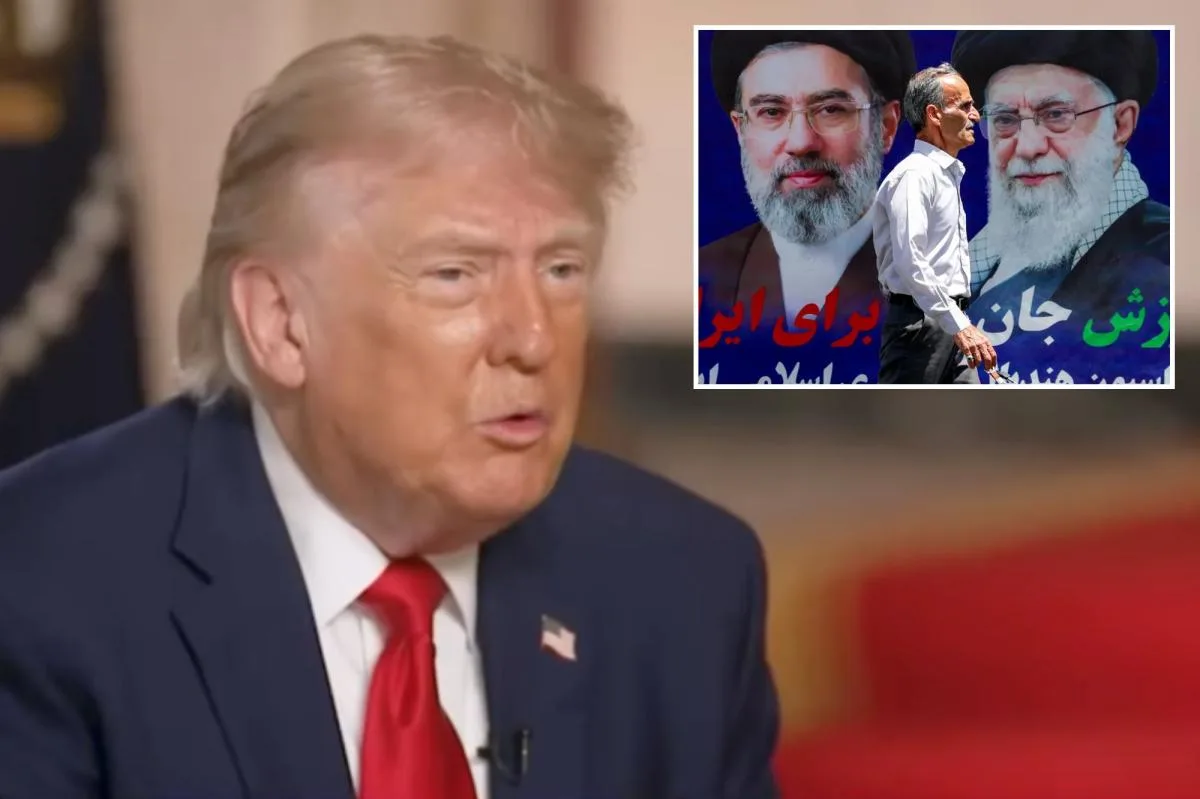
President Trump declared that he is not rushing to finalize a deal with Iran, focusing instead on securing an agreement that guarantees Tehran will not obtain nuclear weapons. He stressed that rushing could jeopardize the quality of the deal, despite potential economic benefits such as lower gasoline prices.
In an interview on a Fox News program, Trump highlighted the core requirement that Iran must never develop nuclear arms. He pointed out that Tehran has agreed to this condition, describing it as a critical element of any successful agreement. However, he also warned that if Iran fails to meet U.S. demands, the outcome could be more confrontational.

The president outlined additional conditions for the deal, including the immediate reopening of the Strait of Hormuz for unrestricted international shipping. He specified that all mines in the strait, including those removed previously by U.S. mine-clearing operations, must be cleared. This demand ties into broader regional security concerns impacting global trade routes.
Trump also revealed plans for the United States, in coordination with China, Iran, and the International Atomic Energy Agency, to unearth and destroy nuclear material buried deep underground, referring to enriched uranium left in collapsed mountain sites targeted by a U.S. B2 bomber strike over the past year. This step aims to eliminate Iran’s nuclear capability physically.
On the military front, Secretary of Defense Pete Hegseth reiterated the administration’s stance that only a strong, comprehensive deal will be accepted. He emphasized the administration’s readiness to pursue military options if negotiations fail, underscoring that the central goal remains preventing Iran from becoming a nuclear-armed state after decades of potential threat.
Trump mentioned that recent high-level discussions in the White House Situation Room are focused on making a final decision regarding the deal’s specifics, indicating negotiations are at a critical juncture. The administration’s firm position ties into wider efforts to maintain strategic stability in the Middle East while avoiding premature agreements that could compromise U.S. objectives.