

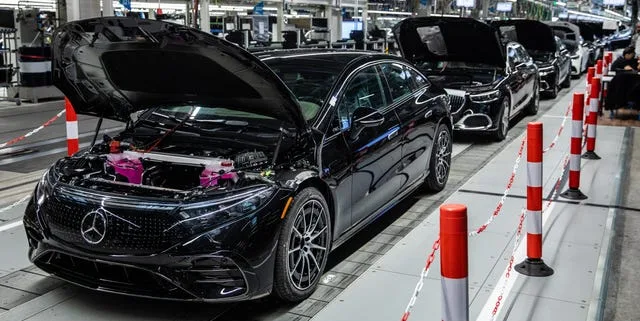
A new legislative effort in the US Congress could prevent Mercedes-Benz from selling vehicles domestically because of its substantial ownership connections to Chinese companies. The bill introduces restrictions against manufacturers with foreign adversary control, which includes Chinese investors holding nearly 20% of Mercedes-Benz's shares through two separate entities.
The Motor Vehicle Modernization Act of 2026, currently moving through the House of Representatives, was initially designed to deliver federal funding for transportation infrastructure over the next five years. However, recent amendments have added provisions aimed at shielding the automotive sector from foreign adversaries, explicitly targeting Chinese influence. Under these rules, automakers controlled by such foreign entities—defined as holding at least a 15% equity stake—would be barred from selling, delivering, or importing vehicles to the US.

This poses a direct challenge for Mercedes-Benz, owned partially by Beijing-based BAIC Group with just under 10%, and Zhejiang Geely Holding Group’s founder Li Shufu, who owns nearly another 10%. Together, these Chinese stakes total approximately 19.7%, surpassing the bill’s control threshold.
Mercedes-Benz representatives have acknowledged the legislative developments, maintaining close communication with lawmakers to clarify the details and expressing confidence that a resolution that safeguards US manufacturing interests will emerge. The company’s CEO also addressed the possibility of a sales ban, emphasizing confidence in managing any forthcoming regulatory hurdles.
Meanwhile, lawmakers intensify scrutiny not only on ownership but also on technology and parts linked to China. Bipartisan initiatives like the Connected Vehicle Security Act seek to ban vehicles, components, and software associated with adversarial countries, reflecting growing concerns about economic and national security risks posed by Chinese industrial expansion.