

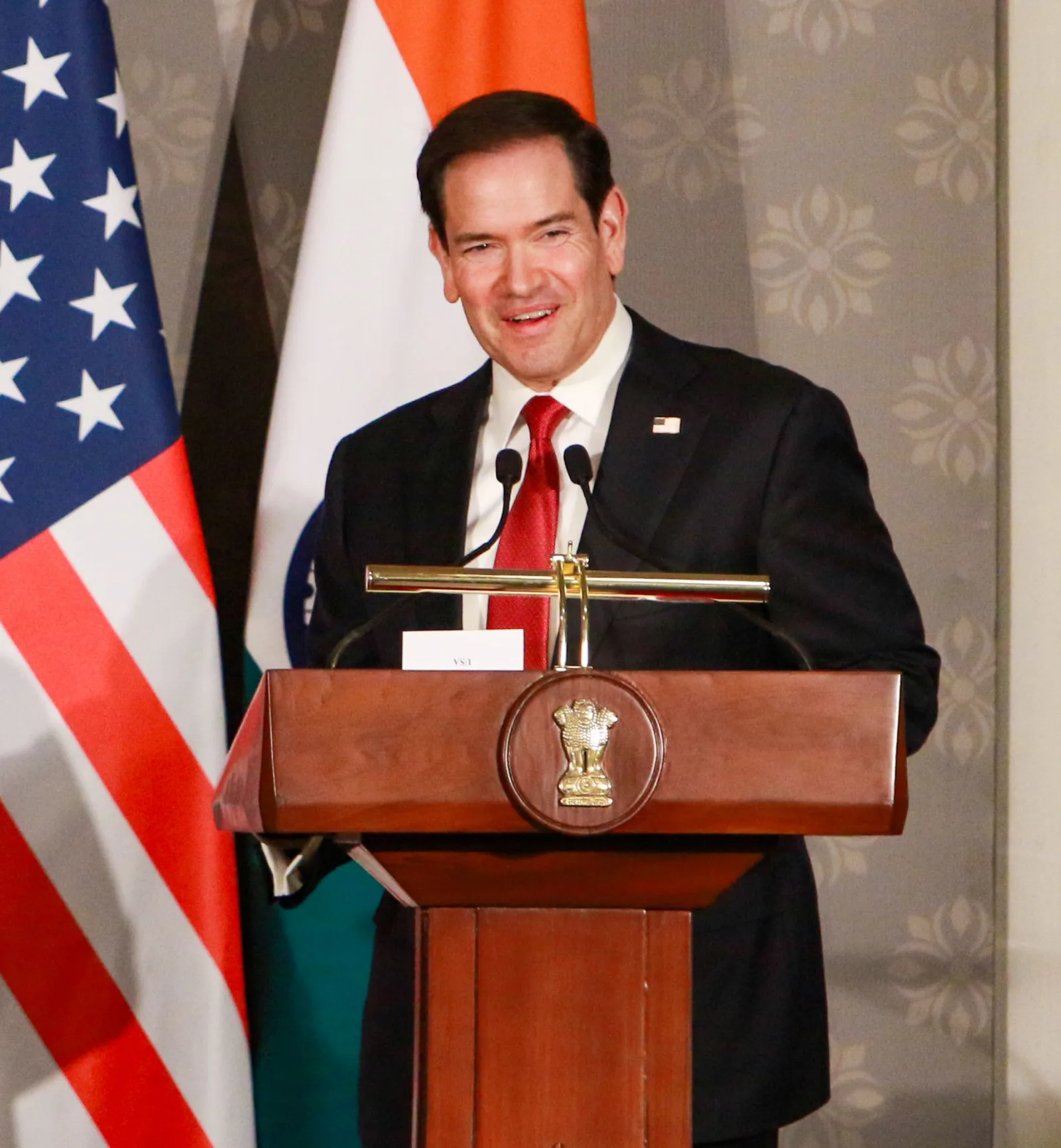
US Secretary of State Marco Rubio underscored the urgent need for the United States to preserve its technological advantage over China, framing leadership in artificial intelligence (AI) as a vital national security priority. Speaking before the Senate Foreign Relations Committee, Rubio highlighted the long-term nature of US-China competition, which spans economics, military power, and technology.
Rubio stressed that despite ongoing diplomatic engagement, the US and China will remain strategic competitors for years or even decades. He pointed out that both countries are the largest economies and possess the two most powerful militaries globally. The secretary emphasized Washington’s goal of sustaining “a period of strategic stability” while recognizing persistent and significant challenges in the bilateral relationship.

A core component of US strategy involves reducing dependency on Chinese supply chains, particularly in critical sectors like minerals, pharmaceuticals, and advanced technologies. Rubio warned that relying on a single source for around 90 percent of essential materials risks making the US vulnerable to economic coercion or supply disruptions during conflict. Such overdependence, he argued, poses a strategic weakness that the US must address.
During the hearing, Rubio exchanged views with Senator Pete Ricketts, who highlighted China’s vigorous investments in semiconductor manufacturing and its ambition to dominate AI. Both agreed that allowing China to take the lead in AI and related technologies could damage the economic leadership and security interests of the US and its allies. Rubio described ongoing US efforts to collaborate with international partners to secure resilient AI-related supply chains.
The secretary also acknowledged that advances in AI will transform economies and societies worldwide. While AI promises significant benefits, it also threatens to disrupt labor markets, potentially eliminating jobs and pushing workers to adapt to new skill requirements. Rubio warned of political consequences stemming from this disruption, noting it could destabilize societies globally if not managed carefully.
Rubio additionally mentioned a State Department initiative named "Pax Silica," intended to enhance cooperation and stability in technological supply chains, though he did not offer extensive details on the program during the hearing.