

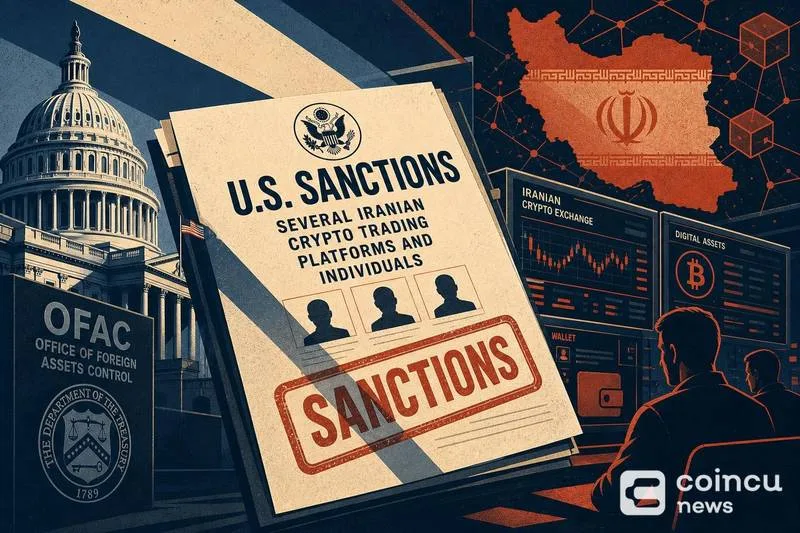
The US Department of the Treasury has imposed sanctions on multiple Iranian cryptocurrency trading platforms along with several individuals linked to their operations. This coordinated move marks a significant escalation in efforts to limit Iran’s involvement in global digital asset markets by cutting off both service providers and the people behind them from the US financial system.
By placing these entities and persons on the Specially Designated Nationals (SDN) list, the Treasury effectively bars any US persons or entities from engaging in transactions with them. This dual targeting of platforms and individuals expands the traditional approach of sanctions beyond just corporate entities, aiming to prevent sanctioned parties from simply reemerging under different names or using front operators.

The sanctions reflect a broader enforcement strategy that increasingly focuses on the infrastructure facilitating sanctioned activities as well as those managing it. This development signals a shift in US regulatory priorities — from targeting isolated platforms to addressing entire networks and their operators. Such action complicates efforts by Iranian-linked crypto services to maintain anonymity or circumvent restrictions.
For global cryptocurrency exchanges and service providers, the expanded SDN designations trigger immediate compliance challenges. Any platform under US jurisdiction, including those handling US persons’ transactions, must now screen users and partners against the updated list. This includes blocking transactions involving the newly sanctioned platforms and related individuals. Exchanges that previously had indirect dealings with these platforms may need to conduct retrospective audits to assess exposure and prevent potential sanctions violations.
Leading crypto firms will face the pressure to update their compliance frameworks swiftly. This involves integrating new wallet addresses and digital identifiers connected to these sanctioned entities into transaction monitoring systems. Failure to do so could expose exchanges to secondary sanctions risks, a liability that has already prompted many platforms to bolster their due diligence procedures significantly.
This targeted action fits within a continuing pattern where US authorities increasingly rely on sanctions to control cryptocurrency networks tied to sanctioned countries. Targeting both technical infrastructure and human operators demonstrates an evolution in enforcement practices focused on comprehensive disruption rather than isolated penalties.