

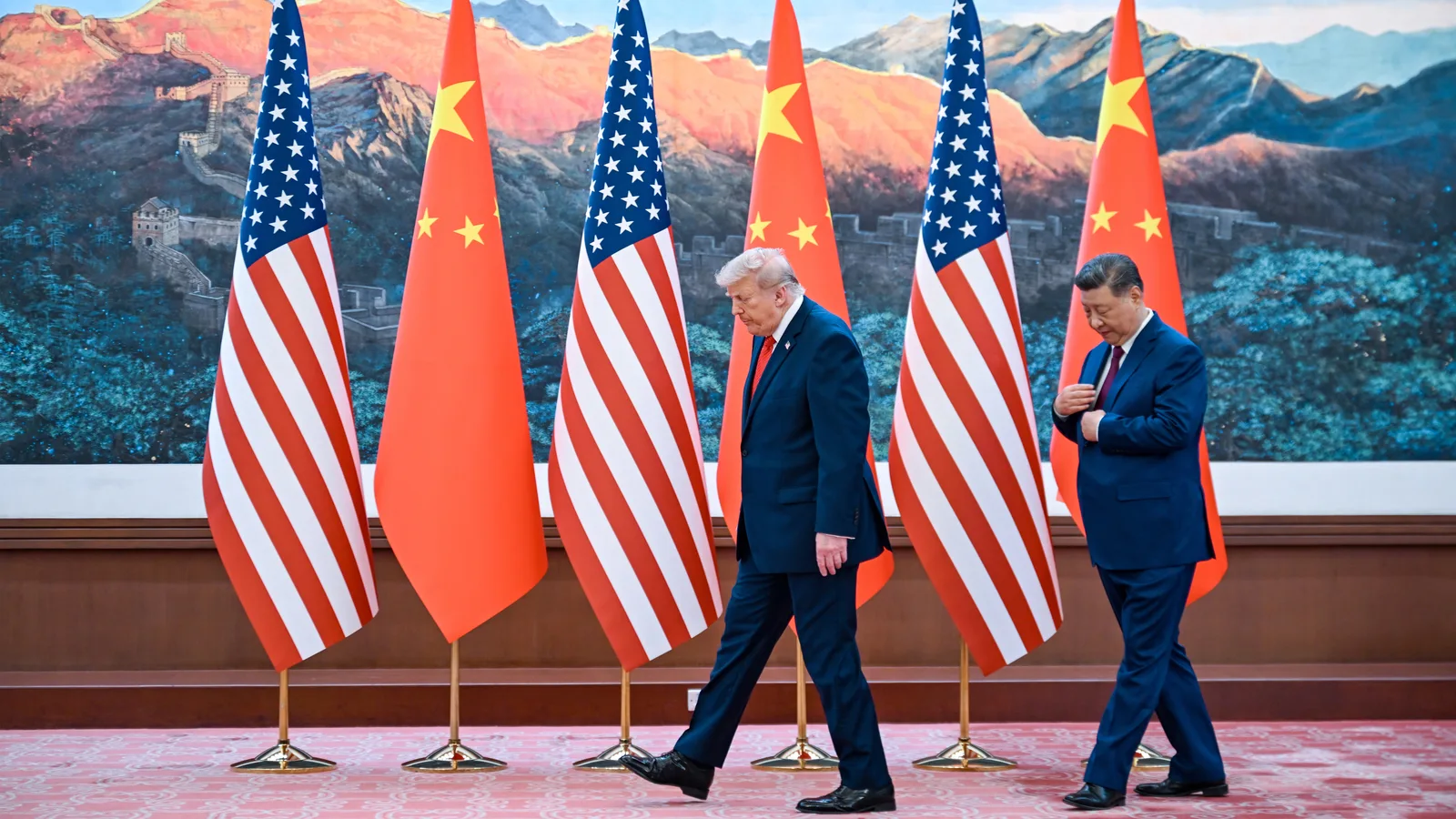
In a rare public warning, Chinese President Xi Jinping cautioned U.S. President Donald Trump that the Taiwan issue remains the most sensitive and potentially explosive point in Sino-American relations. Xi stressed that improper handling of the Taiwan question could provoke clashes or even armed conflict, endangering the entire bilateral relationship.
The stern message contrasted with Trump’s more optimistic tone. Before their two-hour closed-door meeting at Beijing’s Great Hall of the People, Trump praised Xi as a great leader and expressed hope that U.S.-China relations would improve beyond previous levels. The summit’s ceremonial welcome included traditional displays, highlighting the formal but cautious nature of the encounter.

Xi invoked the concept of the "Thucydides Trap"—a scenario where a rising power threatens an established one, often leading to war—emphasizing the need for the two nations to avoid such a fate. He proposed forging a new model of relations based on partnership rather than rivalry, underscoring that cooperation brings mutual benefits while confrontation harms both sides.
The summit also underscored unresolved tensions over multiple global issues. Beyond Taiwan, discord remains over trade disputes, the war in Iran, and broader strategic competition between the two countries. These divisions suggest that Trump’s visit, marked by symbolism and formalities like the temple tour and state banquet, is unlikely to yield major political or economic breakthroughs.
White House officials summarized the private talks as including discussions on enhancing economic cooperation, although details remained sparse. The Taiwan warning, however, was a clear signal from Beijing that certain red lines must be respected to maintain stability in the relationship between the world’s two largest economies.