

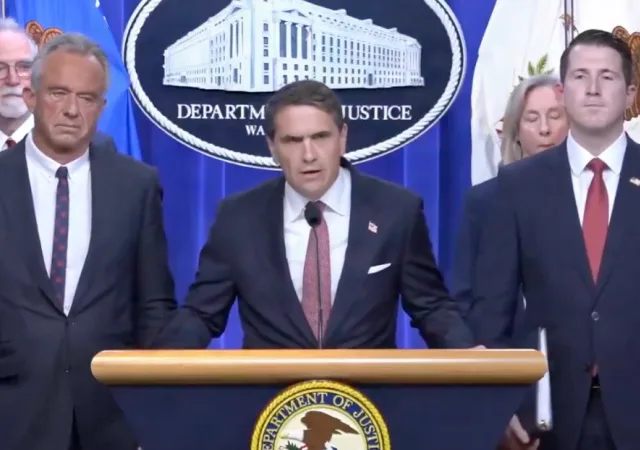
The Department of Justice (DOJ) revealed a sweeping crackdown on healthcare fraud, charging 450 defendants in schemes that allegedly defrauded government healthcare programs of more than $6.5 billion. These cases span across 45 states and territories, involving Medicare, Medicaid, and other federal health programs.
Among the most significant cases is an Arizona-based wound care fraud, where 11 defendants stand accused of orchestrating over $2 billion in false claims, including billing Medicare for unnecessary procedures such as excessive wound grafts. This single scheme reportedly cost Medicare over $1 million per patient. Proceeds from these illicit activities funded a lavish lifestyle marked by multimillion-dollar homes, luxury cars like a $135,000 Maserati, expensive jewelry, and the construction of a $4.6 million hotel at a beach resort in the Philippines.

The DOJ highlighted a series of coordinated enforcement actions in recent weeks, resulting in the seizure of more than $182 million in cash and assets, underlining the significant financial reclaim efforts for taxpayers. Another notable investigation targets four hospice providers in Los Angeles, accused of enrolling patients who were no longer terminal, including the deceased, by exploiting stolen personal information. The scheme allegedly generated $27.7 million in fraudulent Medicare claims while receiving nearly $262 million from the program.
According to the indictment, one hospice owner misrepresented the hospice program to Medicare beneficiaries by emphasizing quality-of-life benefits rather than end-of-life care and concealed how enrollment would restrict access to other Medicare treatments. The owner also reportedly paid beneficiaries monthly cash incentives and provided groceries, alcohol, televisions, and furniture to maintain enrollment, along with referral payments for recruiting others into the scheme.
These cases expose systematic abuses within the healthcare system, reflecting sophisticated fraud networks that exploit vulnerable patients and public healthcare funds. The DOJ’s ongoing efforts signal intensified federal scrutiny and enforcement against increasingly elaborate fraud operations targeting critical health programs.