

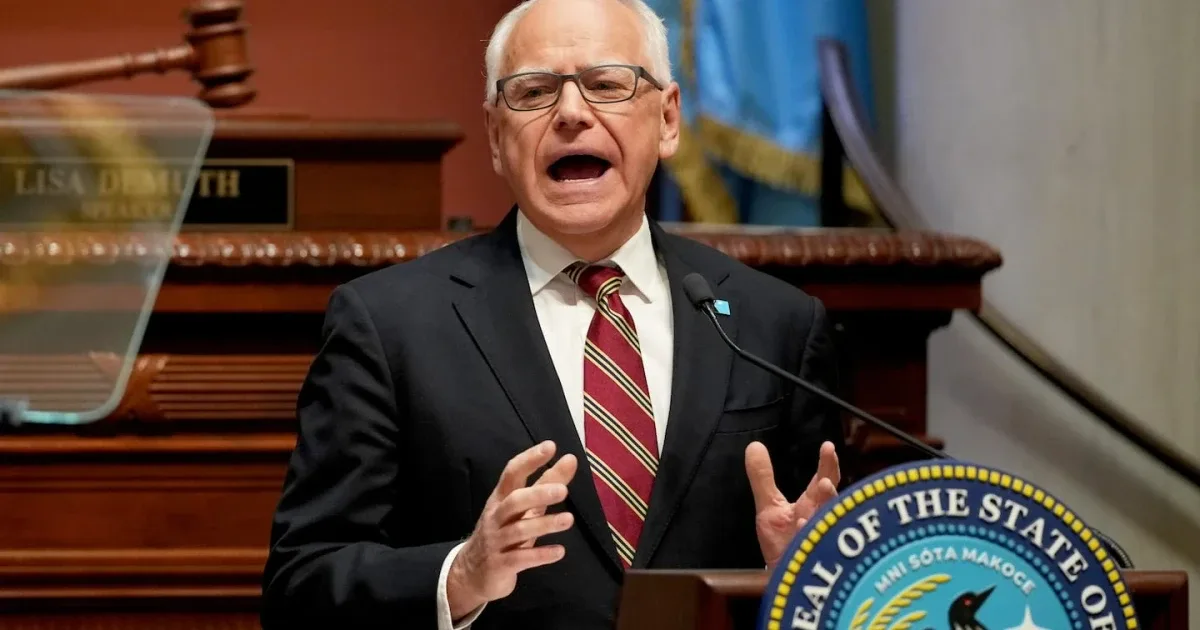
A federal judge invalidated six Justice Department grand jury subpoenas aimed at top Minnesota officials, including Governor Tim Walz and Minneapolis Mayor Jacob Frey, declaring that the subpoenas abused investigative authority and lacked a legitimate criminal basis. The judge found the demands to be overly broad and intended to harass Democratic-led jurisdictions over their handling of federal immigration enforcement.
Issued in January, the subpoenas required the officials to produce extensive records related to federal immigration authorities’ interactions, including communications, policies, training materials, and internal guidance. These demands targeted state and local leaders in Minnesota amid heightened tensions stemming from the federal Operation Metro Surge, an immigration crackdown that deployed thousands of enforcement agents to the Twin Cities area.

Federal Judge Patrick Schiltz, appointed by George W. Bush and former clerk to Justice Antonin Scalia, ruled that the subpoenas lacked a strong connection to any criminal violation and crossed constitutional lines by pressuring state officials to enforce federal immigration laws—a role states are not constitutionally required to assume. The judge described the DOJ’s approach as retaliatory and coercive, rejecting the subpoenas as an improper use of grand jury power and emphasizing the importance of federalism in limiting federal reach into state governance.
The subpoenas had targeted officials including Minnesota Attorney General Keith Ellison, the mayors of Minneapolis and St. Paul, and county boards in the region, all in the wake of protests and violent incidents linked to the federal immigration crackdown. The Justice Department’s requests notably intensified after the killing of Renee Good, an event that sparked further scrutiny of federal enforcement tactics and prompted legal pushback from Minnesota authorities.
Governor Walz hailed the decision as a defense of democratic principles and the rule of law. Meanwhile, the Justice Department did not immediately provide a detailed response but reiterated its commitment to addressing obstruction of federal law enforcement within legal bounds.