

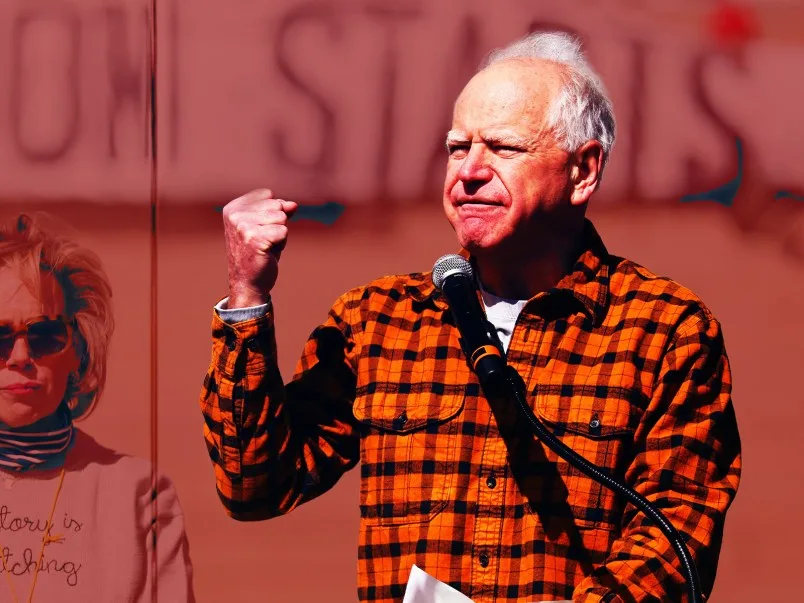
A federal judge has invalidated a series of Department of Justice subpoenas directed at Minnesota Governor Tim Walz and other state officials, ruling that these demands were clearly intended to retaliate against them for resisting federal immigration enforcement efforts.
U.S. District Judge Patrick Schiltz, appointed by President George W. Bush, determined that the subpoenas, which sought documents from Walz, Attorney General Keith Ellison, mayors of Minneapolis and St. Paul, as well as Ramsey and Hennepin county officials, were part of a coercive campaign. The judge stated these subpoenas pursued not a legitimate criminal inquiry but rather aimed to harass and pressure Minnesota leaders into supporting federal civil immigration enforcement—an effort the federal government cannot compel under the Tenth Amendment’s anti-commandeering principle.

The probe originated amid the Trump administration’s aggressive immigration initiative in Minnesota, known as ICE’s Operation Metro Surge, which deployed federal agents and National Guard members to enforce mass deportations. This operation faced widespread backlash following deaths linked to enforcement actions and raised tensions with the state’s Democratic leadership. The administration also took actions perceived as punitive toward Minnesota, such as freezing substantial Medicaid funds.
Judge Schiltz emphasized that the subpoenas reflected a “well-established history” of politically motivated investigations used to target adversaries of the former president, reinforcing concerns about abuse of grand-jury authority. He described the initiation of a criminal investigation for the purpose of political harassment as both blatantly unlawful and unethical. The ruling effectively nullifies six subpoenas demanding records related to the state’s handling of immigration enforcement and challenges to federal authority.
The decision identifies a clear boundary upheld by the Constitution, preventing federal intrusion into state governance by forcing cooperation with immigration policy enforcement—an area reserved to state discretion. Minnesota officials named had resisted federal pressure, prompting what the judge saw as retaliatory efforts rather than genuine legal proceedings.