

The recent Democratic primaries in New York served as a critical arena where political influence, outside spending, and technology policy intersected in decisive ways. In Manhattan’s 12th District, the contest to replace retiring Rep. Jerry Nadler became a focal point for debates around artificial intelligence regulation and the power of tech-backed super PACs, spotlighting Assemblymen Alex Bores and Micah Lasher and candidate Jack Schlossberg.
A super PAC financed by technology investors injected significant funds into support for Bores, raising concerns over whether the tech industry could effectively sway Democratic primaries through substantial financial muscle. Bores’ stance advocating AI regulation further intensified campaign tensions, turning this race into a proxy battle demonstrating the growing political stakes in tech governance.

Outside funding also reshaped other New York districts. The American Israel Public Affairs Committee (AIPAC), which had avoided early intervention in the race, suddenly spent heavily to back Rep. Adriano Espaillat in the 13th District. Concurrently, a pro-Palestinian super PAC contributed millions to progressive candidates Brad Lander, Claire Valdez, and Darializa Avila Chevalier. This fierce financial competition reflected how deeply Israel-related issues have penetrated local Democratic campaigns, exacerbating partisan divides within the party.
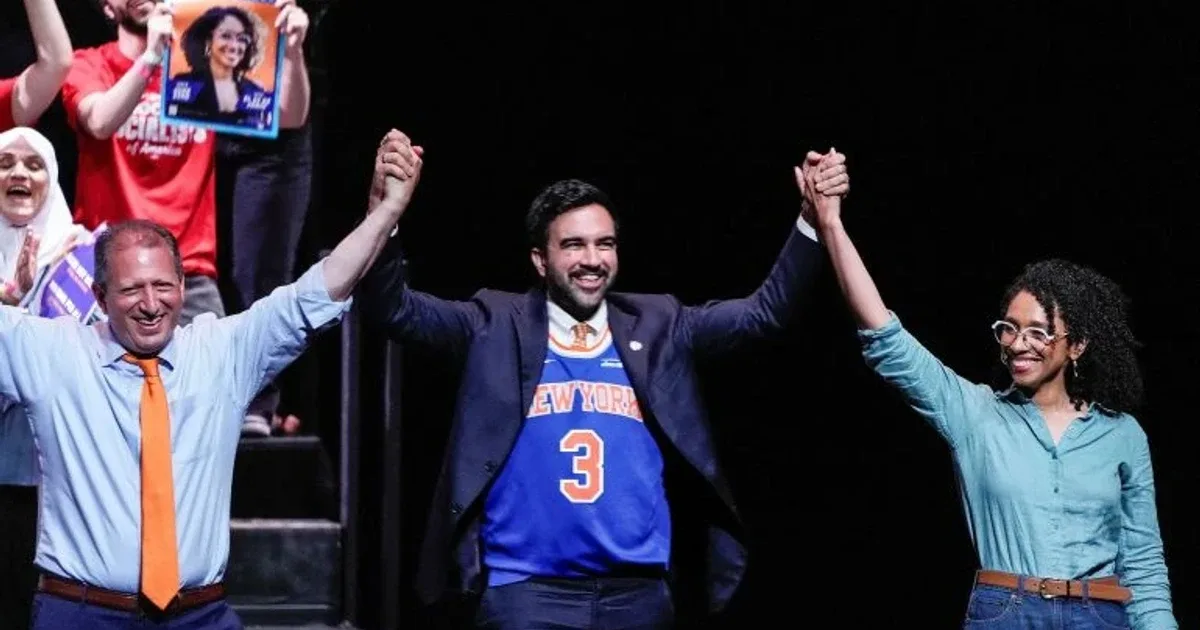
Though Zohran Mamdani, a newly elected New York City mayor known for invigorating the city’s left wing, was not on the ballot, his influence loomed large. Mamdani endorsed Lander, Valdez, and Avila Chevalier, aligning himself with the progressive faction challenging establishment-backed candidates. His high-profile appearance alongside Senator Bernie Sanders at a get-out-the-vote event underscored his commitment to mobilizing younger voters and injecting progressive vigor into these races. Mamdani’s sharp criticism of AIPAC’s spending tactics heightened the Israel policy debate’s intensity during the campaign’s final stretch.
However, early voting trends revealed a more subdued and older electorate compared to previous years, signaling potential obstacles for a strategy that relies heavily on youth turnout and left-wing enthusiasm. These demographics raised questions about the sustainability of Mamdani’s grassroots coalition in driving victories beyond his direct support base.
The New York primaries ultimately tested whether local party organizations still dominate candidate selection or if externally funded groups and divisive policy debates like AI regulation and Israel politics now tip the scales. This evolving landscape points to a complex and increasingly contentious Democratic battlefield, with emerging tech issues and foreign policy stances playing outsized roles.