

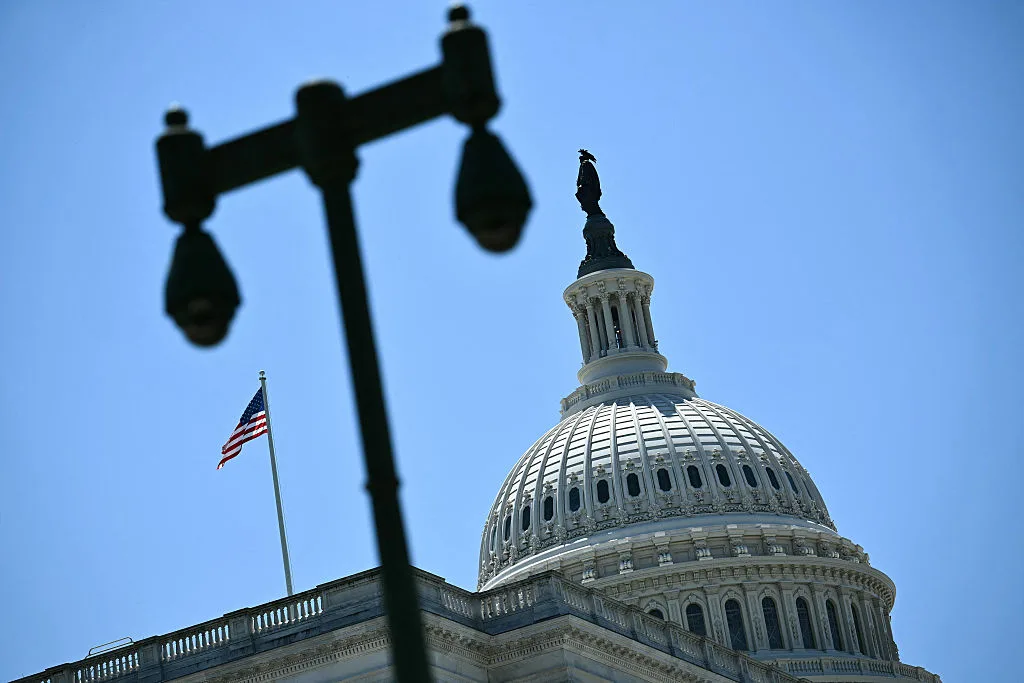
The Senate approved a $70 billion funding package that will support Immigration and Customs Enforcement (ICE) and Border Patrol operations through 2028. The legislation passed with a narrow margin, underscoring deep divisions within both parties over the bill’s broader provisions.
Although the funding is perceived as a win for President Donald Trump’s administration, months of negotiation exposed rifts among Republican senators, triggered largely by a contentious $1.776 billion Department of Justice (DOJ) fund attached to the bill. This fund is intended to provide resources labeled as “anti-weaponization” support, but many lawmakers associate it with political allies linked to the January 6 Capitol insurrection.

Democrats initially stalled the entire funding package, demanding stricter controls on ICE and Border Patrol agents following high-profile acts of violence earlier this year. Their resistance contributed to partial government shutdown concerns. On the Republican side, opposition emerged over the DOJ fund, with some senators advocating for reallocating resources to law enforcement officers directly impacted by the January 6 events. One such proposal—to redirect money to those officials—was rejected before the final vote.
Senator Lisa Murkowski was the only Republican to break ranks and side with Democrats against the bill, while Senator Michael Bennet was absent. Senate Majority Leader John Thune signaled that disputes over the DOJ fund delayed the bill’s passage, illustrating the challenges the Senate faces in balancing law enforcement funding with political accountability.
Despite criticisms from some Republicans viewing the DOJ provision as a political liability in a crucial midterm election year, the acting Attorney General indicated that the fund remains largely inactive. The measure now advances to the House of Representatives, where approval is expected, consolidating funding for immigration enforcement as the Trump administration continues its tenure.