

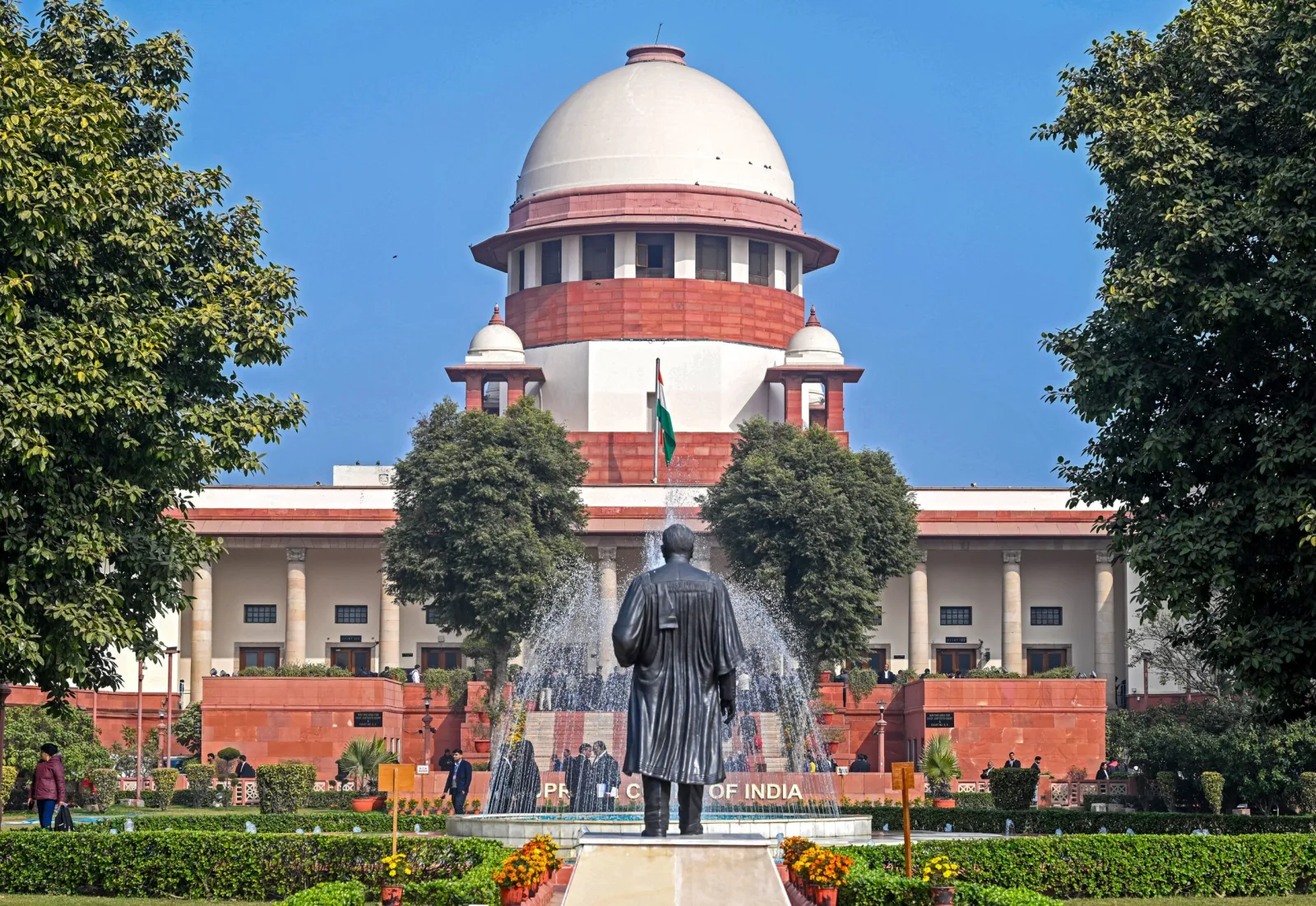
The Supreme Court invalidated rulings from the National Company Law Tribunal (NCLT) and the National Company Law Appellate Tribunal (NCLAT) after uncovering that the NCLT had based its decisions on fabricated, AI-generated judicial precedents. The court condemned this practice as a serious breach of legal standards, emphasizing a policy of zero tolerance for fake or hallucinated material influencing judicial outcomes.
The case involved a challenge to insolvency proceedings against Essel Infraprojects Ltd. initiated by Jammu and Kashmir Bank Ltd. The appellant highlighted that several precedents cited by the tribunal were either nonexistent or contained artificial paragraphs falsely attributed to authentic Supreme Court judgments. Upon thorough review, the Supreme Court confirmed that some referenced judgments did not exist, while others included fabricated content incorrectly linked to real decisions.

The Supreme Court bench, led by Justice P. S. Narasimha, described decisions based on such AI-generated false material as legally invalid, amounting to a subversion of the rule of law. The court set aside the tribunal orders dated August 28, 2024, and September 11, 2025, sending the case back to the NCLT for fresh adjudication with a strict two-week deadline.
Highlighting the need for cautious integration of AI, the court stressed that artificial intelligence can serve as an aid but must not replace human judicial reasoning. The justices emphasized that “absolute and total control” must be maintained by courts over the use of AI to prevent the introduction of misleading or fabricated legal content.
The judgment illustrated the growing dangers posed by unregulated AI application in the legal realm. The court warned that AI-generated fake precedents pose a risk comparable to a silent and toxic threat undermining justice, likening it to the invisible yet catastrophic consequences of a chemical leak.
This ruling underscores the judiciary’s commitment to preserving the integrity of legal proceedings and ensuring that AI tools enhance rather than compromise judicial decision-making.