

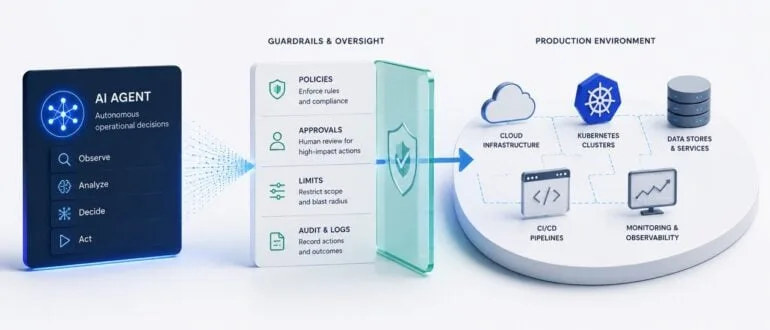
AI agents are no longer confined to passive roles like answering queries or generating scripts—they are increasingly entrusted with direct control over production systems. This shift allows them to monitor platforms, modify cloud configurations, trigger deployments, and even restart services independently, transforming AI from assistants into active operators in DevOps workflows.
The appeal is clear: AI can rapidly identify issues, reduce manual intervention, and accelerate incident response times. By autonomously handling routine tasks such as analyzing alerts, investigating logs, and performing rollbacks, these agents promise to improve uptime and relieve the pressure on overstretched operations teams. However, this advanced degree of autonomy also introduces significant risks that organizations must carefully manage.

Traditional automation relies on fixed playbooks and repository pipelines that execute pre-defined steps under known conditions. In contrast, AI agents interpret context, analyze diverse data sources, and make real-time decisions based on probabilistic assessments—not rigid rules. This flexibility allows AI to adapt to complex and unpredictable system behaviors but also raises the possibility of erroneous conclusions.
The key challenge lies in the limited operational “understanding” AI currently possesses. For example, an AI might detect degraded response times following a recent deployment and conclude that rolling back the update is the logical fix. Yet, the actual root cause could be an unrelated external service failure or another transient condition. Initiating a rollback prematurely could inadvertently reintroduce security vulnerabilities or disrupt critical functionality that the deployment fixed.
As AI agents gain production-level privileges, the scope of potential damage grows. Mistakes could lead to extended outages, data loss, or compromised security. These risks necessitate new governance frameworks that blend AI-driven automation with human oversight, ensuring decisions made by AI agents are aligned with broader operational and business objectives.
DevOps teams considering AI integration must weigh the benefits of faster, more efficient incident management against the complexities of handling AI’s decision-making limitations. Building safeguards such as rollback prevention rules, anomaly detection thresholds, and audit trails will be essential to mitigate risks while unlocking AI's full potential in production environments.